
1
Set the scene
Start with context
Fill the frame
2–3 ft for close-ups; keep ladders, cords and workers fully in view.
A confined space entry check verifies the controls that keep an entrant alive: the atmosphere tested before and during entry, a trained attendant posted at the opening, retrieval equipment rigged and ready, the space isolated from hazardous energy and flow, and a permit that matches the work. OSHA Scan adds a fast first pass — photograph the entry point and the AI flags visible problems like a worker entering with no tripod over the opening, no attendant in frame, or an unprotected opening at grade, referencing the OSHA standard each issue may relate to. It is an AI-assisted preliminary review of what is visible in the photo, not a permit, an atmosphere test, or a formal compliance determination.
Free · No account needed to scan · Results in seconds
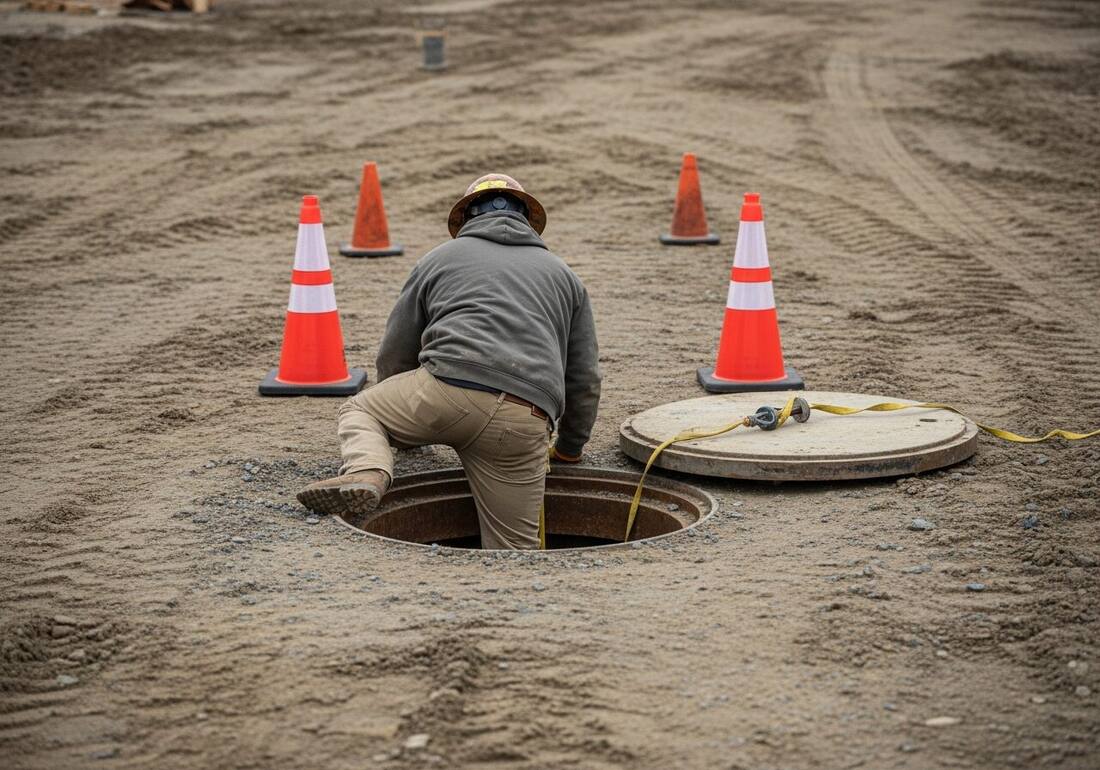
Confined space fatalities follow a brutal pattern: the atmosphere was never tested, nobody was posted at the opening, and there was no way to pull the entrant out without sending a second person in after them — which is how single incidents become multiple fatalities. Every one of those missing controls is visible from outside the space, at the entry point, before anyone goes in.
A photo scan lowers the bar: snap the entry setup and get an immediate second opinion on what is visible — retrieval equipment, an attendant, opening protection, staged ventilation — plus the checklist items a person still must verify directly, like the gas meter readings, the permit, and energy isolation. It turns the pre-entry walkaround into a ten-second habit instead of a form that gets signed from the truck.
Roughly 60 percent of confined space fatalities are rescue attempts, not initial entries. The pattern is well-documented: the atmosphere changes after entry, the entrant is incapacitated, and a coworker enters to help without protective equipment. The entire control framework in OSHA's permit-required confined space standard (29 CFR 1910.146 for general industry; 29 CFR 1926.1200 for construction) is designed to break that chain. The attendant stays outside and cannot enter. Rescue is non-entry where possible. The entry permit documents who authorized entry and what hazards were verified before anyone went in.
Twenty-six states and two territories operate OSHA-approved state plans that may impose additional requirements or heavier enforcement emphasis on confined space entries. OSHA's 2015 construction confined space rule extended enforceable entry requirements to construction for the first time, and federal OSHA has increased inspection activity on utility, sewer, and underground construction projects where entries are most frequent. On multi-employer construction sites, excavation contractors, general contractors, and property owners each carry defined duties under the construction standard — attendant and rescue provider roles must be assigned before each entry, not assumed to be covered by whoever happens to be nearby.
Visible pre-entry setup issues the AI checks in a photo of the entry point.
Entries with no tripod, davit, or retrieval line rigged over the opening, and harness or line gear missing from the entrant in frame.
A worker entering or inside a space with no attendant visible at the opening — the single most common fatal gap.
No blower or duct staged at the opening for spaces that typically need forced air, and duct runs that stop short of the space.
Open manholes, vaults, and hatches left unguarded at grade where workers or the public can step or fall in.
Scan a photo like the one above and this is the report you get — score, findings, OSHA references, and fixes. It is an illustrative example, clearly marked — not live scan data.
Compliance score
28
Lower means more potential hazards found
5 potential hazards found
1Worker entering a below-grade space with no retrieval system rigged at the opening
CriticalPossibly related to permit-required confined space rescue and retrieval (29 CFR 1910.146(k))
Observed condition: Without a tripod and retrieval line, an entrant who goes down cannot be pulled out from outside — which is how would-be rescuers become the second and third victims.
Corrective action: Stop the entry, rig a tripod or davit with a retrieval line to the entrant's harness, and confirm non-entry rescue is workable before anyone goes in.
High confidence
2No attendant posted at the opening while entry is underway
HighPossibly related to attendant duties for permit spaces (29 CFR 1910.146(i))
Observed condition: An attendant is the entrant's lifeline: monitoring conditions, keeping contact, and summoning rescue. An empty opening means nobody knows when something goes wrong.
Corrective action: Post a trained attendant at the entry point with communication to the entrant and no other duties, before entry continues.
Medium confidenceNot fully clear from the photo — verify on site.
Upload a photo like the one above and get a compliance score and hazard count in seconds. No account needed to scan — create a free account to unlock the full report.
Use the real site or facility name. If you save the scan after signup, it becomes the report name.
Three angles, one deeper scan
Only the wide shot is required — every extra angle gives the AI more places to look.
Required: Set the scene — one wide shot lets the AI sweep the whole area at once
Stand at the entry point and capture corner to corner: floors, ladders, scaffolds, and everyone at work
Drop a job-site photo or walkthrough video
Click to upload, drag & drop, or snap a photo on site. Photos scan free in about 15 seconds — no signup, no card. Video walkthroughs (up to 3 min) run on a free account.
Small habits, sharper scans
Set the scene
Start with context
Fill the frame
2–3 ft for close-ups; keep ladders, cords and workers fully in view.
Capture clearly
Make the frame usable
Light it right
Keep the sun or lights behind you — glare and shadows hide hazards.
Tap to focus
Tap the hazard on screen and hold still one second — blur can't be flagged.
Choose the useful view
Give the AI room to understand
Go landscape
Turn your phone sideways — a wider frame catches more of the scene.
Only upload photos you have permission to use, and avoid images showing personal, customer, or confidential information. Demo photos and results are held privately for up to 48 hours so you can save them to a free account; unclaimed photos are deleted automatically. Results are an AI-assisted preliminary review, not an official OSHA determination.
New: Video walkthrough scans
Record up to 3 minutes of your site — the AI extracts frames and flags every hazard with exact timestamps. Free account required.
Get the best results
Wide shot first
Stand at the entrance and photograph the entire work area so AI sees the full context
Hazard areas
Photograph elevated surfaces, equipment, electrical panels, and anywhere workers are active
Close-ups last
Move in close on anything damaged, missing, or that looks risky — the AI catches more detail
Run these points before every entry. The first four are free — create a free account to unlock the full checklist and scan your own entry points.
Free checklist — 12 points
Enter your email to unlock the full checklist
We'll also send you a printable PDF copy — no account required.
One email with the checklist, one follow-up. Unsubscribe anytime.
OSHA Scan reads a single photo. That makes it fast and easy for anyone on site — but it also means it has real limits. Here's an honest look at both.
A scan is a fast first look, not the final word. Before treating this kind of area as safe, a competent person should still confirm:
The core items are: classification of the space, a completed permit, atmosphere testing before and during entry, isolation of energy and flow, forced ventilation, a posted attendant, a rigged retrieval system, working communication, a real rescue plan, a protected opening, and complete entrant equipment. A photo scan covers the visible entry-point setup instantly; the atmosphere, permit, and isolation must be verified directly by the crew.
It checks what is visible at the opening: retrieval equipment, an attendant, ventilation gear, opening protection, and the entrant's visible equipment. It cannot test the atmosphere, read the permit, or verify isolation — the highest-stakes items in confined space work are exactly the ones that need a meter and a person, so treat the scan strictly as a pre-entry visual cross-check.
Permit-required confined spaces in general industry are 29 CFR 1910.146 (attendants in (i), rescue and retrieval in (k)); construction has its own standard, 29 CFR 1926 Subpart AA. OSHA Scan references the standard each visible finding may relate to — the scan itself is a preliminary AI review, not an official determination.
Reviewed by OSHA Scan Editorial
Last updated August 29, 2026
This content is produced by the OSHA Scan Editorial team and reviewed with AI assistance. It is general safety information, not legal or compliance advice. OSHA Scan is an independent tool and is not affiliated with, endorsed by, or certified by OSHA or the U.S. Department of Labor.
More ways to see what an AI OSHA scan can do for your site.
The overview hub — how the scanner works and every job, site, and hazard it covers.
A deep dive on the invisible hazard that testing exists for.
Why isolation from flow is a life-critical control.
The other below-grade work that kills without visible warning.
See a complete labelled example of everything a scan returns.
Start with 5 included AI site scans plus a one-time 10-scan signup bonus — no credit card. Build JHA-ready reports and catch changing conditions sooner.
Start your free trial