
1
Set the scene
Start with context
Fill the frame
2–3 ft for close-ups; keep ladders, cords and workers fully in view.
Leading edges, roof edges, floor holes, and fall arrest
Falls to a lower level are the leading cause of death in construction, killing hundreds of workers every year, and 29 CFR 1926.501 is OSHA's most-cited standard year after year. A fall from as little as six feet can be fatal, yet nearly every fall is preventable with guardrails, covers, and a properly rigged fall arrest system. OSHA Scan surfaces missing and defective fall protection from a single photo so you can fix it before someone goes over the edge.
Free · No account needed to scan · Results in seconds
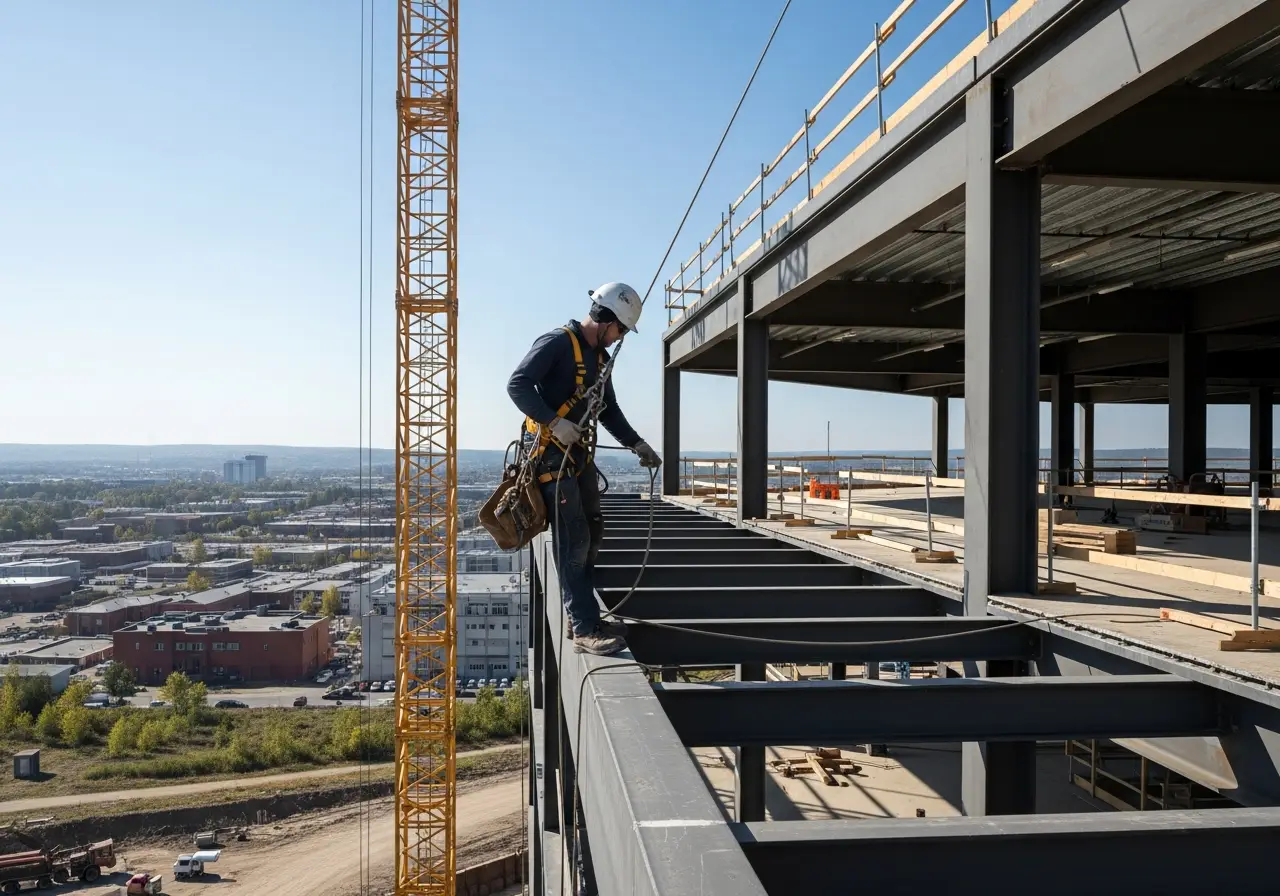
cause of death in construction
trigger height for fall protection in construction
OSHA's most-cited standard year after year
construction fall deaths in the U.S. each year
Upload a real job-site photo and OSHA Scan detects visible fall hazards in seconds — no account needed to run your first scan.
Use the real site or facility name. If you save the scan after signup, it becomes the report name.
Three angles, one deeper scan
Only the wide shot is required — every extra angle gives the AI more places to look.
Required: Set the scene — one wide shot lets the AI sweep the whole area at once
Stand at the entry point and capture corner to corner: floors, ladders, scaffolds, and everyone at work
Drop a job-site photo or walkthrough video
Click to upload, drag & drop, or snap a photo on site. Photos scan free in about 15 seconds — no signup, no card. Video walkthroughs (up to 3 min) run on a free account.
Small habits, sharper scans
Set the scene
Start with context
Fill the frame
2–3 ft for close-ups; keep ladders, cords and workers fully in view.
Capture clearly
Make the frame usable
Light it right
Keep the sun or lights behind you — glare and shadows hide hazards.
Tap to focus
Tap the hazard on screen and hold still one second — blur can't be flagged.
Choose the useful view
Give the AI room to understand
Go landscape
Turn your phone sideways — a wider frame catches more of the scene.
Only upload photos you have permission to use, and avoid images showing personal, customer, or confidential information. Demo photos and results are held privately for up to 48 hours so you can save them to a free account; unclaimed photos are deleted automatically. Results are an AI-assisted preliminary review, not an official OSHA determination.
Here is what an OSHA Scan report looks like for fall hazards. It is an illustrative example built from this trade's hazards — clearly marked, not live scan data.
Compliance score
42
Lower means more potential hazards found
3 potential hazards found
Fall from an unprotected leading edge
CriticalPossibly related to Duty to have fall protection (29 CFR 1926.501)
Observed condition: A carpenter working near the open edge of a second-floor deck has no guardrail and is not tied off.
Corrective action: Install standard guardrail systems with top rails, mid rails, and toe boards at all open edges
High confidence
Step through an uncovered floor hole
HighPossibly related to Fall protection systems criteria and practices (29 CFR 1926.502)
Observed condition: A worker crossing a partially finished floor does not see an uncovered plumbing penetration hidden under debris.
Corrective action: Cover every floor hole and skylight with a secured, load-rated cover marked "HOLE" or "COVER"
Medium confidenceNot fully clear from the photo — verify on site.
Skylight collapse on a roof
MediumPossibly related to Fall protection training requirements (29 CFR 1926.503)
Observed condition: A roofer walks across a low-slope roof and steps onto a painted-over skylight, mistaking it for solid decking.
Corrective action: Erect safety net systems below leading-edge work where guardrails are not feasible
High confidence
A fall hazard is any situation where a worker could fall to a lower level and be injured or killed. On construction sites the most common sources are unprotected leading edges, open roof edges, floor holes and skylights, unguarded wall openings, ladders, scaffolds, and aerial lifts. In general industry the same dangers appear on elevated platforms, mezzanines, loading docks, and around floor openings. OSHA requires fall protection at six feet in construction under 29 CFR 1926 and at four feet in general industry under 29 CFR 1910.
Primary OSHA standard: 29 CFR 1926.501
A fall hazard is any situation where a worker could fall to a lower level and be injured or killed. On construction sites the most common sources are unprotected leading edges, open roof edges, floor holes and skylights, unguarded wall openings, ladders, scaffolds, and aerial lifts. In general industry the same dangers appear on elevated platforms, mezzanines, loading docks, and around floor openings. OSHA requires fall protection at six feet in construction under 29 CFR 1926 and at four feet in general industry under 29 CFR 1910.
What makes falls so lethal is how little height it takes and how fast they happen. A worker who steps back off a leading edge or through an unmarked floor hole has no time to react, and a fall of even one story onto rebar, equipment, or a hard surface is frequently fatal. Falls through fragile surfaces such as skylights and rotted roof decking are especially deadly because the danger is hidden until the surface gives way.
Fall protection works by either preventing the fall or arresting it. Guardrails, hole covers, and safety nets are passive systems that protect everyone in the area without depending on the worker. Personal fall arrest systems — a full-body harness connected by a lanyard or self-retracting lifeline to a rated anchorage — stop a fall in progress but only work when they are worn, rigged correctly, and anchored to something that can hold the load.
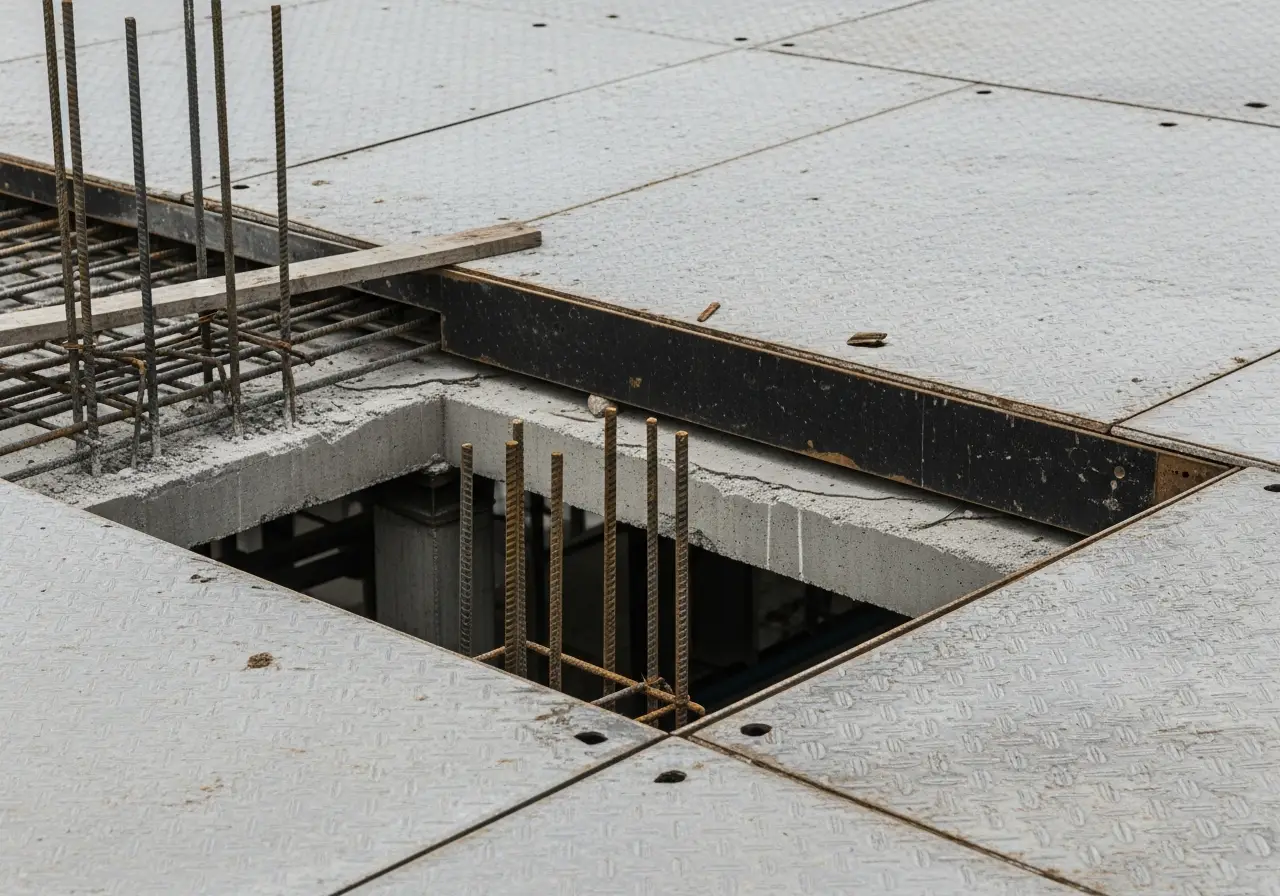
Fall protection violations dominate OSHA's Top 10 every year, and 1926.501, 1926.503, and ladder and scaffold rules routinely appear together. Willful and repeat citations for exposed workers reach six figures per instance.
Survivors of serious falls often face spinal cord injuries, traumatic brain injuries, multiple fractures, and permanent disability. Many falls that do not kill still end a worker's career.
A single fatal fall triggers an OSHA inspection, stops the job, spikes your EMR and insurance premiums, and can expose the company to litigation that dwarfs any project's profit.
General contractors and owners increasingly require documented fall protection plans and 100 percent tie-off policies. A clean record and detailed reporting win bids and keep you on approved-vendor lists.
A carpenter working near the open edge of a second-floor deck has no guardrail and is not tied off. While carrying a sheet of plywood he steps backward, loses the edge, and falls sixteen feet to the slab below, suffering fatal head and spinal injuries.
A worker crossing a partially finished floor does not see an uncovered plumbing penetration hidden under debris. He steps into it and falls to the level below, fracturing his pelvis and both legs on impact.
A roofer walks across a low-slope roof and steps onto a painted-over skylight, mistaking it for solid decking. The fragile panel gives way and he falls through to the warehouse floor twenty-two feet below.
An electrician working from an aerial lift wears a harness but never connects the lanyard to the lift's anchor point. When the basket is bumped by a passing loader he is ejected over the rail and falls to the ground because nothing arrests him.
A painter sets an extension ladder at too shallow an angle on a smooth floor without securing the base. As he reaches out to one side, the ladder kicks out and he falls twelve feet, striking scaffolding on the way down.
The federal regulations that govern fall protection work.
Requires employers to provide fall protection for workers exposed to falls of six feet or more to a lower level, covering leading edges, holes, roof edges, wall openings, excavations, and other construction surfaces. It is OSHA's most-frequently cited standard.
Sets the design and performance criteria for guardrail systems, personal fall arrest systems, safety net systems, hole covers, and positioning devices — including anchorage strength, guardrail height, and arrest forces the systems must meet.
Requires a competent person to train each exposed worker to recognize fall hazards and use fall protection correctly, and to retrain and document that training whenever conditions or the worker's understanding fall short.
Requires fall protection at four feet in general industry for unprotected sides, edges, holes, platforms, and runways, using guardrails, covers, travel restraint, or personal fall arrest systems.
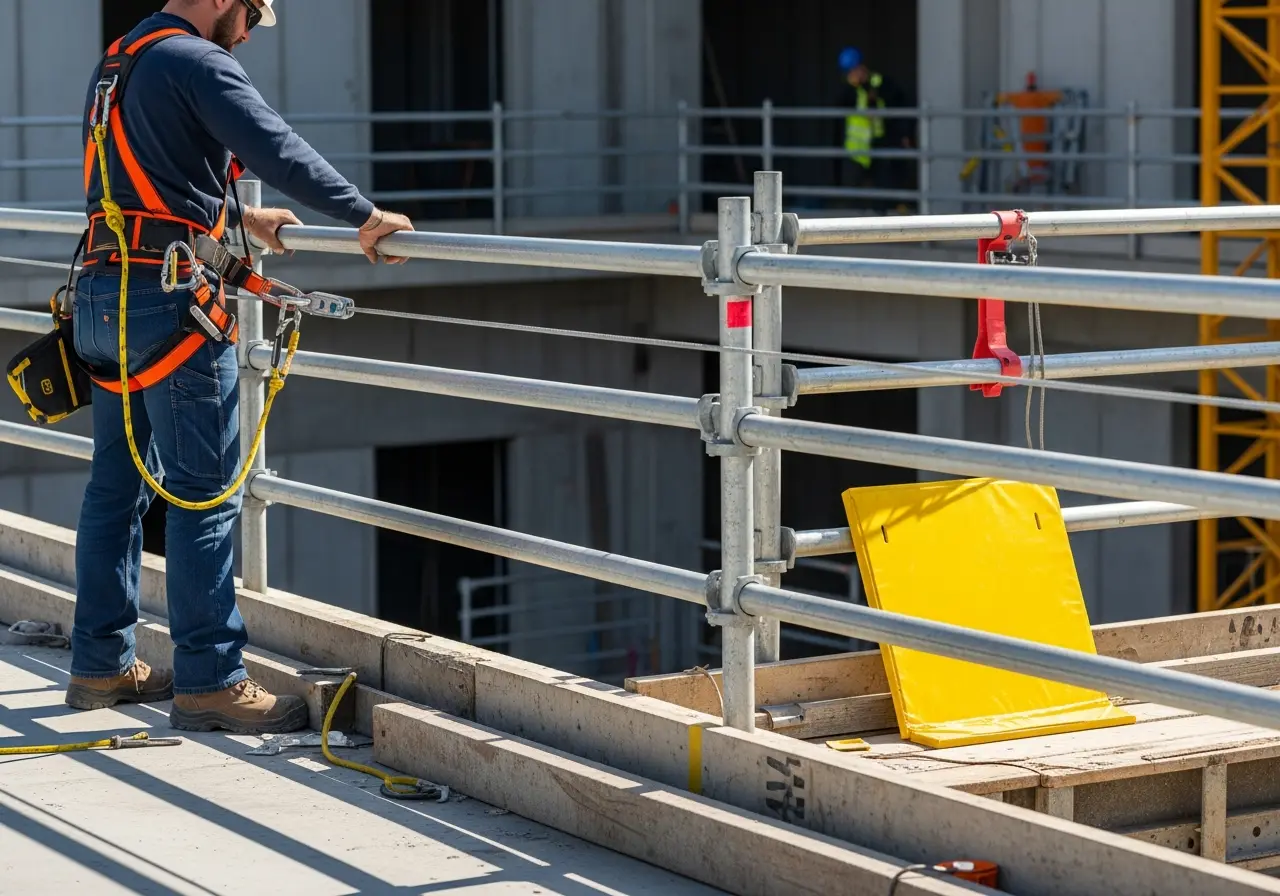
Work top-down through the hierarchy of controls — eliminate the hazard first, then fall back to procedures and PPE.
Prevent the fall with passive systems that protect everyone before relying on procedures or personal gear.
Back up passive protection with planning, permits, and documented procedures.
Personal fall arrest protects the worker when passive systems cannot eliminate the exposure.
Only workers trained by a competent person can recognize fall hazards and rig and use fall protection correctly under real conditions.
OSHA Scan analyzes photos of work at height to flag the fall hazards inspectors cite most: unprotected leading edges and roof edges, missing or non-compliant guardrails, open or uncovered floor holes and skylights, workers wearing a harness that is not connected to an anchorage, improper anchorage or lanyard rigging, ladders set at the wrong angle or unsecured, and unguarded scaffold and aerial-lift platforms. Upload a photo and you get an instant report that cites the specific OSHA standard for each finding and generates a corrective-action checklist your crew can work through on site before anyone goes back over the edge.
In construction, OSHA requires fall protection when a worker is exposed to a fall of six feet or more to a lower level under 29 CFR 1926.501. In general industry the trigger is four feet under 29 CFR 1910.28. Certain work, such as over dangerous equipment or on scaffolds and steel, has its own thresholds, so always check the standard for the task.
OSHA recognizes guardrail systems, safety net systems, and personal fall arrest systems as the primary methods, along with hole covers, positioning devices, travel restraint, and, in limited situations, controlled access zones and warning lines. Passive systems like guardrails and covers are preferred because they protect everyone without depending on the individual worker.
A personal fall arrest system has three components, sometimes called the ABCs: an anchorage that can support the load, body support in the form of a full-body harness, and a connector such as a shock-absorbing lanyard or self-retracting lifeline. All three must be compatible and rigged correctly, or the system will not stop a fall safely.
Under 29 CFR 1926.502, an anchorage used for personal fall arrest must support at least 5,000 pounds per attached worker, or be designed by a qualified person as part of a complete system with a safety factor of at least two. Never tie off to guardrails, conduit, or standpipes that are not rated for arrest forces.
Yes. A compliant standard guardrail has a top rail about 42 inches high, a mid rail roughly halfway between the top rail and the walking surface, and a toe board where materials could fall on people below. The top rail must withstand a 200-pound force applied outward and downward without deflecting below 39 inches.
Yes. Any hole a worker could step into or fall through must be guarded by a guardrail or a secured cover. Covers must support at least twice the maximum expected load, be secured against displacement, and be marked "HOLE" or "COVER" so no one mistakes them for solid flooring.
Rescue the suspended worker immediately using your pre-planned rescue procedure, because suspension trauma can become life-threatening within minutes. Remove the harness, lanyard, and any other component that was subjected to the arrest forces from service permanently, and have a competent person inspect the anchorage before it is used again.
OSHA does not set a fixed calendar interval, but 29 CFR 1926.503 requires retraining whenever there is reason to believe a worker lacks the understanding or skill to stay safe. That includes changes in the workplace or equipment that make earlier training obsolete, changes in the fall protection systems in use, or observations that a worker is not using the equipment correctly. In practice most contractors run annual refreshers because harness inspection, anchorage selection, and rescue skills are perishable and the consequences of a lapse are fatal. Every training event should be documented with the date, the topics covered, the trainer's name, and the worker's demonstrated competency, so you can prove qualification during an inspection or after an incident. New hires and workers moving to unfamiliar systems should never work at height alone until a competent person has verified their skills in the field.
Harnesses, lanyards, and self-retracting lifelines must be visually inspected by the user before every use and removed from service the moment webbing damage, corrosion, chemical exposure, or a deployed shock pack appears. A competent person should perform a documented formal inspection of personal fall arrest equipment at least annually, and more often for heavy or harsh-environment use, following the manufacturer's instructions. Guardrails, covers, scaffolds, and aerial lifts should be inspected before each shift and after any event that could affect them, such as impact, high wind, or modification. Anchorage points and horizontal lifelines require periodic evaluation by a qualified person. Keeping a written inspection log turns these checks into evidence of a functioning safety program, which matters both for OSHA compliance and for defending against liability after an incident. Photo-based tools such as OSHA Scan make it practical to capture and timestamp these inspections consistently.
Stop work immediately if required fall protection is missing, incomplete, or damaged, if a guardrail has been removed and not replaced, if a floor hole or skylight is left uncovered, or if a worker cannot reach a rated anchorage for tie-off. Work should also stop when a harness or lanyard shows damage, when an anchorage is questionable, when a ladder or scaffold is set up incorrectly, and when high winds, ice, storms, or fatigue raise the risk of a fall. Every worker has the right and responsibility to stop a job that feels unsafe without fear of reprisal. The cost of a delayed task is trivial compared with a fatal fall, and a documented stop-work culture is one of the clearest signals to general contractors and insurers that a company manages fall risk seriously.
Run through this before, during, and after every job.
15 more checklist points are waiting. Register with your email to reveal every item and download the complete OSHA compliance checklist as a printable PDF. Free, and it only takes a few seconds.
Already have an account? Sign in
A mid-size framing contractor was building multifamily wood-frame structures on a tight schedule. Crews routinely worked near open floor and deck edges, and tie-off was treated as optional whenever it slowed production down.
A carpenter carrying material stepped backward off an unprotected leading edge and fell more than fifteen feet to the slab below, suffering severe spinal injuries. OSHA cited the company under 1926.501 and 1926.503, the project stopped for the investigation, and the firm's insurance costs climbed sharply.
The contractor built a written fall protection plan around guardrails and hole covers as the default, added engineered anchorage points and self-retracting lifelines for leading-edge work, enforced a 100 percent tie-off policy, and trained every worker under 1926.503. It adopted OSHA Scan to photo-audit edges, covers, and tie-off before crews started each level.
In the two years that followed, the contractor recorded zero falls to a lower level. The improved EMR lowered insurance premiums, and the documented fall protection program helped the firm win larger general contracts that required detailed safety records.
Review findings, organize chemical records, and open relevant official resources for your saved locations and work context.
You make the final call. Review, edit, or dismiss any AI-flagged hazard before finalizing your inspection report.
Scan chemical labels or upload legacy MSDS sheets to create structured drafts that support your team's search for and review of current official manufacturer Safety Data Sheets.
Open official OSHA and State Plan guidance, required posters, emergency contacts, and relevant publications for saved locations and work requirements.
OSHA Scan reads a single photo. That makes it fast and easy for anyone on site — but it also means it has real limits. Here's an honest look at both.
Reviewed by OSHA Scan Editorial
Last updated August 29, 2026
This content is produced by the OSHA Scan Editorial team and reviewed with AI assistance. It is general safety information, not legal or compliance advice. OSHA Scan is an independent tool and is not affiliated with, endorsed by, or certified by OSHA or the U.S. Department of Labor.
Upload a photo of your fall protection job site and get an instant, OSHA-cited hazard report.
Start your free trial