
1
Set the scene
Start with context
Fill the frame
2–3 ft for close-ups; keep ladders, cords and workers fully in view.
A scaffold safety inspection verifies that a scaffold is complete and safe before each shift: full planking, guardrails at open sides, safe access, stable footing, and no visible damage or missing components. OSHA Scan gives crews a fast first pass — photograph the scaffold and the AI flags visible issues like missing guardrails, incomplete planking, or workers climbing frames instead of using ladders, referencing the OSHA standard each finding may relate to. It reviews what is visible in the photo and is an AI-assisted preliminary check, not a substitute for the competent-person inspection OSHA requires.
Free · No account needed to scan · Results in seconds
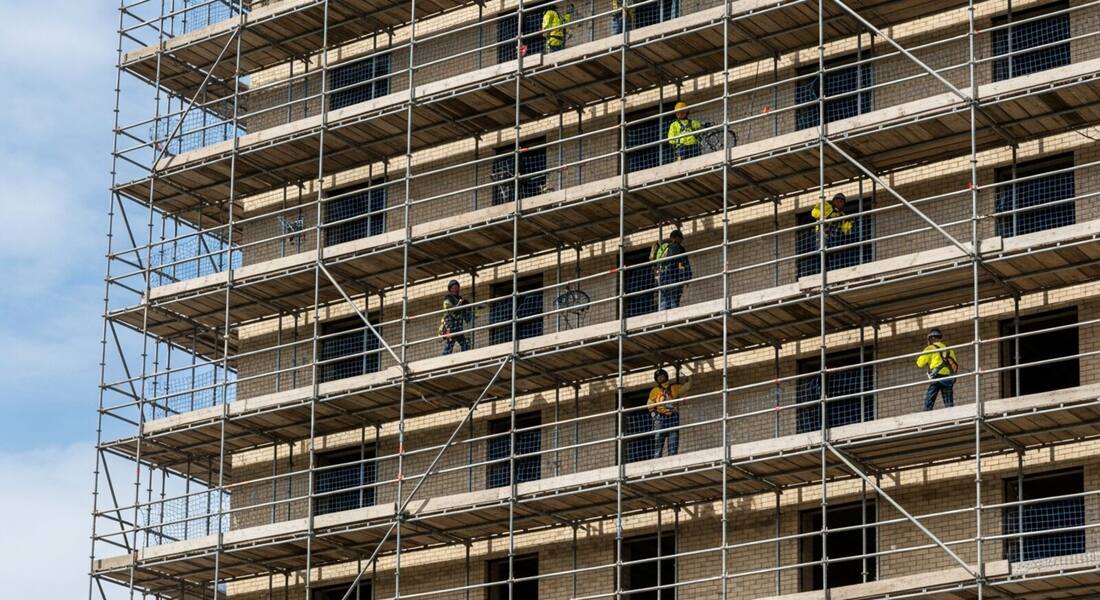
OSHA requires a competent person to inspect scaffolds before each work shift, but between the morning walk and the afternoon material load, scaffolds change — planks get moved, guardrails come off for loading and never go back, and access ladders migrate. The gap between inspections is where most scaffold incidents happen.
A photo scan is a way for any crew member to re-check the scaffold in the moment: photograph the elevation and get an instant read on what is visibly missing or wrong, with the OSHA standard each issue may relate to. It does not replace the competent person — it gives them more eyes between formal inspections and a photo record of what the scaffold looked like at that time.
Scaffolding violations consistently rank in OSHA's top-ten citation list for construction, and falls from scaffold platforms account for a significant share of construction fatalities each year. Inspectors working under 29 CFR 1926.451 know exactly what to look for — they walk each platform level checking planking completeness, guardrail presence, and access compliance. The per-violation penalty for a serious citation can reach $16,550, and a repeat classification (triggered when a substantially similar violation recurs within five years) raises that ceiling to $165,514. Multi-location general contractors face particular exposure because a condition cited at one project can make the identical condition at another project a repeat violation.
State-plan states often set stricter requirements than the federal standard. California's Cal/OSHA Title 8 scaffold rules impose tighter plank-overhang limits and additional documentation for suspended scaffolds. New York's Local Law 196 requires scaffold-safety training credentials on top of OSHA compliance on most commercial construction sites. On multi-employer sites, general contractors can share citation liability even when only a subcontractor's workers are on the scaffold — which is why GCs managing multiple subcontractors have an independent incentive to photograph scaffold conditions throughout the day, not just at the morning inspection.
Run through these steps before crews start — each one covers a visible gap the AI can help you catch.
Walk each platform level and confirm all bays are fully planked with no gaps larger than 1 inch between planks or between a plank and the uprights. Check that planks extend 6–12 inches past their end supports and are secured against displacement.
Confirm a top rail (39–45 in.), mid-rail at mid-height, and toe board are installed on every open side and end of each scaffold platform. Temporary work openings must be restored as soon as the task at that location is complete.
Verify workers are using a proper access point: a cross-braced ladder, stair tower, or built-in scaffold ladder. Workers climbing the end frames or cross-braces is a frequent OSHA citation (1926.451(e)) and a common source of falls.
Confirm all base plates are bearing on mud sills or solid footing, not bricks or blocks. Verify the scaffold is tied to the structure at intervals required by the manufacturer and that no ties have been removed as construction progresses.
Photograph the full scaffold face, base, and access point and upload to OSHA Scan. The AI flags missing guardrails, incomplete planking, and unsafe access, references the relevant OSHA standard (1926.451–452), and suggests fixes — free, no account needed.
Visible completeness and use issues the AI checks in a scaffold photo.
Open sides and ends above the trigger height without visible top rails and midrails.
Gaps in the working platform, single-plank runs, and planks that appear unsecured or short-landed.
Workers climbing cross-braces or frames where no ladder or stair access is visible.
Missing base plates or mudsills, visibly leaning towers, and scaffolds bearing on unstable ground.
Scan a photo like the one above and this is the report you get — score, findings, OSHA references, and fixes. It is an illustrative example, clearly marked — not live scan data.
Compliance score
44
Lower means more potential hazards found
5 potential hazards found
1Open scaffold platform edge with no visible guardrail
CriticalPossibly related to scaffold fall protection (29 CFR 1926.451(g))
Observed condition: Falls from scaffold platforms are among the most serious construction injuries, and an unguarded edge exposes everyone working the level.
Corrective action: Install top rails and midrails on the open side, or provide personal fall arrest until rails are restored.
High confidence
2Working platform planked to less than full width
HighPossibly related to scaffold platform construction (29 CFR 1926.451(b))
Observed condition: Gaps and narrow planking create step-through and trip hazards on a platform where a stumble can become a fall from height.
Corrective action: Fully plank the working level and secure planks against movement before work resumes.
Medium confidenceNot fully clear from the photo — verify on site.
Upload a photo like the one above and get a compliance score and hazard count in seconds. No account needed to scan — create a free account to unlock the full report.
Use the real site or facility name. If you save the scan after signup, it becomes the report name.
Three angles, one deeper scan
Only the wide shot is required — every extra angle gives the AI more places to look.
Required: Set the scene — one wide shot lets the AI sweep the whole area at once
Stand at the entry point and capture corner to corner: floors, ladders, scaffolds, and everyone at work
Drop a job-site photo or walkthrough video
Click to upload, drag & drop, or snap a photo on site. Photos scan free in about 15 seconds — no signup, no card. Video walkthroughs (up to 3 min) run on a free account.
Small habits, sharper scans
Set the scene
Start with context
Fill the frame
2–3 ft for close-ups; keep ladders, cords and workers fully in view.
Capture clearly
Make the frame usable
Light it right
Keep the sun or lights behind you — glare and shadows hide hazards.
Tap to focus
Tap the hazard on screen and hold still one second — blur can't be flagged.
Choose the useful view
Give the AI room to understand
Go landscape
Turn your phone sideways — a wider frame catches more of the scene.
Only upload photos you have permission to use, and avoid images showing personal, customer, or confidential information. Demo photos and results are held privately for up to 48 hours so you can save them to a free account; unclaimed photos are deleted automatically. Results are an AI-assisted preliminary review, not an official OSHA determination.
New: Video walkthrough scans
Record up to 3 minutes of your site — the AI extracts frames and flags every hazard with exact timestamps. Free account required.
Get the best results
Wide shot first
Stand at the entrance and photograph the entire work area so AI sees the full context
Hazard areas
Photograph elevated surfaces, equipment, electrical panels, and anywhere workers are active
Close-ups last
Move in close on anything damaged, missing, or that looks risky — the AI catches more detail
Work through these points before each shift on the scaffold. The first four are free — create a free account to unlock the full checklist and scan your own scaffold photos.
Free checklist — 12 points
Enter your email to unlock the full checklist
We'll also send you a printable PDF copy — no account required.
One email with the checklist, one follow-up. Unsubscribe anytime.
OSHA Scan reads a single photo. That makes it fast and easy for anyone on site — but it also means it has real limits. Here's an honest look at both.
A scan is a fast first look, not the final word. Before treating this kind of area as safe, a competent person should still confirm:
29 CFR 1926.451 requires scaffolds to be inspected by a competent person before each work shift and after any event that could affect structural integrity. A photo scan cannot replace that inspection — it adds fast, repeatable checks between formal inspections and documents the scaffold's visible condition at a point in time.
The visible core: full planking, guardrails at open sides and ends, safe ladder or stair access, base plates and mudsills, plumb and level structure, and no damaged components. Plus the items that need a qualified judgment: design loads, tie-in spacing, component compatibility, and proximity to power lines.
No. Load ratings depend on the scaffold design and the actual weight on the platform, which a photo cannot measure. The scan flags what is visible — missing rails, incomplete planks, unsafe access — and lists load and design checks under what to verify manually.
Reviewed by OSHA Scan Editorial
Last updated August 29, 2026
This content is produced by the OSHA Scan Editorial team and reviewed with AI assistance. It is general safety information, not legal or compliance advice. OSHA Scan is an independent tool and is not affiliated with, endorsed by, or certified by OSHA or the U.S. Department of Labor.
More ways to see what an AI OSHA scan can do for your site.
The overview hub — how the scanner works and every job, site, and hazard it covers.
The full hazard guide for scaffold work.
What unsafe scaffold access looks like on site.
Check the access ladders serving your scaffold.
See a complete labelled example of everything a scan returns.
Start with 5 included AI site scans plus a one-time 10-scan signup bonus — no credit card. Build JHA-ready reports and catch changing conditions sooner.
Start your free trial