
1
Set the scene
Start with context
Fill the frame
2–3 ft for close-ups; keep ladders, cords and workers fully in view.
Arc flash, shock, and electrocution prevention
Electrical hazards cause roughly 4,000 injuries and 1,000 deaths in U.S. workplaces every year. Arc flash can reach 35,000°F — hotter than the surface of the sun — while a shock you never see coming can stop the heart in an instant. OSHA Scan surfaces these hazards from a single photo so you can act before anyone gets hurt.
Free · No account needed to scan · Results in seconds
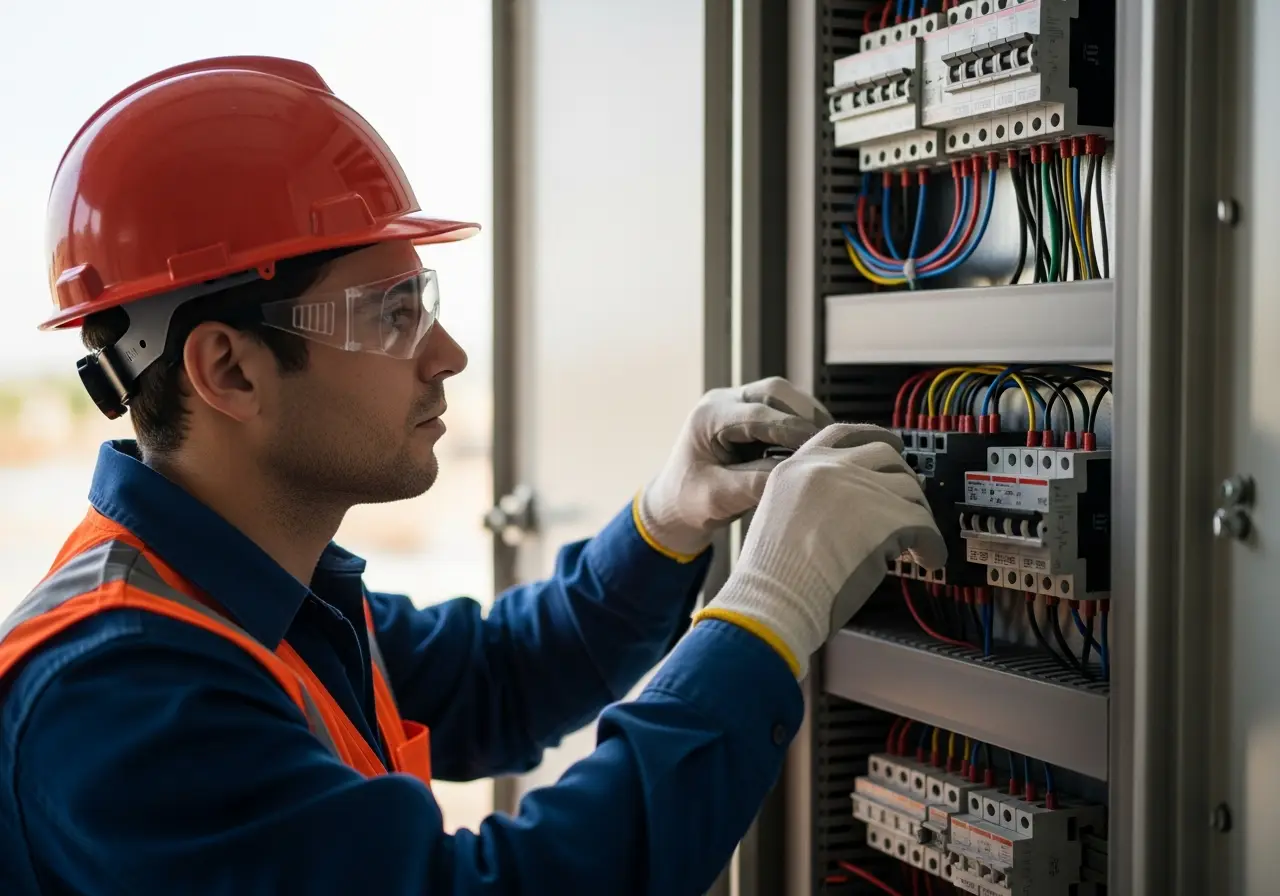
electrical injuries a year in U.S. workplaces
deaths from electrical hazards each year
arc flash temperature (hotter than the sun)
annual cost of electrical incidents
Upload a real job-site photo and OSHA Scan detects visible electrical hazards in seconds — no account needed to run your first scan.
Use the real site or facility name. If you save the scan after signup, it becomes the report name.
Three angles, one deeper scan
Only the wide shot is required — every extra angle gives the AI more places to look.
Required: Set the scene — one wide shot lets the AI sweep the whole area at once
Stand at the entry point and capture corner to corner: floors, ladders, scaffolds, and everyone at work
Drop a job-site photo or walkthrough video
Click to upload, drag & drop, or snap a photo on site. Photos scan free in about 15 seconds — no signup, no card. Video walkthroughs (up to 3 min) run on a free account.
Small habits, sharper scans
Set the scene
Start with context
Fill the frame
2–3 ft for close-ups; keep ladders, cords and workers fully in view.
Capture clearly
Make the frame usable
Light it right
Keep the sun or lights behind you — glare and shadows hide hazards.
Tap to focus
Tap the hazard on screen and hold still one second — blur can't be flagged.
Choose the useful view
Give the AI room to understand
Go landscape
Turn your phone sideways — a wider frame catches more of the scene.
Only upload photos you have permission to use, and avoid images showing personal, customer, or confidential information. Demo photos and results are held privately for up to 48 hours so you can save them to a free account; unclaimed photos are deleted automatically. Results are an AI-assisted preliminary review, not an official OSHA determination.
Here is what an OSHA Scan report looks like for electrical hazards. It is an illustrative example built from this trade's hazards — clearly marked, not live scan data.
Compliance score
57
Lower means more potential hazards found
3 potential hazards found
Arc flash on an energized panel
CriticalPossibly related to General electrical requirements (29 CFR 1910.303)
Observed condition: An electrician troubleshoots a 480V panel without de-energizing it.
Corrective action: Install circuit breakers, GFCIs, and arc-fault protection on all circuits
High confidence
Missing lockout/tagout
HighPossibly related to The control of hazardous energy (lockout/tagout) (29 CFR 1910.147)
Observed condition: A maintenance tech begins work on a conveyor motor believing it is off.
Corrective action: Use finger-safe components and insulated barriers on panels
Medium confidenceNot fully clear from the photo — verify on site.
Contact with overhead lines
MediumPossibly related to Safeguards for personnel protection (29 CFR 1910.335)
Observed condition: A crew raises a metal ladder near an energized overhead service drop.
Corrective action: Provide adequate working clearance around electrical equipment
High confidence
Electrical hazards include contact with live circuits (shock and electrocution), arc flash (severe burns and eye damage), arc blast (pressure waves and flying debris), thermal burns from hot equipment, and fires from electrical faults. What makes them so dangerous is that they are invisible — a worker cannot see energized conductors, so the danger is constantly underestimated until the moment of contact.
Primary OSHA standard: 29 CFR 1910.303
Electrical hazards include contact with live circuits (shock and electrocution), arc flash (severe burns and eye damage), arc blast (pressure waves and flying debris), thermal burns from hot equipment, and fires from electrical faults. What makes them so dangerous is that they are invisible — a worker cannot see energized conductors, so the danger is constantly underestimated until the moment of contact.
The severity of an electrical injury depends on the voltage, the duration of contact, the resistance of the body (wet skin dramatically lowers resistance), and the path the current takes — current across the chest and heart is the most lethal. Alternating current is generally more dangerous than direct current because it can cause muscles to clamp onto the source.
Arc flash deserves special attention. It occurs when current jumps a gap in a circuit, releasing an enormous burst of heat, light, and pressure in a fraction of a second. Workers standing feet away can suffer third-degree burns, hearing loss, and blast injuries even without ever touching a live part.
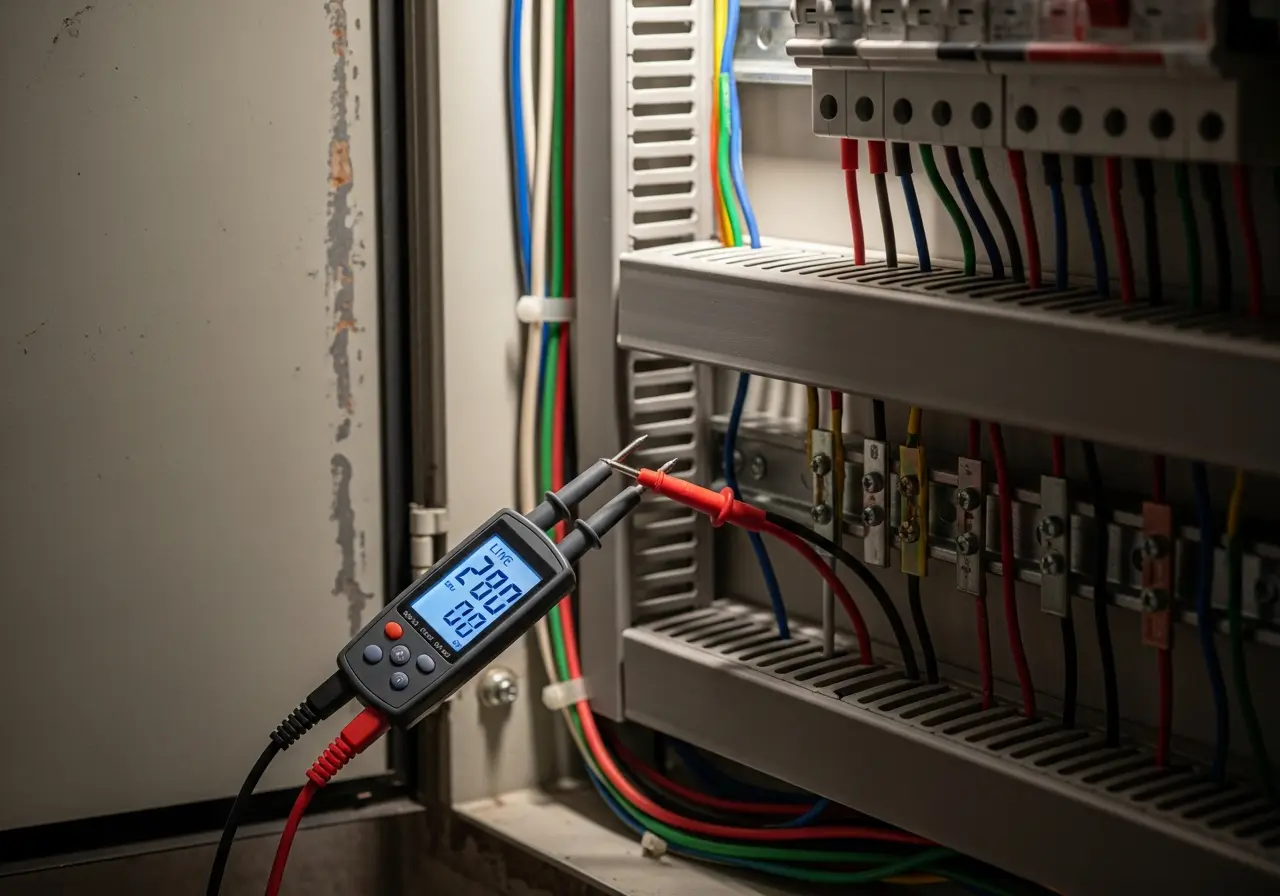
OSHA electrical standards carry some of the largest fines in construction and general industry. Willful lockout/tagout violations regularly exceed six figures per instance.
Survivors of arc flash often face months of burn treatment, nerve damage, and cardiac complications. Many injuries are permanent and career-ending.
A single serious electrical incident drives up EMR and insurance premiums, halts projects during investigation, and can disqualify you from future bids.
General contractors increasingly require documented electrical safety programs. A clean record and detailed reporting win work.
An electrician troubleshoots a 480V panel without de-energizing it. A dropped tool bridges two phases, triggering an arc flash. The worker suffers third-degree burns to the face and hands and is thrown backward by the blast.
A maintenance tech begins work on a conveyor motor believing it is off. A coworker restores power at the panel, re-energizing the circuit and shocking the technician who is in contact with the wiring.
A crew raises a metal ladder near an energized overhead service drop. The ladder contacts the line and the worker holding it is electrocuted before anyone can react.
A worker uses a cord with a cut jacket in a damp area without a GFCI. Moisture reaches the exposed conductor and the worker receives a severe shock while gripping the tool.
A temporary generator is wired without proper grounding. A ground fault energizes the metal frame of nearby equipment, shocking the first worker who touches it.
The federal regulations that govern electrical work.
Requires that all electrical equipment be free from recognized hazards, properly approved and installed, and marked with adequate working clearances around energized parts.
Requires energy sources to be isolated and locked out before servicing. Only the authorized person who applied a lock may remove it, preventing accidental re-energization.
Requires appropriate electrical PPE — insulated gloves, arc-rated clothing, face protection — and insulated tools whenever workers may contact energized parts.
Prohibits work near energized circuits unless they are de-energized or workers are protected, and requires circuits to be identified before work begins.
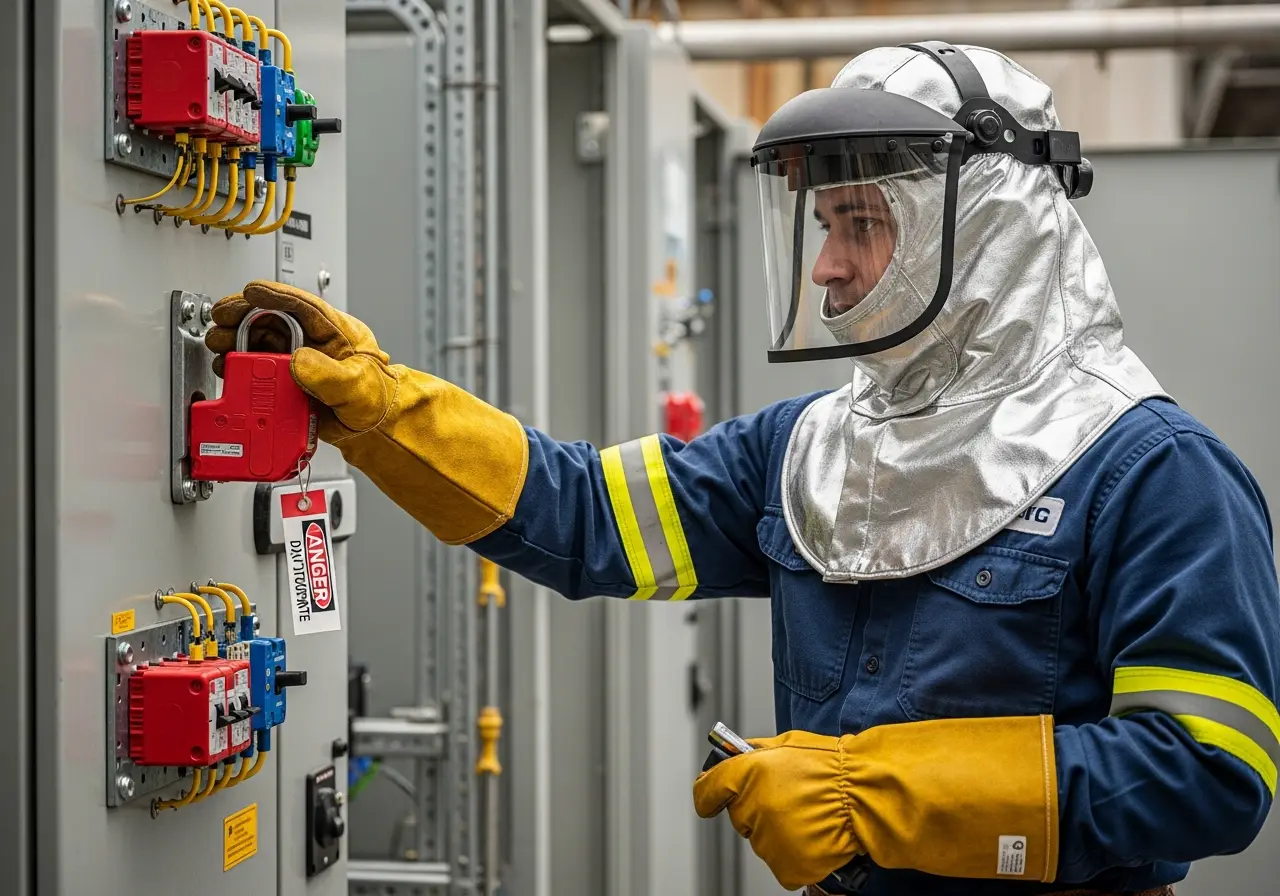
Work top-down through the hierarchy of controls — eliminate the hazard first, then fall back to procedures and PPE.
Design the hazard out wherever possible before relying on procedures or PPE.
Back up engineering controls with rigorous, documented procedures.
PPE protects the worker when a hazard cannot be fully eliminated.
Only workers who are trained, tested, and demonstrably qualified can safely recognize energized hazards and apply lockout/tagout under pressure.
OSHA Scan analyzes photos of electrical work areas to flag common, visible hazards: open or unlocked panels, missing covers and blanks, damaged cords and cables, workers positioned inside arc flash boundaries without arc-rated PPE, improper grounding, and cluttered clearances around energized equipment. Upload a photo and you get an instant report that cites the specific OSHA standard for each finding and generates a corrective-action checklist your crew can work through on site — no waiting for a scheduled audit.
An arc flash is a sudden release of electrical energy through the air when current jumps across a gap between conductors. It produces intense heat (up to 35,000°F), blinding light, and a pressure blast. Workers can suffer severe burns, hearing damage, and blast trauma even from several feet away, which is why arc flash boundaries and arc-rated PPE are critical.
Lockout/tagout is required any time a worker services or maintains equipment where unexpected energization could cause injury. Each authorized worker applies their own lock and tag, and only that worker may remove them. It is one of OSHA's most-cited standards precisely because skipping it is so often fatal.
OSHA expects circuits to be de-energized before work. Energized work is only permitted when de-energizing introduces a greater hazard or is infeasible, and it then requires an energized-work permit, an arc flash risk assessment, and appropriate arc-rated PPE and insulated tools.
It depends on the incident energy at the equipment. At minimum, expect voltage-rated insulated gloves, arc-rated clothing matched to the hazard category, safety glasses, and insulated tools. Inside the arc flash boundary you may also need a face shield or full arc flash hood.
Use a properly rated multimeter or voltage tester, test it on a known live source first, test the circuit you plan to work on, then test the meter again on the known source to confirm it still works. Never rely on a breaker position or a label alone.
Do not touch them — you will become part of the circuit. De-energize the source at the disconnect or breaker if you can reach it safely, call emergency services, and use a non-conductive object only if you must separate them from the source. Begin CPR once they are clear if they are unresponsive.
Serious OSHA violations run into the thousands per instance, and willful or repeat violations can exceed six figures each. Those fines are dwarfed by the indirect costs of an incident — medical care, litigation, higher insurance premiums, and lost contracts.
OSHA requires retraining whenever a worker's job assignment changes, when new equipment or procedures introduce hazards the training did not cover, or when an audit reveals the worker is not following safe practices. NFPA 70E, the consensus standard OSHA relies on, calls for requalification at intervals not to exceed three years, but most electrical contractors run annual refreshers on lockout/tagout, arc flash awareness, and voltage verification because these skills are perishable and the consequences of a lapse are severe. Every training event should be documented with the date, topics, trainer, and the worker's demonstrated competency, so you can prove qualification during an inspection or after an incident. New hires and apprentices should never perform energized or lockout tasks alone until a qualified person has verified their competency in the field.
Extension cords, power tools, and portable GFCIs should be visually inspected before each use and removed from service the moment damage appears. Panels, disconnects, and permanent wiring should be inspected on a documented schedule — monthly for active job sites and at least quarterly for fixed installations — with infrared and torque checks performed by a qualified person during arc flash and maintenance surveys. The arc flash risk assessment itself must be reviewed at least every five years or whenever the electrical system changes. Keeping a written inspection log turns these checks into evidence of a functioning safety program, which matters both for OSHA compliance and for defending against liability after an incident. Photo-based tools such as OSHA Scan make it practical to capture and timestamp these inspections consistently.
Stop work immediately if a circuit cannot be verified de-energized, if the correct arc-rated PPE or insulated tools are unavailable, if a panel shows signs of burning, arcing, or moisture intrusion, or if a lockout/tagout device is missing or has been tampered with. Work should also stop when weather, water, or fatigue raises the risk of contact, or when an unqualified worker is found inside an arc flash boundary. Every worker has the right and the responsibility to stop a job that feels unsafe without fear of reprisal. The cost of a delayed task is trivial compared with an arc flash burn or an electrocution, and a documented stop-work culture is one of the clearest signals to general contractors and insurers that a company manages electrical risk seriously.
Run through this before, during, and after every job.
15 more checklist points are waiting. Register with your email to reveal every item and download the complete OSHA compliance checklist as a printable PDF. Free, and it only takes a few seconds.
Already have an account? Sign in
A commercial electrical contractor was upgrading service in an occupied office building. The lead electrician was highly experienced and, under schedule pressure, chose to troubleshoot a 480V panel while it remained energized.
While probing the panel, a tool slipped and bridged two phases. The resulting arc flash caused second- and third-degree burns to the electrician's hands and face and started a small fire in the panel. Work on the entire floor stopped for the OSHA investigation.
The contractor rebuilt its electrical safety program around de-energized work as the default, introduced an energized-work permit for the rare exceptions, completed an arc flash study, and issued arc-rated PPE. It adopted OSHA Scan to photo-audit every panel before work and confirm covers and PPE were in place.
In the three years that followed, the contractor recorded zero electrical burn injuries. Insurance premiums fell as the EMR improved, and the documented safety program helped win two large institutional contracts that required detailed compliance records.
Review findings, organize chemical records, and open relevant official resources for your saved locations and work context.
You make the final call. Review, edit, or dismiss any AI-flagged hazard before finalizing your inspection report.
Scan chemical labels or upload legacy MSDS sheets to create structured drafts that support your team's search for and review of current official manufacturer Safety Data Sheets.
Open official OSHA and State Plan guidance, required posters, emergency contacts, and relevant publications for saved locations and work requirements.
OSHA Scan reads a single photo. That makes it fast and easy for anyone on site — but it also means it has real limits. Here's an honest look at both.
Reviewed by OSHA Scan Editorial
Last updated August 29, 2026
This content is produced by the OSHA Scan Editorial team and reviewed with AI assistance. It is general safety information, not legal or compliance advice. OSHA Scan is an independent tool and is not affiliated with, endorsed by, or certified by OSHA or the U.S. Department of Labor.
Upload a photo of your electrical job site and get an instant, OSHA-cited hazard report.
Start your free trial