
1
Set the scene
Start with context
Fill the frame
2–3 ft for close-ups; keep ladders, cords and workers fully in view.
Refrigerant, electrical, confined space, and rooftop risks
HVAC technicians juggle a uniquely wide hazard profile — toxic refrigerant, live electrical circuits, cramped attics, and rooftop edges — often on the same job. OSHA Scan analyzes photos of HVAC job sites to catch these risks instantly and keep your crew both safe and OSHA compliant.
Free · No account needed to scan · Results in seconds
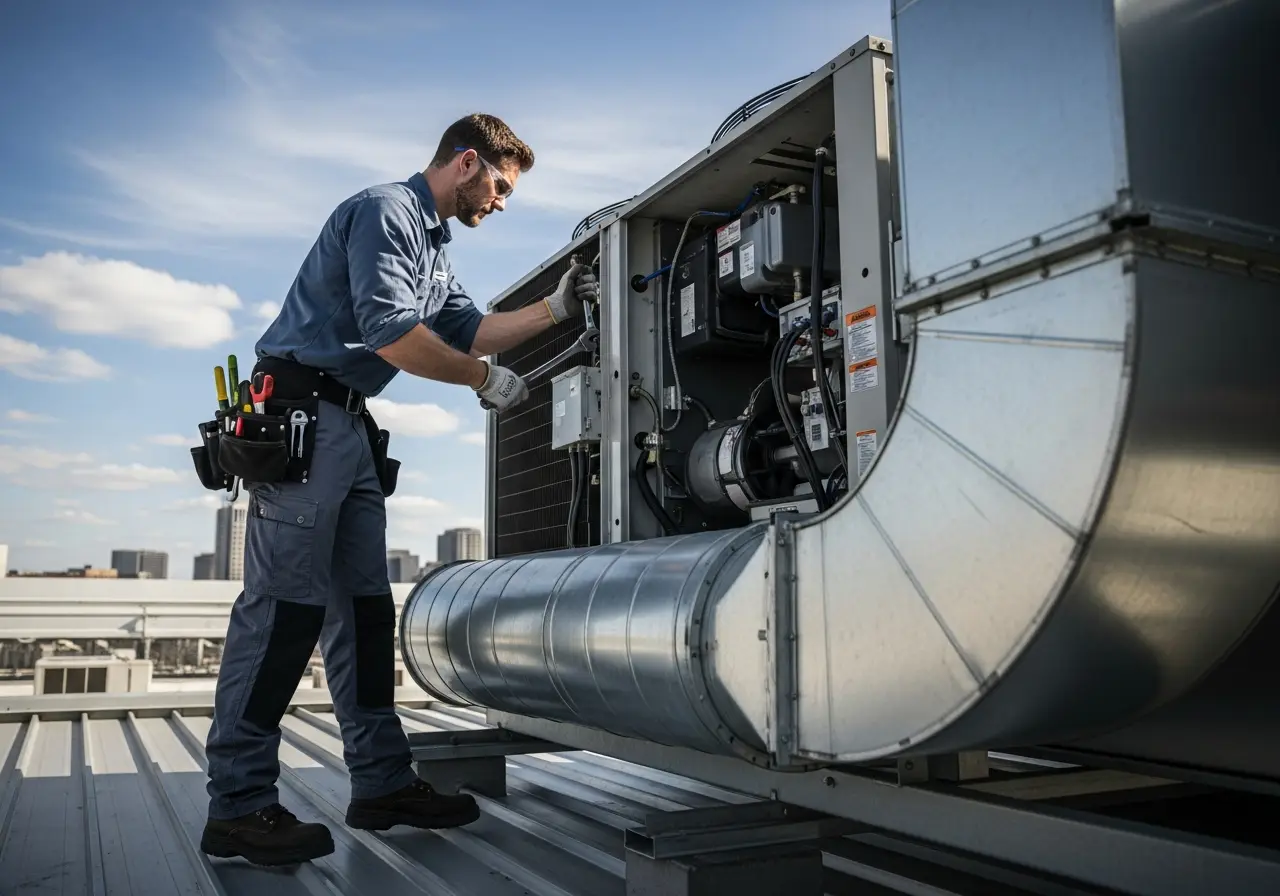
HVAC workers injured each year in the U.S.
refrigerant-exposure ER visits annually
average cost of an HVAC-related incident
of HVAC deaths involve confined space entry
Upload a real job-site photo and OSHA Scan detects visible hvac hazards in seconds — no account needed to run your first scan.
Use the real site or facility name. If you save the scan after signup, it becomes the report name.
Three angles, one deeper scan
Only the wide shot is required — every extra angle gives the AI more places to look.
Required: Set the scene — one wide shot lets the AI sweep the whole area at once
Stand at the entry point and capture corner to corner: floors, ladders, scaffolds, and everyone at work
Drop a job-site photo or walkthrough video
Click to upload, drag & drop, or snap a photo on site. Photos scan free in about 15 seconds — no signup, no card. Video walkthroughs (up to 3 min) run on a free account.
Small habits, sharper scans
Set the scene
Start with context
Fill the frame
2–3 ft for close-ups; keep ladders, cords and workers fully in view.
Capture clearly
Make the frame usable
Light it right
Keep the sun or lights behind you — glare and shadows hide hazards.
Tap to focus
Tap the hazard on screen and hold still one second — blur can't be flagged.
Choose the useful view
Give the AI room to understand
Go landscape
Turn your phone sideways — a wider frame catches more of the scene.
Only upload photos you have permission to use, and avoid images showing personal, customer, or confidential information. Demo photos and results are held privately for up to 48 hours so you can save them to a free account; unclaimed photos are deleted automatically. Results are an AI-assisted preliminary review, not an official OSHA determination.
Here is what an OSHA Scan report looks like for hvac hazards. It is an illustrative example built from this trade's hazards — clearly marked, not live scan data.
Compliance score
52
Lower means more potential hazards found
3 potential hazards found
Refrigerant exposure
CriticalPossibly related to Lockout/tagout (29 CFR 1910.147)
Observed condition: A technician repairs a leaking line without PPE or ventilation.
Corrective action: Use refrigerant recovery equipment to capture and recycle refrigerant
High confidence
Electrical shock on a live unit
HighPossibly related to Hazard communication (29 CFR 1910.1200)
Observed condition: A technician services an AC unit without de-energizing the circuit.
Corrective action: De-energize units and verify with a meter before service
Medium confidenceNot fully clear from the photo — verify on site.
Attic asphyxiation
MediumPossibly related to Fall protection (29 CFR 1926.501)
Observed condition: A technician enters an attic to inspect ductwork without testing the air.
Corrective action: Provide forced-air ventilation for attic and mechanical-room work
High confidence
HVAC technicians face a complex mix of hazards that few other trades combine in a single day. Refrigerant hazards include frostbite from liquid contact, asphyxiation as vapor displaces oxygen, and cardiac sensitization at high concentrations. Electrical hazards include contact with live circuits, arc flash, and electrocution while servicing energized units.
Primary OSHA standard: 29 CFR 1910.147
HVAC technicians face a complex mix of hazards that few other trades combine in a single day. Refrigerant hazards include frostbite from liquid contact, asphyxiation as vapor displaces oxygen, and cardiac sensitization at high concentrations. Electrical hazards include contact with live circuits, arc flash, and electrocution while servicing energized units.
The work environment adds its own dangers. Attics, crawl spaces, and mechanical rooms are confined spaces with potential atmospheric hazards, while rooftop units expose workers to falls from height, heat stress, and weather. Pressurized refrigerant lines can rupture, and repetitive lifting of heavy equipment causes ergonomic injuries over time.
What makes HVAC uniquely challenging is that these hazards are layered: a technician might de-energize a rooftop unit (electrical), recover its refrigerant (chemical), all while exposed to a fall hazard and summer heat. Each control has to account for the others.
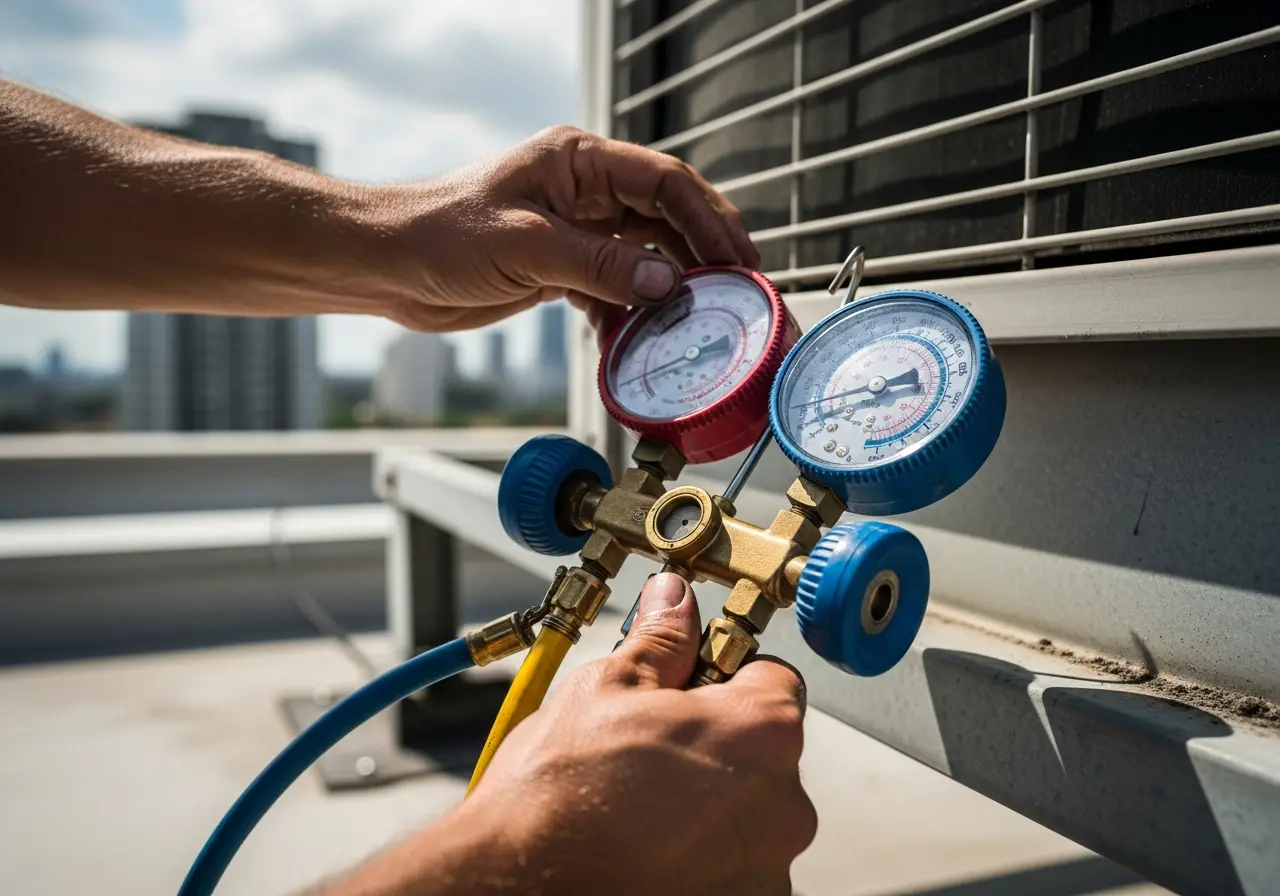
HVAC work is governed by both OSHA safety standards and EPA refrigerant rules. Violations bring fines and, for refrigerant venting, potential criminal liability.
Refrigerant exposure causes immediate frostbite and arrhythmia and long-term respiratory and neurological effects. Falls and shocks are frequently fatal.
Contractors with poor safety records face higher premiums, trouble hiring skilled techs, and lost service contracts with commercial clients.
Facility managers prefer HVAC contractors with clean records and documented safety programs when awarding recurring maintenance work.
A technician repairs a leaking line without PPE or ventilation. Released refrigerant causes dizziness, irregular heartbeat, and frostbite; the technician collapses and needs emergency care.
A technician services an AC unit without de-energizing the circuit. Contact with a live conductor causes electrocution, severe burns, and cardiac arrhythmia.
A technician enters an attic to inspect ductwork without testing the air. Low oxygen from poor ventilation causes loss of consciousness and requires a rescue.
A technician services a rooftop unit near an unguarded edge without fall protection, loses footing on the sloped surface, and falls to the ground below.
A technician works on an over-pressurized refrigerant line. The line ruptures, striking the worker with debris and releasing pressurized, toxic vapor.
The federal regulations that govern hvac work.
Requires electrical, refrigerant, and gas energy sources to be isolated and locked out before HVAC service or repair begins.
Requires safety data sheets, labeling, and training for refrigerants and other chemicals every technician may be exposed to.
Requires fall protection for rooftop and elevated HVAC work at six feet or more, including guardrails, nets, or personal fall arrest systems.
Applies when technicians enter attics, crawl spaces, or mechanical rooms that meet the definition of a confined space.
The EPA requires technicians who handle refrigerants to be certified and prohibits knowingly venting refrigerant to the atmosphere.
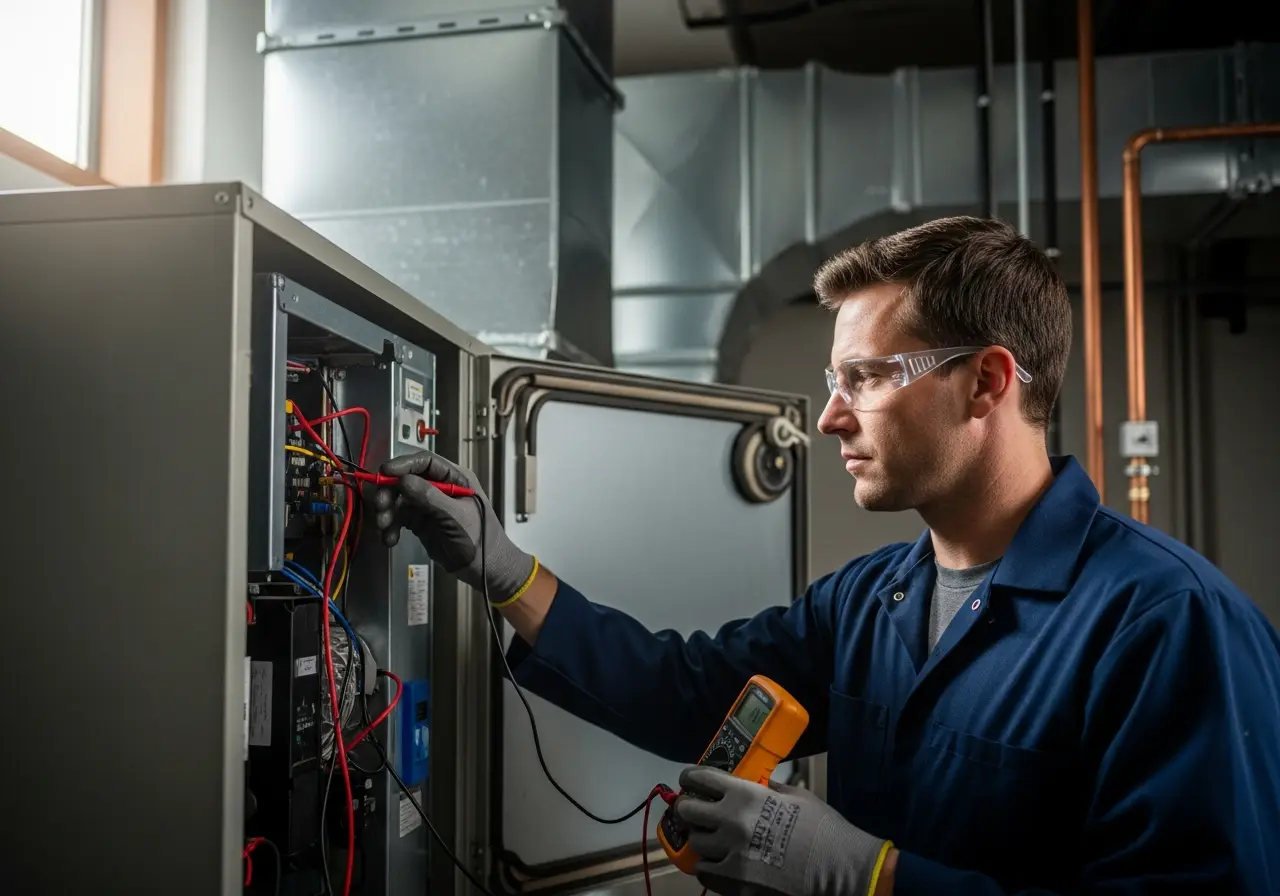
Work top-down through the hierarchy of controls — eliminate the hazard first, then fall back to procedures and PPE.
Remove or contain the hazard before relying on procedure or PPE.
Standardize how techs approach layered hazards.
Protect against the residual chemical, electrical, and fall hazards.
Because HVAC techs face electrical, chemical, confined-space, and fall hazards in a single visit, only cross-trained and verified technicians can safely sequence the controls each task demands.
OSHA Scan analyzes photos of HVAC job sites to identify improper refrigerant handling, open and energized electrical panels, confined-space entries without ventilation, and rooftop work near unprotected edges. Upload a photo of the unit or work area and OSHA Scan returns an instant report with the specific OSHA or EPA reference for each hazard plus a corrective-action checklist — so a supervisor can vet a rooftop or attic job remotely before the tech is exposed.
Yes. Under EPA Section 608, any technician who maintains, services, repairs, or disposes of equipment that could release refrigerant must be certified. Certification requires passing an exam covering safe handling, recovery, and environmental protection, and knowingly venting refrigerant is illegal.
Move to fresh air immediately, remove contaminated clothing, and rinse affected skin with water for at least 15 minutes to treat frostbite. Seek medical attention, especially if you feel dizzy or notice an irregular heartbeat, and report the incident to your employer.
OSHA requires fall protection for construction work at six feet or more and for general-industry elevated work at four feet. Rooftop unit service almost always crosses these thresholds, so plan for guardrails, a warning-line system, or a personal fall arrest system before going up.
They can be. If the space is large enough to enter, has limited entry or exit, and is not designed for continuous occupancy, it is a confined space — and if it has poor ventilation or atmospheric hazards it may be permit-required, demanding testing and an attendant.
Symptoms include dizziness, headache, nausea, irregular heartbeat, frostbite on exposed skin, and, at high concentrations, loss of consciousness. Refrigerant displaces oxygen, so a space can become dangerous without any obvious smell — get to fresh air and seek care immediately.
Inspect lines regularly for corrosion and damage, replace worn components before they fail, use proper installation and flaring techniques, keep system pressure within spec, and monitor with gauges. Recovery equipment should always be on hand so refrigerant is captured rather than vented.
Inspect harnesses, lanyards, and anchors before every use and immediately after any fall or impact. Have equipment formally inspected by a competent person at least annually, and remove any component from service the moment it shows wear, cuts, or deformation.
The EPA prohibits knowingly venting most refrigerants to the atmosphere under Section 608 of the Clean Air Act, and violations can bring civil penalties of tens of thousands of dollars per day per violation, with the EPA authorized to pay awards to those who report violations. Serious or knowing violations can also carry criminal liability. On top of the EPA exposure, OSHA can cite the same job for hazard-communication, respiratory-protection, or lockout failures, stacking penalties. Beyond fines, a venting violation signals a broken program to facility managers and can cost a contractor its commercial maintenance agreements. The practical takeaway is simple: always recover refrigerant with proper equipment, keep recovery and disposal records, and maintain current EPA certification for every technician. Treating refrigerant as both an environmental and a safety hazard protects workers, the business, and the license to operate.
EPA Section 608 certification does not expire, but the safety training around it should be refreshed regularly because HVAC hazards and equipment change. OSHA requires retraining whenever job duties change, new equipment or refrigerants are introduced, or an evaluation shows a worker is not following safe practices. Most contractors run annual refreshers on lockout/tagout, fall protection, hazard communication, and confined-space entry, and require fall-protection users to be retrained if they show gaps in competency. New technicians and apprentices should be paired with a qualified worker and never perform energized service, rooftop work, or attic entry alone until their competency has been verified in the field. Document every session with the date, topics, trainer, and the worker's demonstrated proficiency so you can prove qualification during an EPA or OSHA inspection and after any incident.
Stop work immediately if a unit cannot be verified de-energized and locked out, if the required PPE or fall protection is missing or damaged, if an attic or mechanical room has not been tested and could have a hazardous atmosphere, or if a rooftop edge is unguarded and no personal fall arrest system is available. Work should also stop when a refrigerant leak is suspected in an unventilated space, when weather or heat makes a rooftop unsafe, or when a pressurized line shows signs of over-pressurization or damage. Every technician has the authority to halt a job that feels unsafe without fear of reprisal, and supervisors should reinforce that a delayed service call is far cheaper than an electrocution, a fall, or a refrigerant exposure. A documented stop-work culture is also one of the clearest signals of program maturity to commercial clients.
Run through this before, during, and after every job.
15 more checklist points are waiting. Register with your email to reveal every item and download the complete OSHA compliance checklist as a printable PDF. Free, and it only takes a few seconds.
Already have an account? Sign in
A commercial HVAC contractor sent an experienced technician to locate and repair a refrigerant leak in a rooftop system. The technician had worked in the trade for 15 years and had been exposed to refrigerant many times without incident, so he no longer treated it as a serious hazard.
He began work without PPE or ventilation. The refrigerant line ruptured, releasing a large volume of vapor. He inhaled it and immediately suffered dizziness, an irregular heartbeat, and difficulty breathing before collapsing. He was hospitalized for two days.
The contractor built a comprehensive refrigerant safety program: required PPE for all refrigerant work, purchased recovery equipment, put every technician through EPA certification, and adopted OSHA Scan to photo-inspect HVAC work areas for missing ventilation, PPE, and fall protection.
The company recorded no refrigerant-related incidents over the following three years, cut insurance premiums by roughly 15%, and won more bids on the strength of its safety record. The incident became a lasting reminder that familiarity is not the same as safety.
Review findings, organize chemical records, and open relevant official resources for your saved locations and work context.
You make the final call. Review, edit, or dismiss any AI-flagged hazard before finalizing your inspection report.
Scan chemical labels or upload legacy MSDS sheets to create structured drafts that support your team's search for and review of current official manufacturer Safety Data Sheets.
Open official OSHA and State Plan guidance, required posters, emergency contacts, and relevant publications for saved locations and work requirements.
OSHA Scan reads a single photo. That makes it fast and easy for anyone on site — but it also means it has real limits. Here's an honest look at both.
Reviewed by OSHA Scan Editorial
Last updated August 29, 2026
This content is produced by the OSHA Scan Editorial team and reviewed with AI assistance. It is general safety information, not legal or compliance advice. OSHA Scan is an independent tool and is not affiliated with, endorsed by, or certified by OSHA or the U.S. Department of Labor.
Upload a photo of your hvac job site and get an instant, OSHA-cited hazard report.
Start your free trial