
1
Set the scene
Start with context
Fill the frame
2–3 ft for close-ups; keep ladders, cords and workers fully in view.
Catch the live contact hazard before it reaches your crew
Electrical shock doesn't need high voltage to kill — a current well below what powers a light bulb can stop a heart or freeze muscles so a worker can't let go. Exposed conductors, damaged cords, missing GFCI protection, and contact with live parts injure and kill workers every year. OSHA Scan analyzes job-site photos to flag exposed energized parts, missing ground-fault protection, and shock hazards before anyone makes contact.
Free · No account needed to scan · Results in seconds
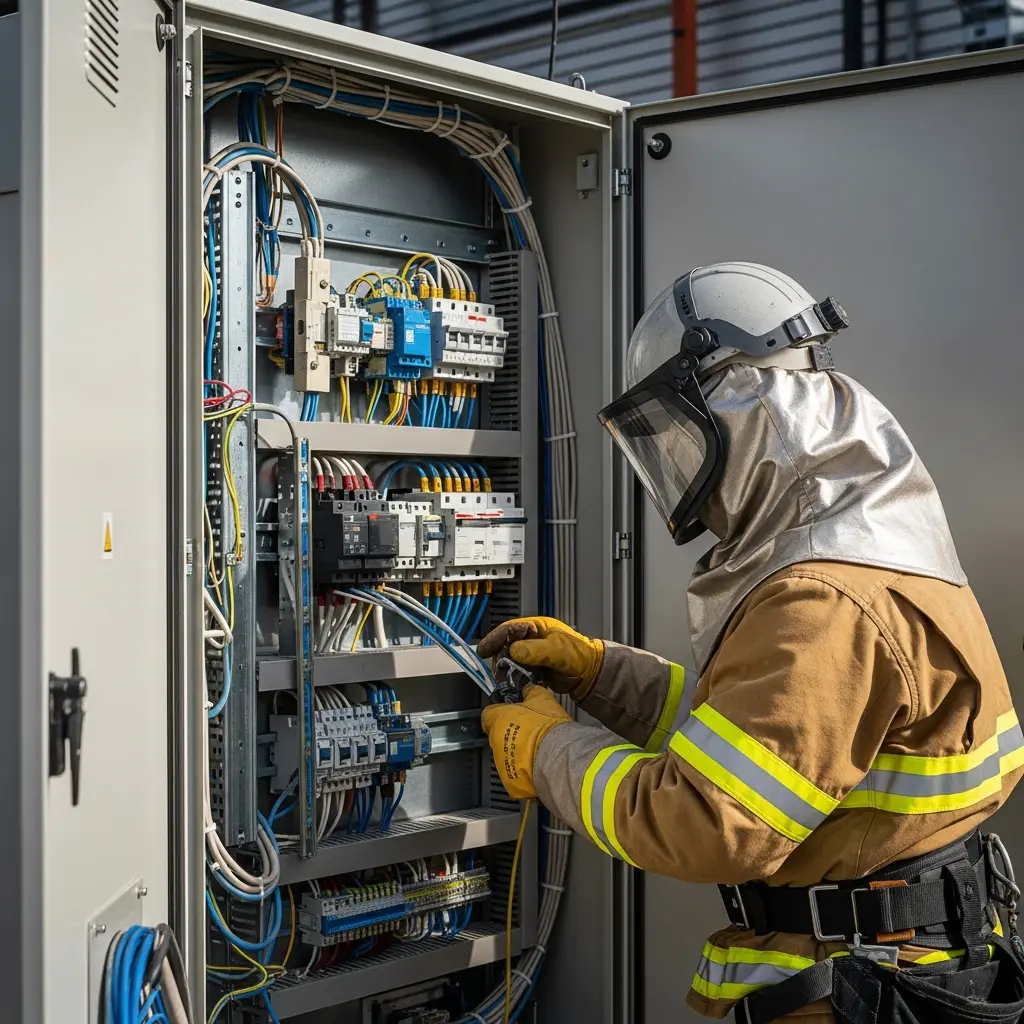
May relate to 29 CFR 1910.333
Current that can cause cardiac arrest
Electrocution among construction's 'Fatal Four'
Electrical injuries treated in the US each year
Typical time to get scan results
Electrical shock exposure is any situation where a worker can complete a circuit through their body — by contacting an energized conductor, a faulted tool or appliance, or an energized surface while grounded. The severity depends on current, path through the body, and duration, and even low-voltage systems can be lethal under the right conditions.
On site the hazard shows up as damaged extension cords with exposed copper, missing ground pins, receptacles without GFCI protection in wet or outdoor areas, open junction boxes and panels, temporary wiring run through doorways or standing water, and tools with cracked housings. Contact with overhead or buried lines and working on assumed-dead circuits that are still live are frequent killers.
The trap is that electricity is invisible and gives no warning — a cord or panel looks the same whether it is safe or lethal. A worker can grab an energized part and be unable to release it as muscles clamp down. That is why a photo-based check that flags exposed conductors and missing GFCI before work begins prevents so many electrocutions.
Here is what an OSHA Scan report looks like for electrical shock exposure. It is an illustrative example built from this scenario's hazards — clearly marked, not live scan data.
Compliance score
46
Lower means more potential hazards found
3 potential hazards found
Electrical Shock Exposure
CriticalPossibly related to Selection and use of work practices (electrical) (29 CFR 1910.333)
Observed condition: Electrical shock exposure is any situation where a worker can complete a circuit through their body — by contacting an energized conductor, a faulted tool or appliance, or an ener…
Corrective action: Provide GFCI protection on all temporary power and in wet or outdoor areas
High confidence
Electrical Shock Exposure: Wiring design and protection (construction)
HighPossibly related to Wiring design and protection (construction) (29 CFR 1926.404)
Observed condition: Requires ground-fault protection (GFCI) or an assured grounding program on temporary construction power and proper grounding of equipment.
Corrective action: Use an assured equipment grounding conductor program where GFCI is not used
Medium confidenceNot fully clear from the photo — verify on site.
Electrical Shock Exposure: Wiring design and protection (general industry)
MediumPossibly related to Wiring design and protection (general industry) (29 CFR 1910.304)
Observed condition: Requires grounding, ground-fault protection, and proper wiring methods to protect workers from shock hazards.
Corrective action: Enclose all live parts in boxes, panels, and covers
High confidence
Electrical shock causes cardiac arrest, severe burns, muscle and nerve damage, and falls triggered by the shock. Currents that seem small can be fatal within seconds.
Electrical safety and GFCI violations are commonly cited. A serious violation runs over $16,000, willful violations exceed $160,000, and electrocution is one of OSHA's Fatal Four with intensive enforcement.
A shock incident stops work, triggers investigation, and often reveals systemic wiring problems that shut down areas until corrected. Downtime and claims costs mount quickly.
Construction, maintenance, electrical, and outdoor trades constantly use temporary power, cords, and tools in wet and dirty conditions where damaged equipment and missing GFCI create shock risk.
OSHA Scan uses an AI vision model to spot shock hazards. Upload a photo of your work area and it identifies exposed conductors, damaged cords, open panels and boxes, and missing GFCI protection in wet or outdoor settings, flags each hazard with a severity rating, and cites the OSHA standard it may relate to — before anyone makes contact.
Analyze your first photo freeUpload a real job-site photo and OSHA Scan detects visible hazards in seconds — no account needed to run your first scan.
Use the real site or facility name. If you save the scan after signup, it becomes the report name.
Three angles, one deeper scan
Only the wide shot is required — every extra angle gives the AI more places to look.
Required: Set the scene — one wide shot lets the AI sweep the whole area at once
Stand at the entry point and capture corner to corner: floors, ladders, scaffolds, and everyone at work
Drop a job-site photo or walkthrough video
Click to upload, drag & drop, or snap a photo on site. Photos scan free in about 15 seconds — no signup, no card. Video walkthroughs (up to 3 min) run on a free account.
Small habits, sharper scans
Set the scene
Start with context
Fill the frame
2–3 ft for close-ups; keep ladders, cords and workers fully in view.
Capture clearly
Make the frame usable
Light it right
Keep the sun or lights behind you — glare and shadows hide hazards.
Tap to focus
Tap the hazard on screen and hold still one second — blur can't be flagged.
Choose the useful view
Give the AI room to understand
Go landscape
Turn your phone sideways — a wider frame catches more of the scene.
Only upload photos you have permission to use, and avoid images showing personal, customer, or confidential information. Demo photos and results are held privately for up to 48 hours so you can save them to a free account; unclaimed photos are deleted automatically. Results are an AI-assisted preliminary review, not an official OSHA determination.
New: Video walkthrough scans
Record up to 3 minutes of your site — the AI extracts frames and flags every hazard with exact timestamps. Free account required.
Get the best results
Wide shot first
Stand at the entrance and photograph the entire work area so AI sees the full context
Hazard areas
Photograph elevated surfaces, equipment, electrical panels, and anywhere workers are active
Close-ups last
Move in close on anything damaged, missing, or that looks risky — the AI catches more detail
A carpenter plugged a circular saw into an extension cord whose outer jacket was split, exposing the conductors near the plug. The cord ran across a slab that had been hosed down that morning, and the receptacle had no GFCI protection.
As he adjusted his grip, his hand contacted the exposed conductors while standing in the damp area. Current passed through his body to ground; without GFCI protection nothing interrupted the fault, and he suffered a severe shock and fell, breaking his wrist.
A single photo of the setup run through OSHA Scan would have flagged the damaged cord and the missing GFCI in a wet location as critical shock hazards, cited 29 CFR 1910.333, and prompted the crew to remove the damaged cord and use GFCI-protected temporary power before energizing the saw.
Damaged cords and missing GFCI in wet areas are a lethal combination. Inspect every cord and use GFCI protection wherever moisture is present — a fast photo scan confirms the setup is safe before work starts.
Layered controls, from most to least effective.
Interrupt faults and keep energized parts out of reach.
Enforce inspection and verification before contact.
Protection when working on or near electrical hazards.
The federal standards this hazard may relate to.
Requires de-energizing and verifying circuits before work and safe practices to protect workers from shock and electrocution when contact with live parts is possible.
Up to $16,550 per serious violation; $165,514 for willful or repeat
Requires ground-fault protection (GFCI) or an assured grounding program on temporary construction power and proper grounding of equipment.
Up to $16,550 per serious violation
Requires grounding, ground-fault protection, and proper wiring methods to protect workers from shock hazards.
Up to $16,550 per serious violation
If an incident occurs, act fast and in order.
Workers will understand how electrical shock injures and kills, recognize exposed conductors and missing protection, and verify de-energization and GFCI use before electrical work.
Train before electrical or temporary-power work, refresh annually, and reinforce with a toolbox talk each shift using real photos of safe and hazardous setups.
Run these checks to stay ahead of citations.
10 more checklist points are waiting. Register with your email to reveal every item and download the complete OSHA compliance checklist as a printable PDF. Free, and it only takes a few seconds.
Already have an account? Sign in
Very little. Around 10 mA can cause a worker to lose muscle control and be unable to let go, and roughly 50 mA through the chest can cause cardiac arrest. Even low-voltage systems can deliver lethal current.
A ground-fault circuit interrupter senses current leaking to ground and cuts power in milliseconds. OSHA requires GFCI protection on temporary construction power and in wet or outdoor locations (29 CFR 1926.404).
Circuits are often mislabeled, back-fed, or energized by another source. OSHA requires testing to verify a circuit is de-energized and applying lockout/tagout before working on it — never assume it is dead.
A split jacket or missing ground pin can energize the cord's exposed conductors or leave a faulted tool ungrounded, so a worker contacting it completes a circuit to ground. Damaged cords must be removed from service.
Water lowers skin resistance and provides a conductive path to ground, so a shock that might be survivable when dry can become lethal. GFCI protection is essential wherever moisture is present.
At currents around 10-20 mA, involuntary muscle contraction can prevent a worker from releasing an energized part, prolonging contact and greatly increasing the chance of a fatal shock.
A serious violation can cost over $16,000, and willful or repeat violations can exceed $165,000 per instance. Electrocution is part of OSHA's Fatal Four and draws intensive enforcement.
OSHA Scan flags shock hazards. It identifies exposed conductors, damaged cords, and missing GFCI, returning the location and OSHA citation.
Upload a photo of your work area and get instant, specific feedback on exposed conductors and missing GFCI.
Get startedPut our expert electrical-safety checklist to work on your next job to stay ahead of shock hazards and citations.
Get startedSee how OSHA Scan fits your operation and get recommendations for your temporary power and tools.
Get startedSee how other crews use OSHA Scan to catch shock hazards before anyone makes contact.
Get startedReview findings, organize chemical records, and open relevant official resources for your saved locations and work context.
You make the final call. Review, edit, or dismiss any AI-flagged hazard before finalizing your inspection report.
Scan chemical labels or upload legacy MSDS sheets to create structured drafts that support your team's search for and review of current official manufacturer Safety Data Sheets.
Open official OSHA and State Plan guidance, required posters, emergency contacts, and relevant publications for saved locations and work requirements.
OSHA Scan reads a single photo. That makes it fast and easy for anyone on site — but it also means it has real limits. Here's an honest look at both.
Reviewed by OSHA Scan Editorial
Last updated August 29, 2026
This content is produced by the OSHA Scan Editorial team and reviewed with AI assistance. It is general safety information, not legal or compliance advice. OSHA Scan is an independent tool and is not affiliated with, endorsed by, or certified by OSHA or the U.S. Department of Labor.
Start with 5 included AI site scans plus a one-time 10-scan signup bonus — no credit card. Build JHA-ready reports and catch changing conditions sooner.
Start your free trial