
1
Set the scene
Start with context
Fill the frame
2–3 ft for close-ups; keep ladders, cords and workers fully in view.
Stop struck-by incidents before something drops
Falling objects cause more than 7,600 serious struck-by injuries every year, and an object dropped from just 20 feet reaches nearly 45 mph before it lands. A single wrench, brick, or unsecured pallet can fracture a skull straight through a hard hat. OSHA Scan analyzes job-site photos to flag unsecured loads, improper stacking, missing toe boards, and overhead work zones before a worker walks underneath.
Free · No account needed to scan · Results in seconds
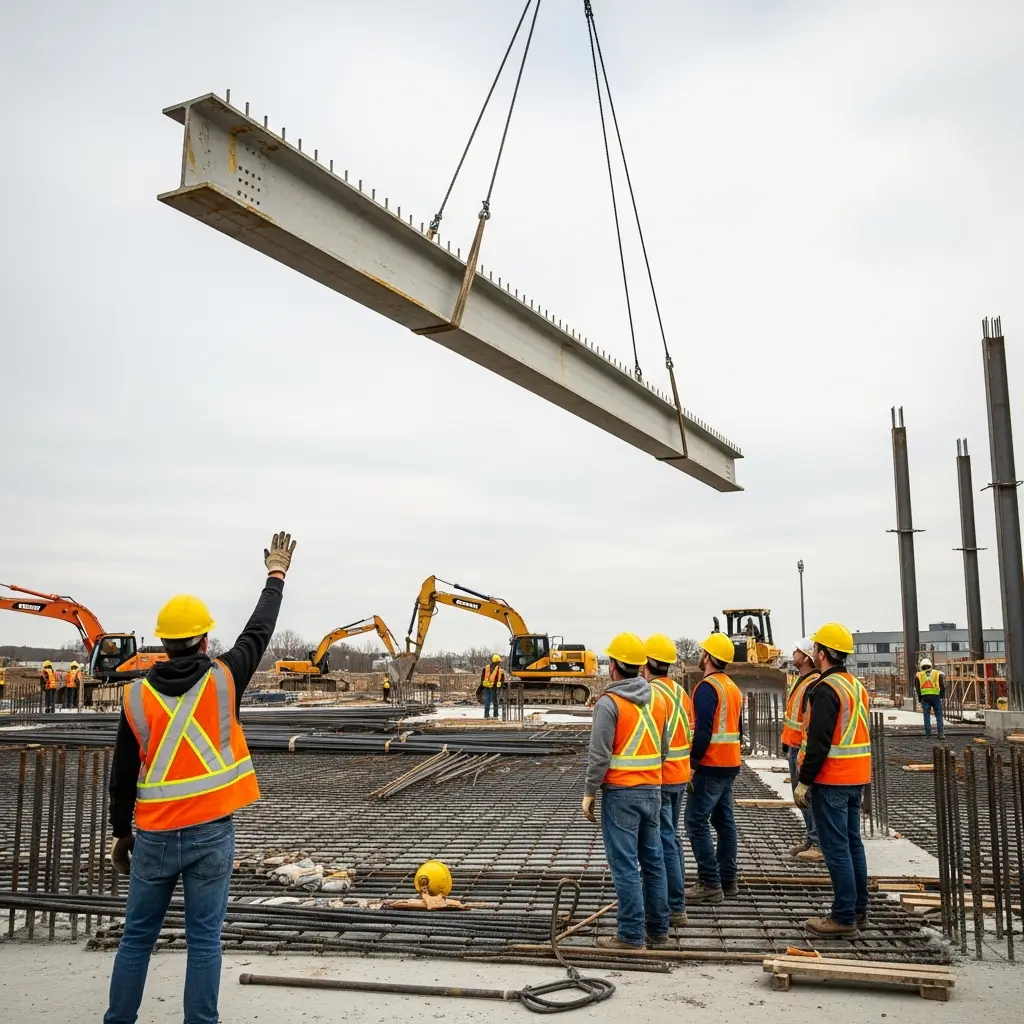
May relate to 29 CFR 1926.501
Struck-by injuries from falling objects yearly
Impact speed of a 20-ft drop
Of falling-object incidents occur in construction
Typical time to get scan results
A falling-object hazard exists any time tools, materials, or debris are stored, staged, or handled above where people work or walk without a barrier to catch them. On scaffolds it shows up as loose hand tools and material stacked past the platform edge with no toe board; in warehouses it appears as pallets and cartons overhanging rack beams 20 or more feet overhead; on cranes and hoists it is an unsecured load swinging over an active work zone.
In the field these hazards form quietly. A worker sets a drill on a beam 'for a second,' a bundle of pipe is stacked above the rack rail to save space, or a demolition crew lets debris accumulate near an open edge. Nothing looks wrong until vibration, a bump, or a gust sends the object over. Because the danger is directly overhead, the person at risk almost never sees it coming.
The force is what makes falling objects so deadly. A one-pound object dropped from 100 feet strikes with roughly 1,000 pounds of force — enough to penetrate a hard hat and cause fatal head and spinal injuries. Multiple items can cascade, turning one dropped tool into a shower of debris. That silent, invisible risk is exactly why photo-based overhead scanning matters.
Here is what an OSHA Scan report looks like for falling objects from height. It is an illustrative example built from this scenario's hazards — clearly marked, not live scan data.
Compliance score
57
Lower means more potential hazards found
3 potential hazards found
Falling Objects From Height
CriticalPossibly related to Duty to have fall protection and falling object protection (29 CFR 1926.501)
Observed condition: A falling-object hazard exists any time tools, materials, or debris are stored, staged, or handled above where people work or walk without a barrier to catch them.
Corrective action: Install toe boards at least 3.5 inches high on all scaffolds and elevated platforms
High confidence
Falling Objects From Height: Falling object protection criteria
HighPossibly related to Falling object protection criteria (29 CFR 1926.502)
Observed condition: Specifies performance criteria for toe boards, paneling, and canopies used to protect workers from falling objects, including heights, strength, and materials handling limits.
Corrective action: Rig debris netting or catch platforms below overhead work areas
Medium confidenceNot fully clear from the photo — verify on site.
Falling Objects From Height: Head protection
MediumPossibly related to Head protection (29 CFR 1926.100)
Observed condition: Requires protective helmets for workers in areas where there is a possible danger of head injury from impact, falling or flying objects, or electrical shock.
Corrective action: Add rack-back and edge netting to high-bay storage racking
High confidence
Being struck by a falling object causes skull fractures, traumatic brain injury, spinal damage, and crushing wounds. Head strikes are frequently fatal, and survivors often face permanent disability from a single impact.
Falling-object citations under OSHA's fall-protection standards run up to $16,550 per serious violation and far more for willful or repeat findings, while struck-by lawsuits routinely settle from $500,000 to well over $2 million.
A struck-by incident shuts down the work area immediately, triggers an OSHA inspection, and stalls the schedule at thousands of dollars a day while insurance premiums and your experience modification rate climb.
Construction, warehousing, and manufacturing all stack and hoist materials overhead daily, often with tight footprints and multi-level work that put crews directly beneath active loads.
OSHA Scan uses an AI vision model to spot overhead hazards people miss. Upload a photo of your work area and it identifies tools and materials stacked above workers, unsecured loads on scaffolds and racks, missing toe boards and debris netting, and elevated storage without edge protection — then flags each risk with a severity rating and the OSHA standard it may relate to, in seconds.
Analyze your first photo freeUpload a real job-site photo and OSHA Scan detects visible hazards in seconds — no account needed to run your first scan.
Use the real site or facility name. If you save the scan after signup, it becomes the report name.
Three angles, one deeper scan
Only the wide shot is required — every extra angle gives the AI more places to look.
Required: Set the scene — one wide shot lets the AI sweep the whole area at once
Stand at the entry point and capture corner to corner: floors, ladders, scaffolds, and everyone at work
Drop a job-site photo or walkthrough video
Click to upload, drag & drop, or snap a photo on site. Photos scan free in about 15 seconds — no signup, no card. Video walkthroughs (up to 3 min) run on a free account.
Small habits, sharper scans
Set the scene
Start with context
Fill the frame
2–3 ft for close-ups; keep ladders, cords and workers fully in view.
Capture clearly
Make the frame usable
Light it right
Keep the sun or lights behind you — glare and shadows hide hazards.
Tap to focus
Tap the hazard on screen and hold still one second — blur can't be flagged.
Choose the useful view
Give the AI room to understand
Go landscape
Turn your phone sideways — a wider frame catches more of the scene.
Only upload photos you have permission to use, and avoid images showing personal, customer, or confidential information. Demo photos and results are held privately for up to 48 hours so you can save them to a free account; unclaimed photos are deleted automatically. Results are an AI-assisted preliminary review, not an official OSHA determination.
New: Video walkthrough scans
Record up to 3 minutes of your site — the AI extracts frames and flags every hazard with exact timestamps. Free account required.
Get the best results
Wide shot first
Stand at the entrance and photograph the entire work area so AI sees the full context
Hazard areas
Photograph elevated surfaces, equipment, electrical panels, and anywhere workers are active
Close-ups last
Move in close on anything damaged, missing, or that looks risky — the AI catches more detail
A warehouse associate was pulling inventory in a high-bay aisle where wooden pallets were stacked 25 feet up on steel selective racking. The load beams held mixed-weight product, and one pallet had been pushed past the beam edge during a prior put-away to fit an oversized carton.
As a lift truck vibrated the rack two bays over, the overhanging pallet shifted and dropped 25 feet, striking the associate on the head and shoulders. He suffered a skull fracture, broken ribs, and internal injuries and was hospitalized for three months.
A single photo of that aisle run through OSHA Scan would have flagged the overhanging pallet as a critical falling-object hazard, cited 29 CFR 1926.501(c), and prompted the team to re-position the load and install rack-back netting before anyone worked beneath it.
Overhead storage fails silently. Every elevated load must sit fully within its beam, high-bay aisles need back and edge netting, and a quick photo scan before entering an aisle confirms nothing is hanging over the walkway.
Layered controls, from most to least effective.
Physically prevent objects from reaching the workers below.
Build the plan and habits that keep overhead loads under control.
The last line of defense for anyone working below an overhead hazard.
The federal standards this hazard may relate to.
Requires employers to protect workers from falling objects with toe boards, screens, guardrail systems, canopies, or barricaded drop zones wherever overhead exposure exists.
Up to $16,550 per serious violation; $165,514 for willful or repeat
Specifies performance criteria for toe boards, paneling, and canopies used to protect workers from falling objects, including heights, strength, and materials handling limits.
Up to $16,550 per serious violation
Requires protective helmets for workers in areas where there is a possible danger of head injury from impact, falling or flying objects, or electrical shock.
Up to $16,550 per serious violation
If an incident occurs, act fast and in order.
Workers will understand how falling-object incidents occur, recognize overhead and elevated-storage hazards, and correctly apply toe boards, netting, load securing, and tool tethering.
Train before multi-level work begins, refresh annually, and reinforce with a toolbox talk each shift using real photos to illustrate overhead hazards.
Run these checks to stay ahead of citations.
10 more checklist points are waiting. Register with your email to reveal every item and download the complete OSHA compliance checklist as a printable PDF. Free, and it only takes a few seconds.
Already have an account? Sign in
Any tool, material, or debris that could fall from a height and strike a worker below — including items on scaffolds, roofs, cranes, storage racks, and demolition areas. If anything is stored or handled overhead without a barrier, a falling-object hazard exists.
Impact force grows with drop height. A one-pound object falling from about 100 feet reaches roughly 45 mph and strikes with close to 1,000 pounds of force — more than enough to penetrate a hard hat and cause fatal head injuries.
A toe board is a low barrier — at least 3.5 inches high — installed along the edge of a scaffold or elevated platform to keep tools and materials from sliding off. OSHA requires falling-object protection such as toe boards, screens, or canopies wherever workers can pass below.
No. Hard hats reduce injury from small or glancing impacts but can be penetrated by heavy objects or those dropped from significant heights. They are a last line of defense — engineering controls like toe boards and netting are far more effective.
Stack heaviest items on the bottom, keep loads fully within the storage footprint, never overhang rack beams or platform edges, and secure or band tall stacks. High-bay racking should have back and edge netting to catch shifted loads.
A serious violation of the falling-object provisions in 29 CFR 1926.501 can exceed $16,000, and willful or repeat violations can top $165,000 per instance. A resulting fatality can also lead to criminal referral and major litigation.
Barricade the area directly below active overhead work, post warning signs, and control access so no one enters while work is underway. Combine the drop zone with toe boards, netting, or canopies for layered protection.
OSHA Scan identifies overhead and falling-object hazards. It flags unsecured loads, improper stacking, and missing toe boards, and returns the specific location and OSHA citation.
Upload a photo of your work zone and get instant, specific feedback on falling-object hazards in your exact environment.
Get startedPut our expert falling-object prevention checklist to work on your next job to stay ahead of struck-by citations.
Get startedSee how OSHA Scan fits your site or warehouse and get recommendations for your specific overhead work.
Get startedSee how other crews use OSHA Scan to catch overhead hazards before something drops.
Get startedReview findings, organize chemical records, and open relevant official resources for your saved locations and work context.
You make the final call. Review, edit, or dismiss any AI-flagged hazard before finalizing your inspection report.
Scan chemical labels or upload legacy MSDS sheets to create structured drafts that support your team's search for and review of current official manufacturer Safety Data Sheets.
Open official OSHA and State Plan guidance, required posters, emergency contacts, and relevant publications for saved locations and work requirements.
OSHA Scan reads a single photo. That makes it fast and easy for anyone on site — but it also means it has real limits. Here's an honest look at both.
Reviewed by OSHA Scan Editorial
Last updated August 29, 2026
This content is produced by the OSHA Scan Editorial team and reviewed with AI assistance. It is general safety information, not legal or compliance advice. OSHA Scan is an independent tool and is not affiliated with, endorsed by, or certified by OSHA or the U.S. Department of Labor.
Start with 5 included AI site scans plus a one-time 10-scan signup bonus — no credit card. Build JHA-ready reports and catch changing conditions sooner.
Start your free trial