
1
Set the scene
Start with context
Fill the frame
2–3 ft for close-ups; keep ladders, cords and workers fully in view.
Catch poor ventilation before contaminants concentrate
Ventilation is the quiet control behind almost every respiratory hazard. When airflow is blocked, undersized, or missing, welding fumes, solvent vapors, dust, and toxic gases concentrate to dangerous levels and oxygen can be displaced. OSHA Scan analyzes job-site photos to flag enclosed and partially enclosed work, missing local exhaust, and blocked airflow before contaminated air becomes a health emergency.
Free · No account needed to scan · Results in seconds
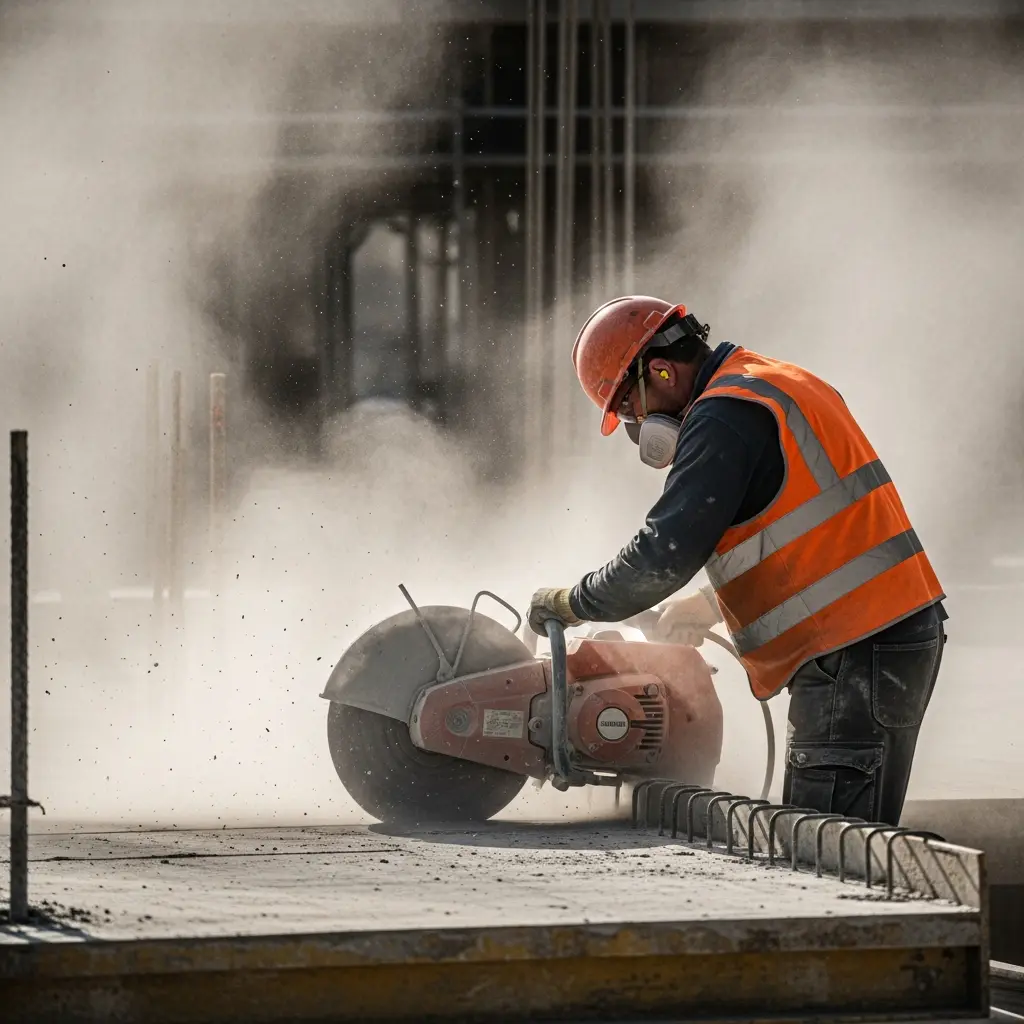
May relate to 29 CFR 1926.353
Of confined-space deaths involve bad air
Per serious OSHA ventilation violation
Minimum safe oxygen level in air
Faster contaminant buildup when airflow stops
An inadequate-ventilation hazard exists wherever contaminated or oxygen-deficient air cannot be diluted or removed fast enough to keep workers safe. It underlies fume, vapor, dust, and gas exposures alike — the same task that is manageable outdoors can become life-threatening in a closed room where the air never turns over.
On job sites it shows up as welding or painting in a closed space with the doors shut, a local exhaust fan that is unplugged, undersized, or pointed the wrong way, ductwork that is crushed or disconnected, or a confined space with a single opening and no forced-air blower. It also appears when temporary heating or fuel engines consume oxygen faster than fresh air can replace it.
The danger is that poor ventilation gives no obvious signal — the space looks the same whether the air is clean or saturated with vapor. Workers only notice when they feel dizzy or short of breath, by which point exposure is already high. That invisibility is exactly why photo-based detection of enclosed work and missing exhaust matters.
Here is what an OSHA Scan report looks like for inadequate ventilation. It is an illustrative example built from this scenario's hazards — clearly marked, not live scan data.
Compliance score
39
Lower means more potential hazards found
3 potential hazards found
Inadequate Ventilation
CriticalPossibly related to Ventilation and protection in welding, cutting, and heating (29 CFR 1926.353)
Observed condition: An inadequate-ventilation hazard exists wherever contaminated or oxygen-deficient air cannot be diluted or removed fast enough to keep workers safe.
Corrective action: Provide local exhaust ventilation that captures contaminants at the source
High confidence
Inadequate Ventilation: Confined spaces — permit-required program
HighPossibly related to Confined spaces — permit-required program (29 CFR 1926.1204)
Observed condition: Requires atmospheric testing, ventilation, attendants, and rescue procedures for permit-required confined spaces where poor airflow allows hazardous atmospheres to develop.
Corrective action: Use forced-air blowers to supply fresh air to enclosed and confined spaces
Medium confidenceNot fully clear from the photo — verify on site.
Inadequate Ventilation: Ventilation
MediumPossibly related to Ventilation (29 CFR 1926.57)
Observed condition: Requires local exhaust or general ventilation to control harmful dusts, fumes, mists, vapors, and gases produced during construction operations.
Corrective action: Size fans and ducting to the space and contaminant load
High confidence
Poor ventilation can cause rapid buildup of toxic vapors and oxygen deficiency, leading to dizziness, loss of consciousness, and death in confined spaces — sometimes within minutes.
OSHA cites ventilation and air-contaminant failures across welding, painting, and confined-space work. A serious violation exceeds $16,000, willful or repeat violations top $165,000, and incidents drive costly claims.
A ventilation-related incident stops the job, prompts an OSHA review of every enclosed task, and forces the crew to source and install proper exhaust before work can resume.
Painting, coating, welding, tank and vessel work, and interior renovation carry the highest ventilation risk, often in tight, closed spaces where contaminants have nowhere to go.
OSHA Scan uses an AI vision model to spot inadequate ventilation. Upload a photo of your work area and it identifies enclosed and partially enclosed spaces, checks for local exhaust, blowers, and open airflow paths, flags blocked or disconnected ducting and contaminant-generating tasks without ventilation, rates the severity, and cites 29 CFR 1926.353 — in seconds, before the air goes bad.
Analyze your first photo freeUpload a real job-site photo and OSHA Scan detects visible hazards in seconds — no account needed to run your first scan.
Use the real site or facility name. If you save the scan after signup, it becomes the report name.
Three angles, one deeper scan
Only the wide shot is required — every extra angle gives the AI more places to look.
Required: Set the scene — one wide shot lets the AI sweep the whole area at once
Stand at the entry point and capture corner to corner: floors, ladders, scaffolds, and everyone at work
Drop a job-site photo or walkthrough video
Click to upload, drag & drop, or snap a photo on site. Photos scan free in about 15 seconds — no signup, no card. Video walkthroughs (up to 3 min) run on a free account.
Small habits, sharper scans
Set the scene
Start with context
Fill the frame
2–3 ft for close-ups; keep ladders, cords and workers fully in view.
Capture clearly
Make the frame usable
Light it right
Keep the sun or lights behind you — glare and shadows hide hazards.
Tap to focus
Tap the hazard on screen and hold still one second — blur can't be flagged.
Choose the useful view
Give the AI room to understand
Go landscape
Turn your phone sideways — a wider frame catches more of the scene.
Only upload photos you have permission to use, and avoid images showing personal, customer, or confidential information. Demo photos and results are held privately for up to 48 hours so you can save them to a free account; unclaimed photos are deleted automatically. Results are an AI-assisted preliminary review, not an official OSHA determination.
New: Video walkthrough scans
Record up to 3 minutes of your site — the AI extracts frames and flags every hazard with exact timestamps. Free account required.
Get the best results
Wide shot first
Stand at the entrance and photograph the entire work area so AI sees the full context
Hazard areas
Photograph elevated surfaces, equipment, electrical panels, and anywhere workers are active
Close-ups last
Move in close on anything damaged, missing, or that looks risky — the AI catches more detail
A two-worker crew was applying a solvent-based epoxy coating to the walls of a small below-grade pump room. The room had one door, no windows, and a ventilation fan that had been disconnected during earlier demolition and never restored.
Solvent vapors accumulated with no airflow to remove them. Within an hour both workers were lightheaded and nauseated; one nearly passed out on the stairs while leaving. Air testing afterward found vapor concentrations well above safe levels and approaching the lower flammable limit.
A single photo of the room run through OSHA Scan before coating began would have flagged solvent application in a closed below-grade space with no working ventilation as a critical hazard, cited the ventilation standard, and prompted the crew to restore forced-air ventilation and use respiratory protection before opening a single can.
Enclosed spaces turn ordinary tasks into serious exposures the moment ventilation is missing. Confirm that exhaust or forced-air ventilation is running — not just present — before starting any fume- or vapor-generating work.
Layered controls, from most to least effective.
Move contaminated air out and fresh air in at the point of work.
Verify airflow and manage tasks so ventilation keeps pace.
Protect the airway when ventilation alone cannot control exposure.
The federal standards this hazard may relate to.
Requires mechanical ventilation or local exhaust to keep welding and cutting contaminants below hazardous levels, with specific provisions for confined spaces and toxic materials.
Up to $16,550 per serious violation; $165,514 for willful or repeat
Requires atmospheric testing, ventilation, attendants, and rescue procedures for permit-required confined spaces where poor airflow allows hazardous atmospheres to develop.
Up to $16,550 per serious violation
Requires local exhaust or general ventilation to control harmful dusts, fumes, mists, vapors, and gases produced during construction operations.
Up to $16,550 per serious violation
If an incident occurs, act fast and in order.
Workers will understand how poor ventilation concentrates hazards, recognize enclosed and high-emission tasks that need exhaust, and correctly set up and verify ventilation before work begins.
Train before any enclosed or high-emission work, refresh annually, and reinforce with a toolbox talk at each setup using real photos of adequate and inadequate ventilation.
Run these checks to stay ahead of citations.
10 more checklist points are waiting. Register with your email to reveal every item and download the complete OSHA compliance checklist as a printable PDF. Free, and it only takes a few seconds.
Already have an account? Sign in
Ventilation dilutes and removes airborne contaminants — fumes, vapors, dust, and gases — and replaces oxygen consumed by engines and processes. When airflow is inadequate, contaminants concentrate quickly and oxygen can drop, turning routine tasks into life-threatening exposures, especially in enclosed spaces.
General (dilution) ventilation moves large volumes of air through a space to lower average contaminant levels, while local exhaust ventilation captures contaminants right at the source before they spread. Local exhaust is far more effective for concentrated sources like welding, cutting, and coating.
Confirm that mechanical ventilation is actually running, that ducting is connected and unblocked, and that the airflow is sized for the space and task. For confined and enclosed spaces, verify with atmospheric testing before and during work rather than assuming the equipment is enough.
Normal air is about 20.9% oxygen. OSHA considers atmospheres below 19.5% oxygen to be oxygen-deficient and hazardous. Poor ventilation, combustion, and displacement by other gases can lower oxygen below this level, requiring supplied-air protection.
Sometimes for light, low-emission tasks, but often not. A single opening may not create enough airflow to remove concentrated fumes or vapors. Enclosed spaces and high-emission tasks usually require mechanical exhaust or forced-air blowers to move air effectively.
Ventilation is the primary control, but when it cannot keep contaminants below limits — or in confined and oxygen-deficient spaces — respiratory protection is still required. Air monitoring determines whether ventilation alone is sufficient for the task.
Solvent coating and painting, welding and cutting in enclosed areas, spray application, and any work inside tanks, vaults, or small rooms are the most common. Temporary heating and fuel-powered equipment in enclosed spaces also create ventilation and oxygen concerns.
OSHA Scan detects the visual signs of inadequate ventilation — enclosed work, missing or disconnected exhaust, and blocked airflow. It flags the hazard and cites 29 CFR 1926.353 so you can add ventilation before contaminants build up.
Upload a photo of your work area and get instant feedback on ventilation adequacy in your exact environment.
Get startedPut our expert ventilation checklist to work on your next enclosed job to stay ahead of citations.
Get startedSee how OSHA Scan fits your coating, welding, or interior-renovation operation and get tailored recommendations.
Get startedSee how other crews use OSHA Scan to confirm ventilation before contaminants build up.
Get startedReview findings, organize chemical records, and open relevant official resources for your saved locations and work context.
You make the final call. Review, edit, or dismiss any AI-flagged hazard before finalizing your inspection report.
Scan chemical labels or upload legacy MSDS sheets to create structured drafts that support your team's search for and review of current official manufacturer Safety Data Sheets.
Open official OSHA and State Plan guidance, required posters, emergency contacts, and relevant publications for saved locations and work requirements.
OSHA Scan reads a single photo. That makes it fast and easy for anyone on site — but it also means it has real limits. Here's an honest look at both.
Reviewed by OSHA Scan Editorial
Last updated August 29, 2026
This content is produced by the OSHA Scan Editorial team and reviewed with AI assistance. It is general safety information, not legal or compliance advice. OSHA Scan is an independent tool and is not affiliated with, endorsed by, or certified by OSHA or the U.S. Department of Labor.
Start with 5 included AI site scans plus a one-time 10-scan signup bonus — no credit card. Build JHA-ready reports and catch changing conditions sooner.
Start your free trial