
1
Set the scene
Start with context
Fill the frame
2–3 ft for close-ups; keep ladders, cords and workers fully in view.
Catch the exposed part before it catches your worker
Rotating shafts, gears, belts, and chains can pull a hand, sleeve, or strand of hair into a machine in a fraction of a second — faster than any worker can react. Entanglement injuries are among the most severe on any floor, often ending in amputation. OSHA Scan analyzes job-site and shop photos to flag unguarded moving parts, missing barrier guards, and exposed nip points before someone gets pulled in.
Free · No account needed to scan · Results in seconds
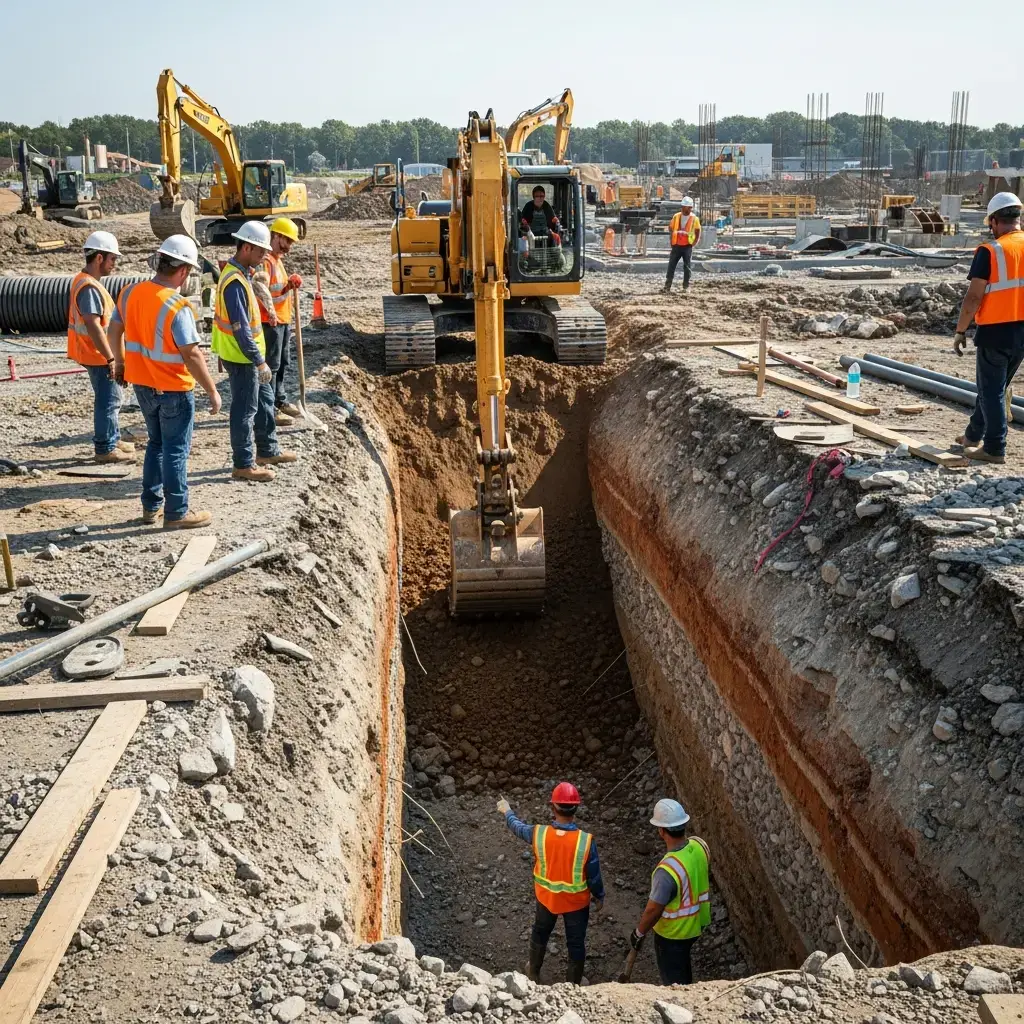
May relate to 29 CFR 1910.212
Amputations & lacerations from machines yearly
Machine guarding among most-cited OSHA standards
Time for a machine to pull in a limb
Typical time to get scan results
Machinery entanglement happens wherever a moving machine part can grip clothing, jewelry, hair, or skin and pull the worker into the mechanism. The classic sources are rotating shafts, power take-offs, gears in mesh, belt-and-pulley drives, chain-and-sprocket drives, and the nip points where two rotating parts meet or where a belt runs onto a pulley.
On a real floor the hazard shows up as a guard that was removed for cleaning and never reinstalled, a set screw or keyway protruding from a rotating shaft, a drive belt with the cover left open, or an auger turning with no barrier around it. Loose gloves, untucked shirts, drawstrings, lanyards, and long hair dramatically raise the risk near any of these points.
The trap is speed and silence. A rotating shaft looks harmless because it seems to be turning slowly, but it can wrap a sleeve in well under a second and draw an arm in before the worker can even flinch. That is why a photo-based check that flags an exposed moving part before startup is so valuable.
Here is what an OSHA Scan report looks like for machinery entanglement. It is an illustrative example built from this scenario's hazards — clearly marked, not live scan data.
Compliance score
47
Lower means more potential hazards found
3 potential hazards found
Machinery Entanglement
CriticalPossibly related to General requirements for all machines (29 CFR 1910.212)
Observed condition: Machinery entanglement happens wherever a moving machine part can grip clothing, jewelry, hair, or skin and pull the worker into the mechanism.
Corrective action: Install fixed barrier guards over all gears, belts, chains, and rotating shafts
High confidence
Machinery Entanglement: Mechanical power-transmission apparatus
HighPossibly related to Mechanical power-transmission apparatus (29 CFR 1910.219)
Observed condition: Specifies guarding for belts, pulleys, gears, sprockets, chains, shafting, and other power-transmission components.
Corrective action: Use interlocked guards that stop the machine when opened
Medium confidenceNot fully clear from the photo — verify on site.
Machinery Entanglement: The control of hazardous energy (lockout/tagout)
MediumPossibly related to The control of hazardous energy (lockout/tagout) (29 CFR 1910.147)
Observed condition: Requires energy isolation and lockout before servicing machines where unexpected startup or stored energy could injure a worker.
Corrective action: Enclose nip points, pinch points, and power take-offs completely
High confidence
Entanglement injuries are catastrophic — amputations, degloving, crushed and broken bones, scalping, and death. Once a limb is drawn in, escape is nearly impossible without shutting the machine down.
Machine guarding is one of OSHA's most-cited standards. A serious violation runs over $16,000, willful or repeat violations exceed $160,000, and an amputation triggers mandatory OSHA reporting and heavy scrutiny.
An entanglement stops production immediately, triggers an OSHA investigation, and can idle a machine for weeks. Workers' compensation costs and insurance premiums climb sharply after an amputation claim.
Manufacturing, woodworking, metal fabrication, food processing, and agriculture all run open drives and rotating equipment where a single removed guard exposes workers to entanglement.
OSHA Scan uses an AI vision model to spot unguarded moving parts. Upload a photo of a machine and it locates exposed rotating shafts, gears, belts, chains, and nip points, checks whether fixed or interlocked guards are in place, flags each exposed point with a severity rating, and cites the OSHA standard it may relate to — before the machine is switched on.
Analyze your first photo freeUpload a real job-site photo and OSHA Scan detects visible hazards in seconds — no account needed to run your first scan.
Use the real site or facility name. If you save the scan after signup, it becomes the report name.
Three angles, one deeper scan
Only the wide shot is required — every extra angle gives the AI more places to look.
Required: Set the scene — one wide shot lets the AI sweep the whole area at once
Stand at the entry point and capture corner to corner: floors, ladders, scaffolds, and everyone at work
Drop a job-site photo or walkthrough video
Click to upload, drag & drop, or snap a photo on site. Photos scan free in about 15 seconds — no signup, no card. Video walkthroughs (up to 3 min) run on a free account.
Small habits, sharper scans
Set the scene
Start with context
Fill the frame
2–3 ft for close-ups; keep ladders, cords and workers fully in view.
Capture clearly
Make the frame usable
Light it right
Keep the sun or lights behind you — glare and shadows hide hazards.
Tap to focus
Tap the hazard on screen and hold still one second — blur can't be flagged.
Choose the useful view
Give the AI room to understand
Go landscape
Turn your phone sideways — a wider frame catches more of the scene.
Only upload photos you have permission to use, and avoid images showing personal, customer, or confidential information. Demo photos and results are held privately for up to 48 hours so you can save them to a free account; unclaimed photos are deleted automatically. Results are an AI-assisted preliminary review, not an official OSHA determination.
New: Video walkthrough scans
Record up to 3 minutes of your site — the AI extracts frames and flags every hazard with exact timestamps. Free account required.
Get the best results
Wide shot first
Stand at the entrance and photograph the entire work area so AI sees the full context
Hazard areas
Photograph elevated surfaces, equipment, electrical panels, and anywhere workers are active
Close-ups last
Move in close on anything damaged, missing, or that looks risky — the AI catches more detail
An operator cleared a jam on a packaging line's belt drive, removed the belt guard to reach the pulley, and restarted the line to keep up with a shift quota without reinstalling the cover.
Twenty minutes later a coworker reached across the running drive to grab a fallen carton. His loose sleeve caught the pulley nip point, pulling his forearm into the drive and causing a severe crushing injury before the line could be stopped.
A single photo of the line before restart run through OSHA Scan would have flagged the open, guardless belt drive as a critical entanglement hazard, cited 29 CFR 1910.212, and prompted the operator to reinstall the guard before energizing the machine.
Guards removed for maintenance are where entanglement quietly wins. No machine should be restarted until every guard is back in place — a fast photo scan confirms nothing is left exposed.
Layered controls, from most to least effective.
Physically separate workers from moving parts so contact is impossible.
Enforce the procedures that keep guards on and workers clear.
The last defense when workers must be near moving machinery.
The federal standards this hazard may relate to.
Requires one or more methods of machine guarding to protect operators and others from hazards such as rotating parts, nip points, and flying chips at the point of operation.
Up to $16,550 per serious violation; $165,514 for willful or repeat
Specifies guarding for belts, pulleys, gears, sprockets, chains, shafting, and other power-transmission components.
Up to $16,550 per serious violation
Requires energy isolation and lockout before servicing machines where unexpected startup or stored energy could injure a worker.
Up to $16,550 per serious violation
If an incident occurs, act fast and in order.
Workers will understand how machinery entanglement occurs, recognize unguarded moving parts, and correctly apply guarding and lockout/tagout before any contact with a machine.
Train before workers operate any machine, refresh annually, and reinforce with a toolbox talk each shift using real photos of guarded and unguarded equipment.
Run these checks to stay ahead of citations.
10 more checklist points are waiting. Register with your email to reveal every item and download the complete OSHA compliance checklist as a printable PDF. Free, and it only takes a few seconds.
Already have an account? Sign in
Entanglement occurs when a moving machine part — a rotating shaft, gear, belt, chain, or nip point — catches clothing, hair, jewelry, or skin and pulls the worker into the mechanism. It is a leading cause of workplace amputations.
Rotating shafts, power take-offs, gears in mesh, belt-and-pulley drives, chain-and-sprocket drives, augers, and nip points where two parts meet or a belt runs onto a pulley are the most common sources.
29 CFR 1910.212 requires guarding of any machine part that presents a hazard, protecting operators and others from rotating parts, nip points, and flying chips. Guards must be secure and not create their own hazard.
Often not. Loose gloves can be grabbed by rotating parts and pull the hand in. Around unguarded rotating shafts, drills, or lathes, OSHA and manufacturers frequently prohibit gloves entirely.
Because clearing jams or servicing a machine with the guard off exposes workers to unexpected startup and stored energy. Lockout/tagout (29 CFR 1910.147) isolates the energy so the machine cannot move during the task.
A serious machine-guarding violation can cost over $16,000, and willful or repeat violations can exceed $165,000 per instance. An amputation must also be reported to OSHA within 24 hours.
An adequate guard prevents contact with the hazard, stays securely in place, does not create a new hazard, allows safe lubrication and maintenance, and does not interfere excessively with the work. If any moving part can be touched, the guard is inadequate.
OSHA Scan detects exposed moving parts. It locates unguarded shafts, gears, belts, and nip points and returns the specific location and OSHA citation.
Upload a photo of your machine and get instant, specific feedback on exposed moving parts and missing guards.
Get startedPut our expert machine-guarding checklist to work on your floor to stay ahead of amputations and citations.
Get startedSee how OSHA Scan fits your shop or plant and get recommendations for your specific machinery.
Get startedSee how other operations use OSHA Scan to catch unguarded machines before anyone gets pulled in.
Get startedReview findings, organize chemical records, and open relevant official resources for your saved locations and work context.
You make the final call. Review, edit, or dismiss any AI-flagged hazard before finalizing your inspection report.
Scan chemical labels or upload legacy MSDS sheets to create structured drafts that support your team's search for and review of current official manufacturer Safety Data Sheets.
Open official OSHA and State Plan guidance, required posters, emergency contacts, and relevant publications for saved locations and work requirements.
OSHA Scan reads a single photo. That makes it fast and easy for anyone on site — but it also means it has real limits. Here's an honest look at both.
Reviewed by OSHA Scan Editorial
Last updated August 29, 2026
This content is produced by the OSHA Scan Editorial team and reviewed with AI assistance. It is general safety information, not legal or compliance advice. OSHA Scan is an independent tool and is not affiliated with, endorsed by, or certified by OSHA or the U.S. Department of Labor.
Start with 5 included AI site scans plus a one-time 10-scan signup bonus — no credit card. Build JHA-ready reports and catch changing conditions sooner.
Start your free trial