
1
Set the scene
Start with context
Fill the frame
2–3 ft for close-ups; keep ladders, cords and workers fully in view.
Catch unprotected ears before the damage is done
Occupational noise-induced hearing loss is one of the most common workplace injuries in America, yet it happens silently over months and years until the damage is irreversible. Workers grinding, cutting, jackhammering, or standing beside heavy equipment routinely exceed 90 decibels without earplugs or muffs. OSHA Scan analyzes job-site photos to flag workers in high-noise zones who are missing hearing protection before their hearing is gone for good.
Free · No account needed to scan · Results in seconds
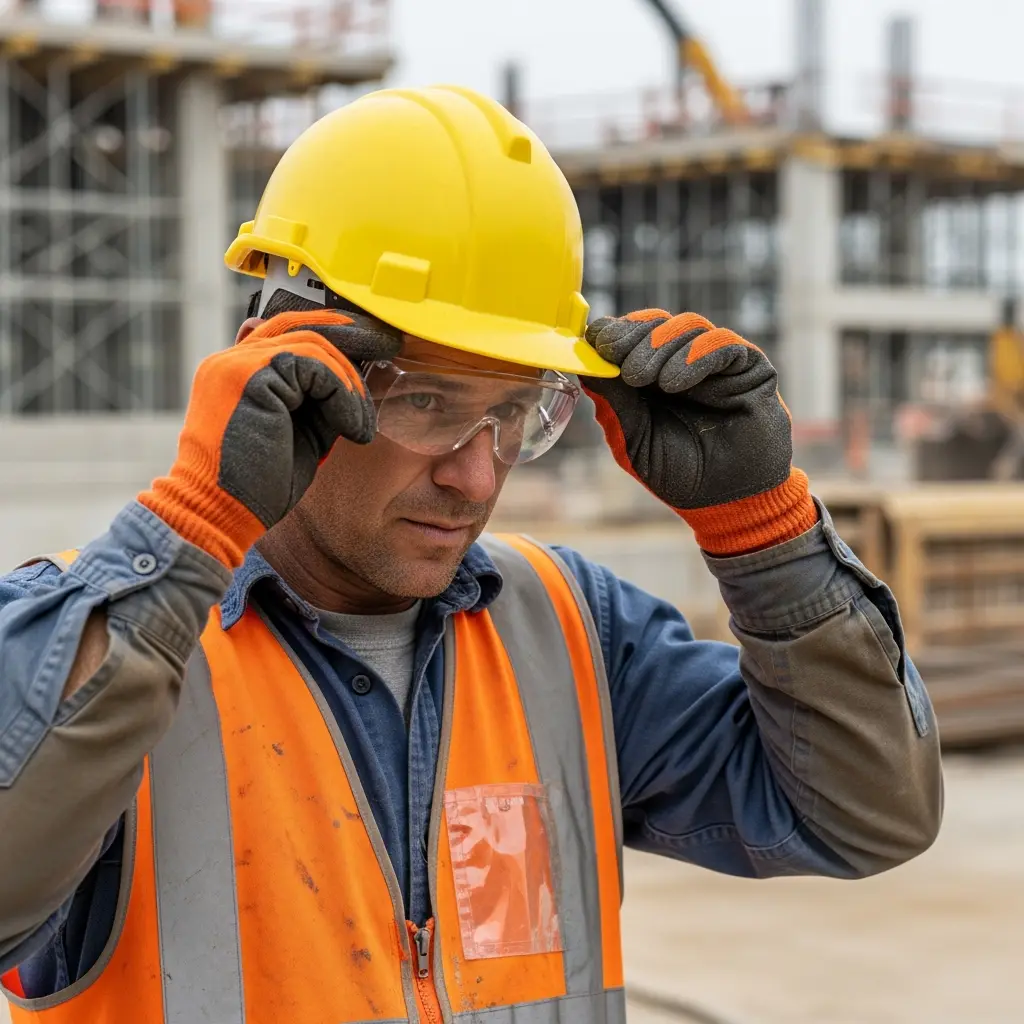
May relate to 29 CFR 1910.95
US workers exposed to hazardous noise yearly
Paid annually for hearing-loss disability
8-hour exposure that triggers OSHA action
Typical time to get scan results
A missing-hearing-protection hazard is any situation where a worker is exposed to noise at or above OSHA's 85-decibel action level over an eight-hour shift without wearing properly fitted earplugs or earmuffs. It shows up around grinders, saws, jackhammers, pneumatic tools, generators, and heavy equipment where conversation requires shouting at arm's length.
In practice, the gap appears when a worker pops out an earplug to hear a coworker, wears muffs pushed up onto a hard hat instead of over the ears, or steps into a loud zone 'for just a minute' with no protection at all. Ill-fitting or dirty foam plugs that no longer seal are just as dangerous as wearing nothing, because they give a false sense of protection.
The danger is that noise damage is painless and invisible. There is no bleeding, no bruise, and no immediate symptom — only a slow erosion of hearing that workers often do not notice until they cannot follow a conversation. That silent progression is exactly why photo-based detection of unprotected ears matters.
Here is what an OSHA Scan report looks like for missing hearing protection. It is an illustrative example built from this scenario's hazards — clearly marked, not live scan data.
Compliance score
49
Lower means more potential hazards found
3 potential hazards found
Missing Hearing Protection
CriticalPossibly related to Occupational noise exposure (29 CFR 1910.95)
Observed condition: A missing-hearing-protection hazard is any situation where a worker is exposed to noise at or above OSHA's 85-decibel action level over an eight-hour shift without wearing properl…
Corrective action: Install mufflers, silencers, and vibration damping on pneumatic and combustion equipment
High confidence
Missing Hearing Protection: Hearing protection (construction)
HighPossibly related to Hearing protection (construction) (29 CFR 1926.101)
Observed condition: Requires ear protective devices whenever it is not feasible to reduce noise levels or duration of exposure, with plugs fitted or determined individually by a competent person.
Corrective action: Enclose or isolate the loudest machines with acoustic barriers and sound-absorbing panels
Medium confidenceNot fully clear from the photo — verify on site.
Missing Hearing Protection: Occupational noise exposure (construction)
MediumPossibly related to Occupational noise exposure (construction) (29 CFR 1926.52)
Observed condition: Sets permissible noise exposure limits for construction and requires feasible engineering or administrative controls, plus personal protection when limits are exceeded.
Corrective action: Maintain and lubricate equipment to prevent noise from worn or loose parts
High confidence
Each unprotected shift in a high-noise zone chips away at hearing that never regenerates. Workers develop tinnitus, difficulty understanding speech, and permanent noise-induced hearing loss that no hearing aid can fully restore.
OSHA cites 29 CFR 1910.95 with serious violations exceeding $16,000, and hearing-loss claims drive some of the largest cumulative workers' compensation payouts in industry — over $240 million in disability compensation each year.
Hearing-impaired workers miss verbal warnings and equipment alarms, raising the risk of struck-by and caught-in incidents. Failed audiograms trigger mandatory retraining, medical follow-up, and program audits that pull crews off the job.
Construction, manufacturing, demolition, and highway crews face fluctuating impact noise that standard monitoring can miss, and rotating multi-trade teams make consistent hearing-protection enforcement especially difficult.
OSHA Scan uses an AI vision model to identify workers operating in or near high-noise tasks. Upload a photo and it detects the presence of loud equipment, checks whether each nearby worker is wearing earplugs or earmuffs, flags anyone unprotected with a severity rating, and cites the OSHA hearing-conservation standard it may relate to — in seconds, before the shift racks up more exposure.
Analyze your first photo freeUpload a real job-site photo and OSHA Scan detects visible hazards in seconds — no account needed to run your first scan.
Use the real site or facility name. If you save the scan after signup, it becomes the report name.
Three angles, one deeper scan
Only the wide shot is required — every extra angle gives the AI more places to look.
Required: Set the scene — one wide shot lets the AI sweep the whole area at once
Stand at the entry point and capture corner to corner: floors, ladders, scaffolds, and everyone at work
Drop a job-site photo or walkthrough video
Click to upload, drag & drop, or snap a photo on site. Photos scan free in about 15 seconds — no signup, no card. Video walkthroughs (up to 3 min) run on a free account.
Small habits, sharper scans
Set the scene
Start with context
Fill the frame
2–3 ft for close-ups; keep ladders, cords and workers fully in view.
Capture clearly
Make the frame usable
Light it right
Keep the sun or lights behind you — glare and shadows hide hazards.
Tap to focus
Tap the hazard on screen and hold still one second — blur can't be flagged.
Choose the useful view
Give the AI room to understand
Go landscape
Turn your phone sideways — a wider frame catches more of the scene.
Only upload photos you have permission to use, and avoid images showing personal, customer, or confidential information. Demo photos and results are held privately for up to 48 hours so you can save them to a free account; unclaimed photos are deleted automatically. Results are an AI-assisted preliminary review, not an official OSHA determination.
New: Video walkthrough scans
Record up to 3 minutes of your site — the AI extracts frames and flags every hazard with exact timestamps. Free account required.
Get the best results
Wide shot first
Stand at the entrance and photograph the entire work area so AI sees the full context
Hazard areas
Photograph elevated surfaces, equipment, electrical panels, and anywhere workers are active
Close-ups last
Move in close on anything damaged, missing, or that looks risky — the AI catches more detail
A fabrication crew spent six-hour stretches grinding welds inside a steel structure where reflected noise pushed levels past 100 decibels. To coordinate cuts, several workers pulled out one earplug so they could hear each other over the grinders.
Half-protected for months, three workers failed their annual audiograms with a standard threshold shift indicating early permanent hearing loss. Because no one flagged the repeated protection gaps, the exposure continued unchecked through multiple projects.
A photo of the grinding area run through OSHA Scan would have flagged the workers with removed or pushed-up hearing protection near active grinders as a critical hazard, cited 29 CFR 1910.95, and prompted the supervisor to issue radio-compatible communication headsets so workers could talk without sacrificing protection.
Communication needs drive most hearing-protection failures. When workers must talk in loud zones, give them protective solutions that also let them hear — and re-inspect the area, ideally with a quick photo scan, whenever the task or crew changes.
Layered controls, from most to least effective.
Reduce the noise at its source so hearing protection is a backup, not the only defense.
Build the hearing-conservation program that keeps exposure within safe limits.
The last line of defense when workers must be in high-noise zones.
The federal standards this hazard may relate to.
Requires a hearing-conservation program when eight-hour time-weighted noise reaches 85 decibels, including monitoring, audiometric testing, hearing protection, training, and recordkeeping.
Up to $16,550 per serious violation; $165,514 for willful or repeat
Requires ear protective devices whenever it is not feasible to reduce noise levels or duration of exposure, with plugs fitted or determined individually by a competent person.
Up to $16,550 per serious violation
Sets permissible noise exposure limits for construction and requires feasible engineering or administrative controls, plus personal protection when limits are exceeded.
Up to $16,550 per serious violation
If an incident occurs, act fast and in order.
Workers will understand how noise damages hearing, recognize high-noise zones, and correctly select, fit, and maintain earplugs and earmuffs for their exposure level.
Train before workers enter high-noise areas, refresh annually as part of the hearing-conservation program, and reinforce with toolbox talks using real job-site photos.
Run these checks to stay ahead of citations.
10 more checklist points are waiting. Register with your email to reveal every item and download the complete OSHA compliance checklist as a printable PDF. Free, and it only takes a few seconds.
Already have an account? Sign in
OSHA's action level is an eight-hour time-weighted average of 85 decibels, which triggers a hearing-conservation program under 29 CFR 1910.95. The permissible exposure limit is 90 decibels. As a rule of thumb, if you must raise your voice to be heard three feet away, the area likely needs hearing protection.
Both work when rated for the noise level and worn correctly. Earplugs are compact and better under hard hats or in tight spaces, while earmuffs are faster to put on and off. Above roughly 100 decibels, OSHA recommends dual protection — plugs and muffs together.
Exposed workers need a baseline audiogram within six months of first exposure and an audiometric test every year afterward. Comparing annual results to the baseline detects a standard threshold shift early, when intervention can still protect remaining hearing.
A serious violation of 29 CFR 1910.95 can exceed $16,000 per instance, and willful or repeat violations can top $165,000. Beyond fines, cumulative hearing-loss claims are among the costliest occupational injuries, driving large long-term workers' compensation payouts.
Removing protection in a high-noise zone, even briefly, defeats its purpose and is a common cause of hearing loss. The safe solution is radio-equipped or level-dependent hearing protection that lets workers hear speech and warnings while still attenuating harmful noise.
The employer must implement and enforce the hearing-conservation program, but a competent person should monitor noise zones, verify workers are protected, and correct gaps. A documented pre-shift check before loud tasks is best practice.
No. Noise-induced hearing loss is permanent because it destroys the sensory hair cells in the inner ear, which do not regenerate. Hearing aids can amplify sound but cannot restore clarity, which is why prevention is the only real protection.
OSHA Scan detects missing hearing protection. It recognizes high-noise equipment, checks whether nearby workers wear plugs or muffs, and returns the specific location and OSHA citation for each gap.
Upload a photo of your loud work area and get instant, specific feedback on workers missing hearing protection in your exact environment.
Get startedPut our expert hearing-conservation checklist to work on your next noisy job to stay ahead of citations and audiogram failures.
Get startedSee how OSHA Scan fits your noise-exposure program and get recommendations for your specific high-noise tasks.
Get startedSee how other contractors use OSHA Scan to keep workers protected in high-noise zones and prevent permanent hearing loss.
Get startedReview findings, organize chemical records, and open relevant official resources for your saved locations and work context.
You make the final call. Review, edit, or dismiss any AI-flagged hazard before finalizing your inspection report.
Scan chemical labels or upload legacy MSDS sheets to create structured drafts that support your team's search for and review of current official manufacturer Safety Data Sheets.
Open official OSHA and State Plan guidance, required posters, emergency contacts, and relevant publications for saved locations and work requirements.
OSHA Scan reads a single photo. That makes it fast and easy for anyone on site — but it also means it has real limits. Here's an honest look at both.
Reviewed by OSHA Scan Editorial
Last updated August 29, 2026
This content is produced by the OSHA Scan Editorial team and reviewed with AI assistance. It is general safety information, not legal or compliance advice. OSHA Scan is an independent tool and is not affiliated with, endorsed by, or certified by OSHA or the U.S. Department of Labor.
Start with 5 included AI site scans plus a one-time 10-scan signup bonus — no credit card. Build JHA-ready reports and catch changing conditions sooner.
Start your free trial