
1
Set the scene
Start with context
Fill the frame
2–3 ft for close-ups; keep ladders, cords and workers fully in view.
Struck-by, slips and falls, and ergonomic strain
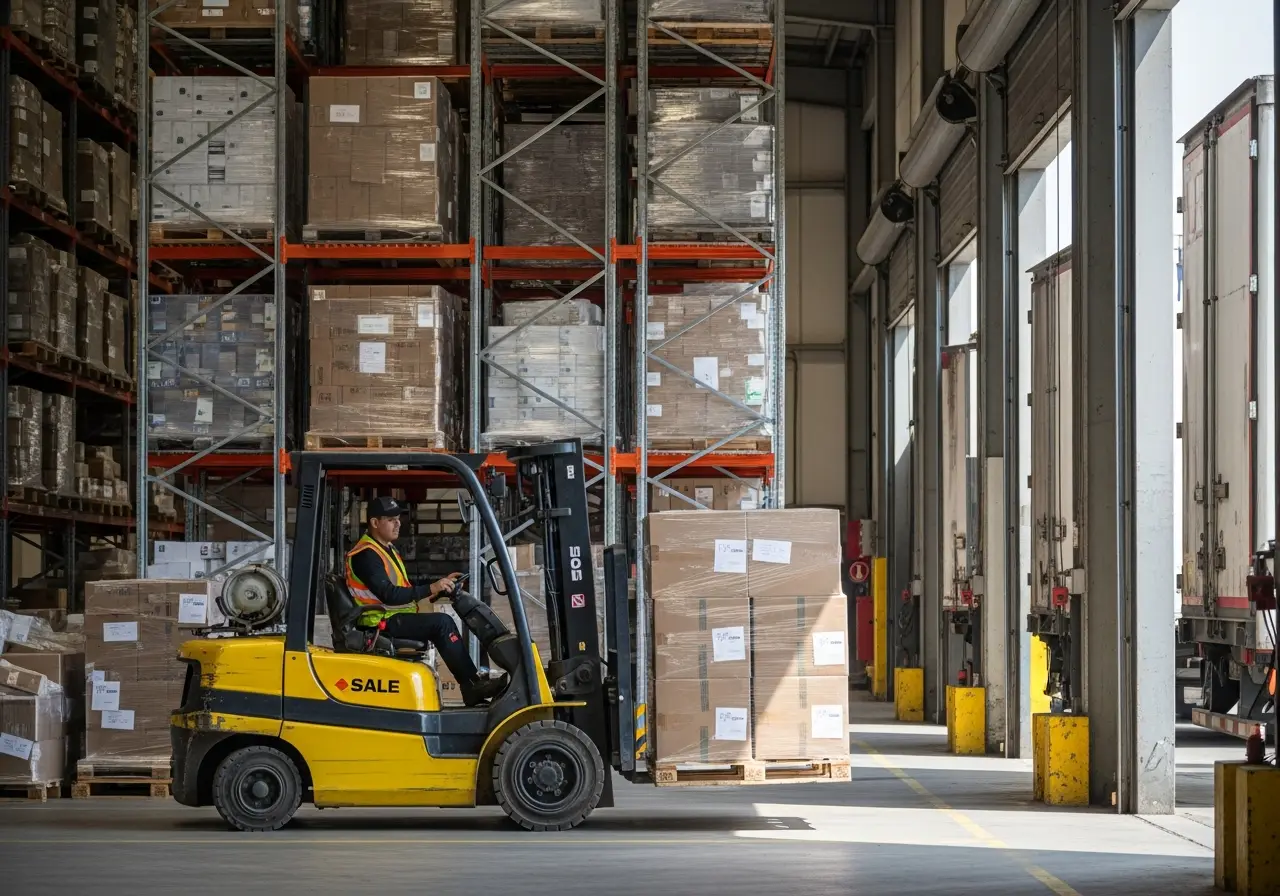
The pressure to move product fast makes docks and warehouses one of the highest-injury environments in industry — forklifts, dock edges, and repetitive lifting all take their toll. OSHA Scan analyzes facility photos to catch struck-by, fall, and material-storage hazards before they cause injury.
Free · No account needed to scan · Results in seconds
warehouse injury rate vs. many industries
serious forklift injuries a year
typical dock height — a serious fall drop
overexertion is the top warehouse injury cause
Upload a real job-site photo and OSHA Scan detects visible dock and warehouse hazards in seconds — no account needed to run your first scan.
Use the real site or facility name. If you save the scan after signup, it becomes the report name.
Three angles, one deeper scan
Only the wide shot is required — every extra angle gives the AI more places to look.
Required: Set the scene — one wide shot lets the AI sweep the whole area at once
Stand at the entry point and capture corner to corner: floors, ladders, scaffolds, and everyone at work
Drop a job-site photo or walkthrough video
Click to upload, drag & drop, or snap a photo on site. Photos scan free in about 15 seconds — no signup, no card. Video walkthroughs (up to 3 min) run on a free account.
Small habits, sharper scans
Set the scene
Start with context
Fill the frame
2–3 ft for close-ups; keep ladders, cords and workers fully in view.
Capture clearly
Make the frame usable
Light it right
Keep the sun or lights behind you — glare and shadows hide hazards.
Tap to focus
Tap the hazard on screen and hold still one second — blur can't be flagged.
Choose the useful view
Give the AI room to understand
Go landscape
Turn your phone sideways — a wider frame catches more of the scene.
Only upload photos you have permission to use, and avoid images showing personal, customer, or confidential information. Demo photos and results are held privately for up to 48 hours so you can save them to a free account; unclaimed photos are deleted automatically. Results are an AI-assisted preliminary review, not an official OSHA determination.
Here is what an OSHA Scan report looks like for dock and warehouse hazards. It is an illustrative example built from this trade's hazards — clearly marked, not live scan data.
Compliance score
56
Lower means more potential hazards found
3 potential hazards found
Forklift struck-by in an aisle
CriticalPossibly related to Powered industrial trucks (29 CFR 1910.178)
Observed condition: A forklift rounds a blind corner between racks and strikes a worker on foot who could not be seen.
Corrective action: Establish marked pedestrian lanes separated from forklift routes
High confidence
Fall from a dock edge
HighPossibly related to Handling materials — general (29 CFR 1910.176)
Observed condition: A worker steps backward off an open, unguarded dock edge while directing a trailer and falls about four feet to the drive below.
Corrective action: Use dock levelers, wheel chocks, and trailer restraints
Medium confidenceNot fully clear from the photo — verify on site.
Trailer creep dock-plate drop
MediumPossibly related to Walking-working surfaces (29 CFR 1910.22)
Observed condition: A trailer not secured with wheel chocks or a restraint drifts away from the dock as a forklift crosses the dock plate, dropping the machine into the gap.
Corrective action: Install barriers, gates, or edge protection at open dock edges
High confidence
Dock and warehouse operations concentrate several hazards in a fast-moving environment. Struck-by incidents involving forklifts and other powered equipment are among the most serious, as machines and pedestrians share tight aisles and busy dock areas, often with limited visibility around racks and trailers.
Primary OSHA standard: 29 CFR 1910.178
Dock and warehouse operations concentrate several hazards in a fast-moving environment. Struck-by incidents involving forklifts and other powered equipment are among the most serious, as machines and pedestrians share tight aisles and busy dock areas, often with limited visibility around racks and trailers.
Falls are a constant risk. Workers fall from unprotected dock edges — typically around four feet to the drive below — off equipment, and on floors made slick by spills, packaging, and weather tracked in at the doors. Trailers that creep away from the dock or trucks that pull away early create gaps and dock-plate failures that drop forklifts and workers.
The other defining hazard is ergonomic. Repetitive lifting, carrying, and reaching to move product causes overexertion injuries — the single largest category of warehouse injury. Add unstable material storage that can topple, and equipment maintenance hazards, and it becomes clear why disciplined traffic control, housekeeping, and material handling are central to dock and warehouse safety.
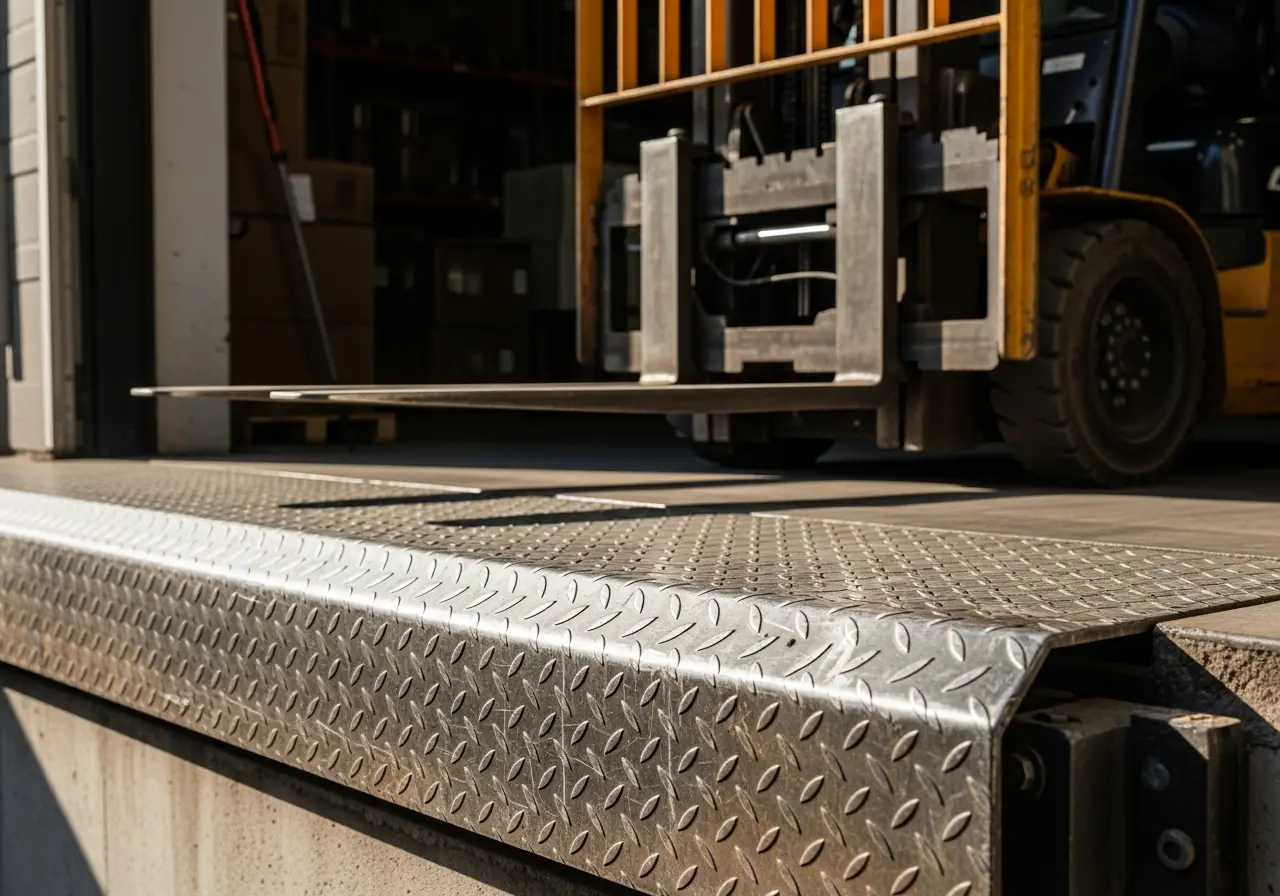
OSHA regulates powered industrial trucks and material storage closely. Forklift and housekeeping violations are frequently cited in warehouses.
Struck-by and fall incidents cause severe trauma, while cumulative overexertion injuries disable workers over time.
High injury rates drive up workers' compensation costs, slow throughput, and increase turnover in an already tight labor market.
Shippers and 3PL clients favor facilities with strong safety metrics and documented programs when awarding contracts.
A forklift rounds a blind corner between racks and strikes a worker on foot who could not be seen. The tight aisle and lack of pedestrian separation leave no room to react.
A worker steps backward off an open, unguarded dock edge while directing a trailer and falls about four feet to the drive below.
A trailer not secured with wheel chocks or a restraint drifts away from the dock as a forklift crosses the dock plate, dropping the machine into the gap.
A worker repeatedly lifts heavy cartons from floor to shoulder height without mechanical aid, developing a disabling shoulder and back injury.
Product is stacked too high and unstably on racking. A load shifts and pallets fall onto a worker passing below.
The federal regulations that govern dock and warehouse work.
Requires operator training and certification, inspections, and safe operation of forklifts around pedestrians and at docks.
Requires safe storage, clear aisles and passageways, and stable stacking to prevent struck-by and tripping hazards.
Requires floors to be kept clean, dry, and free of hazards, and openings and dock edges to be guarded.
Addresses protection at open-sided floors and platforms, including loading dock edges where workers are exposed.
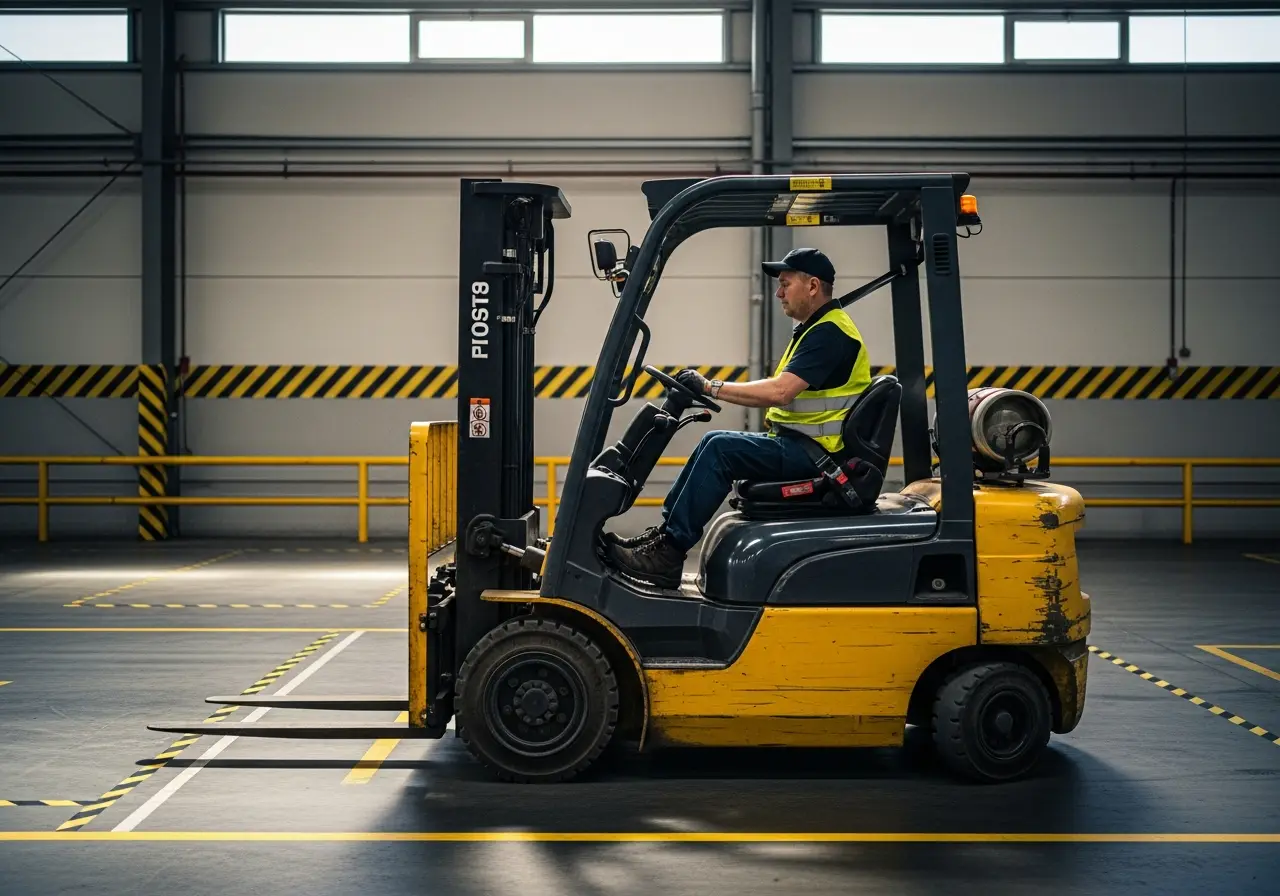
Work top-down through the hierarchy of controls — eliminate the hazard first, then fall back to procedures and PPE.
Separate people from equipment and secure the dock.
Control traffic, storage, and pace.
Make workers visible and protected.
Struck-by and overexertion injuries drop when operators are certified, pedestrians know the traffic rules, and everyone is trained in safe material handling for the fast pace of a dock and warehouse.
OSHA Scan analyzes dock and warehouse photos to flag pedestrians in forklift paths and blind aisles, open and unguarded dock edges, unsecured trailers at the dock, blocked aisles, and unstable or overheight material storage. Each finding cites the relevant OSHA standard and generates a corrective-action checklist covering traffic separation, dock security, and storage — so a supervisor can spot struck-by and fall hazards from a photo before someone is hurt.
Separate pedestrian and forklift traffic with marked lanes and physical barriers, use mirrors and warning systems at blind corners, enforce speed limits and right-of-way rules, and require operators to sound the horn and slow at intersections. Keeping people out of equipment areas whenever possible is the most effective control.
Common causes include stepping off open, unguarded dock edges (often around four feet high), slips on wet or debris-covered floors, and dock-plate failures when trailers move. Edge barriers or gates, dock levelers in good condition, trailer restraints, and good housekeeping prevent most dock falls.
An unsecured trailer can drift away from the dock ('trailer creep') or be pulled away early, creating a gap that drops a crossing forklift or worker. Wheel chocks or powered trailer restraints, along with a communication system between dock and driver, keep the trailer in place until loading is complete.
Overexertion is the top warehouse injury, so reduce manual handling with conveyors, lift assists, and adjustable-height equipment, keep loads within safe weights, store heavy items at waist height, and design tasks to avoid excessive reaching and twisting. Task rotation and training on lifting technique further reduce cumulative strain.
Materials must be stacked stably and within the rated capacity of racking and floors, kept clear of aisles and exits, and secured against sliding or collapse. Heavy items belong lower, and stacks should not exceed safe heights. Blocked aisles and unstable stacks are frequent OSHA citations and struck-by causes.
Yes. OSHA requires powered-industrial-truck operators to be trained, evaluated, and certified for the equipment and conditions, with refresher evaluation at least every three years and after any incident or near-miss. Untrained operation is both a citation risk and a leading factor in warehouse injuries.
OSHA cites powered-industrial-truck, material-handling, and walking-working-surface violations frequently in warehouses, and the penalties add up quickly. Uncertified forklift operation, blocked aisles and exits, unstable high stacking, and unguarded dock edges each carry penalties that can reach the tens of thousands of dollars per item, with willful or repeat citations climbing into six figures. A struck-by fatality or a dock fall often results in willful classifications and referral for further enforcement. Beyond fines, incidents drive up workers' compensation premiums, slow throughput, increase turnover, and cost facilities contracts when shippers and 3PL clients audit safety metrics. Blocked egress can also become a life-safety citation from fire authorities. Compared with the modest cost of operator certification, floor markings, dock restraints, and disciplined housekeeping, compliance is far cheaper than a single serious citation or a high-throughput shutdown, which is why leading distribution centers treat documented safety programs as a competitive necessity.
Treat a struck-by, tip-over, or dock fall as a medical emergency and stop nearby equipment immediately. Call 911, provide first aid within your training, and do not move a seriously injured worker unless there is ongoing danger. Shut down and isolate the involved forklift or dock position so it cannot be used until inspected, and secure the area to protect responders from other traffic. Preserve the scene for investigation — note trailer position, chocks or restraints, load, and sightlines — because these details reveal the root cause. Report qualifying hospitalizations within 24 hours and any fatality within 8 hours to OSHA. Afterward, investigate for contributing factors such as missing traffic separation, an unsecured trailer, or an overloaded rack, and correct the program before resuming. Every incident and near-miss should be logged so recurring hazards are addressed before they cause the next injury.
Forklifts must be inspected before each shift or before use, with defects tagging the truck out of service until repaired, and this daily check is an OSHA expectation for powered industrial trucks. Dock levelers, restraints, and edge barriers should be checked at the start of each shift and serviced on a documented preventive-maintenance schedule. Storage racking should be inspected regularly — many facilities do a documented walk weekly and a thorough structural review monthly or quarterly — for bent uprights, overloading, and damaged connectors, since a single struck upright can precede a collapse. Aisles, floors, and housekeeping warrant continuous attention throughout the shift, with spills cleaned immediately. Keeping dated inspection records for equipment and racking both drives real corrective action and demonstrates compliance during an OSHA visit or a client safety audit.
Stop work whenever a control that keeps people separated from hazards has failed. Concrete triggers include a forklift with a brake, horn, or hydraulic defect; a trailer that is not chocked or restrained before loading; a dock leveler or edge barrier that will not function; racking that is damaged, overloaded, or leaning; blocked aisles or exits; and floors made slick by a spill that has not been cleaned. Also halt operations when pedestrians and equipment cannot be kept apart in a congested area, or when a worker raises a safety concern. Supervisors should pull the equipment or position out of service, correct the condition, and only resume once it is verified safe. Peak-season throughput pressure is exactly when these controls matter most, and no shipping deadline justifies running an unsafe forklift or crossing an unsecured dock plate.
Run through this before, during, and after every job.
15 more checklist points are waiting. Register with your email to reveal every item and download the complete OSHA compliance checklist as a printable PDF. Free, and it only takes a few seconds.
Already have an account? Sign in
A high-throughput distribution center ran forklifts and order pickers through the same narrow aisles as workers on foot, with no marked pedestrian lanes. Peak-season pressure kept everyone moving quickly.
A forklift rounding a blind corner between tall racks struck a worker who stepped into the aisle and could not be seen. The worker suffered serious leg injuries. The investigation found no traffic separation, obstructed sightlines, and an operator traveling too fast for conditions.
The facility installed marked pedestrian lanes with physical barriers, added mirrors and warning lights at intersections, enforced forklift speed limits, and adopted OSHA Scan to photo-audit aisles for pedestrians in equipment paths and blocked sightlines.
Struck-by near-misses fell sharply after traffic separation was installed, and the center completed the following peak season without a forklift injury. The photo audits repeatedly flagged workers and stock drifting into forklift lanes so supervisors could correct it early.
Review findings, organize chemical records, and open relevant official resources for your saved locations and work context.
You make the final call. Review, edit, or dismiss any AI-flagged hazard before finalizing your inspection report.
Scan chemical labels or upload legacy MSDS sheets to create structured drafts that support your team's search for and review of current official manufacturer Safety Data Sheets.
Open official OSHA and State Plan guidance, required posters, emergency contacts, and relevant publications for saved locations and work requirements.
OSHA Scan reads a single photo. That makes it fast and easy for anyone on site — but it also means it has real limits. Here's an honest look at both.
Reviewed by OSHA Scan Editorial
Last updated August 29, 2026
This content is produced by the OSHA Scan Editorial team and reviewed with AI assistance. It is general safety information, not legal or compliance advice. OSHA Scan is an independent tool and is not affiliated with, endorsed by, or certified by OSHA or the U.S. Department of Labor.
Upload a photo of your dock and warehouse job site and get an instant, OSHA-cited hazard report.
Start your free trial