
1
Set the scene
Start with context
Fill the frame
2–3 ft for close-ups; keep ladders, cords and workers fully in view.
The floor that looks safe is often the one that puts a worker down
Water, mud, oil, ice, and hydraulic leaks turn ordinary walking surfaces into fall hazards in seconds. Slips on wet surfaces are one of the most common causes of lost-time injuries, from sprains and fractures to serious head trauma when a worker goes down near an edge or equipment. OSHA Scan analyzes job-site photos to flag wet, slick, and contaminated surfaces so crews can dry, drain, or barricade them before someone falls.
Free · No account needed to scan · Results in seconds
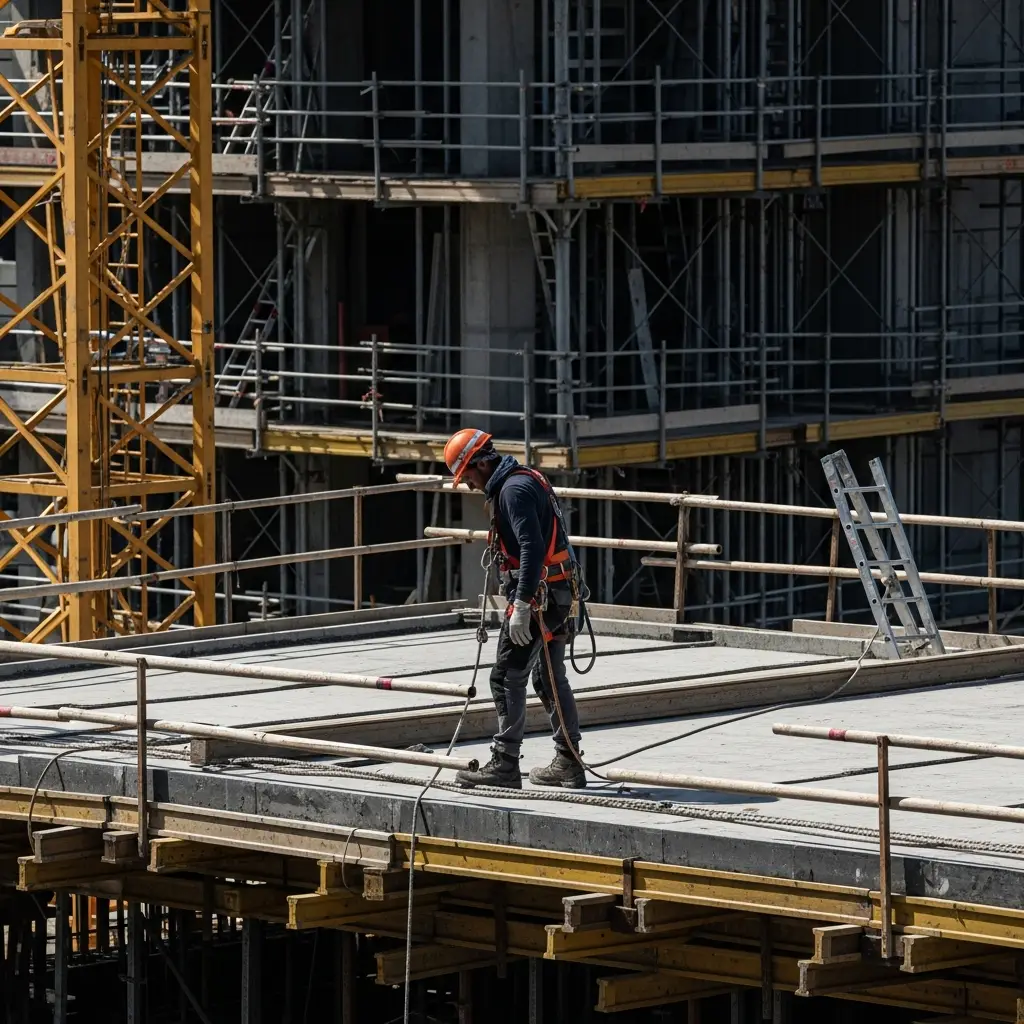
May relate to 29 CFR 1926.501
Of workplace injuries involve slips and falls
Average cost of a serious slip-and-fall claim
Minimum static coefficient of friction OSHA references
Typical time to get scan results
A wet-surface slip hazard is any walking or working surface made slick by water, rain, mud, ice, snow melt, oil, grease, hydraulic fluid, or cleaning products. OSHA requires walking and working surfaces to be kept clean, dry, and free of hazards where feasible, and to be drained or covered when wet conditions cannot be avoided. A slick surface near an edge, ramp, stair, or moving equipment multiplies the danger.
On job sites these hazards appear as rain-soaked plywood decking, muddy entry paths, condensation on steel and concrete, tracked-in water at building entrances, spilled fuel or hydraulic fluid around equipment, and ice on scaffolds and walkways in cold weather. Smooth surfaces like polished concrete, metal plates, and painted decks become dangerously slick with even a thin film of water.
The danger is that wet surfaces often look no different from dry ones until a boot loses traction. A worker carrying a load, turning quickly, or stepping onto a ramp has no warning before the slip. Because the hazard is transient — it appears with weather, spills, and washdowns — a quick photo scan is one of the few reliable ways to catch it in the moment.
Here is what an OSHA Scan report looks like for wet surface slip hazard. It is an illustrative example built from this scenario's hazards — clearly marked, not live scan data.
Compliance score
45
Lower means more potential hazards found
3 potential hazards found
Wet Surface Slip Hazard
CriticalPossibly related to Duty to have fall protection (29 CFR 1926.501)
Observed condition: A wet-surface slip hazard is any walking or working surface made slick by water, rain, mud, ice, snow melt, oil, grease, hydraulic fluid, or cleaning products.
Corrective action: Install proper drainage and slope so water runs off walking surfaces
High confidence
Wet Surface Slip Hazard: Housekeeping
HighPossibly related to Housekeeping (29 CFR 1926.25)
Observed condition: Requires work areas, passageways, and stairs to be kept clear and free of hazards, including the prompt removal of spills, mud, and debris that create slip conditions.
Corrective action: Apply slip-resistant coatings, grating, or textured mats to smooth floors
Medium confidenceNot fully clear from the photo — verify on site.
Wet Surface Slip Hazard: Walking-working surfaces — general requirements
MediumPossibly related to Walking-working surfaces — general requirements (29 CFR 1910.22)
Observed condition: Requires walking and working surfaces to be kept clean, orderly, dry where feasible, and free of hazards, with drainage, mats, or other means where wet processes are used.
Corrective action: Use anti-slip decking and treads on ramps, stairs, and scaffolds
High confidence
A slip on a wet surface can cause sprains, fractures, torn ligaments, back injuries, and head trauma. Slips near edges, stairs, or equipment can escalate into a fatal fall or a struck-by injury.
OSHA cites uncontrolled slip hazards under its walking-working-surface and fall-protection standards, with serious penalties over $16,000. Slip-and-fall claims are among the costliest workers' comp losses and frequently lead to litigation.
A slip injury means lost time, restricted duty, higher insurance premiums, and a climbing experience modification rate, all of which erode your ability to win future bids.
Construction, food processing, warehousing, and facility maintenance all deal with washdowns, weather, and fluid leaks that create slick surfaces daily, often in high-traffic areas where many workers are exposed.
OSHA Scan uses an AI vision model to identify slick and contaminated surfaces. Upload a photo of a walkway, deck, ramp, or work area and it detects standing water, mud, ice, and fluid spills, evaluates whether the surface is near an edge, stair, or equipment, checks for warning signs, drainage, or slip-resistant coatings, and flags each hazard with a severity rating and the OSHA standard it may relate to — in seconds.
Analyze your first photo freeUpload a real job-site photo and OSHA Scan detects visible hazards in seconds — no account needed to run your first scan.
Use the real site or facility name. If you save the scan after signup, it becomes the report name.
Three angles, one deeper scan
Only the wide shot is required — every extra angle gives the AI more places to look.
Required: Set the scene — one wide shot lets the AI sweep the whole area at once
Stand at the entry point and capture corner to corner: floors, ladders, scaffolds, and everyone at work
Drop a job-site photo or walkthrough video
Click to upload, drag & drop, or snap a photo on site. Photos scan free in about 15 seconds — no signup, no card. Video walkthroughs (up to 3 min) run on a free account.
Small habits, sharper scans
Set the scene
Start with context
Fill the frame
2–3 ft for close-ups; keep ladders, cords and workers fully in view.
Capture clearly
Make the frame usable
Light it right
Keep the sun or lights behind you — glare and shadows hide hazards.
Tap to focus
Tap the hazard on screen and hold still one second — blur can't be flagged.
Choose the useful view
Give the AI room to understand
Go landscape
Turn your phone sideways — a wider frame catches more of the scene.
Only upload photos you have permission to use, and avoid images showing personal, customer, or confidential information. Demo photos and results are held privately for up to 48 hours so you can save them to a free account; unclaimed photos are deleted automatically. Results are an AI-assisted preliminary review, not an official OSHA determination.
New: Video walkthrough scans
Record up to 3 minutes of your site — the AI extracts frames and flags every hazard with exact timestamps. Free account required.
Get the best results
Wide shot first
Stand at the entrance and photograph the entire work area so AI sees the full context
Hazard areas
Photograph elevated surfaces, equipment, electrical panels, and anywhere workers are active
Close-ups last
Move in close on anything damaged, missing, or that looks risky — the AI catches more detail
In an equipment maintenance bay, a skid steer developed a slow hydraulic leak that left a thin film across a stretch of polished concrete near the main walkway. The film blended into the floor and went unnoticed during the morning rush.
A technician carrying a toolbox walked briskly through the bay, hit the invisible film, and lost his footing. He fell backward, struck his head on the concrete, and suffered a concussion and a fractured wrist that kept him off work for weeks.
A photo of the bay floor run through OSHA Scan at shift start would have flagged the sheen of hydraulic fluid on the polished surface as a slip hazard, cited the walking-working-surface requirements, and prompted the crew to clean the spill, apply absorbent, and barricade the area before anyone walked through.
Thin fluid films on smooth floors are nearly invisible and extremely slick. Any leak or washdown area should be scanned and cleaned before traffic resumes — the hazard disappears the moment the floor is dried and treated.
Layered controls, from most to least effective.
Design the surface and drainage so water cannot create a hazard.
Keep surfaces dry and warn workers when they cannot be.
Keep workers upright when surfaces cannot be fully dried.
The federal standards this hazard may relate to.
Requires fall protection where slips on wet surfaces near unprotected edges 6 feet or more above a lower level could result in a fall, using guardrails, nets, or personal fall arrest.
Up to $16,550 per serious violation; $165,514 for willful or repeat
Requires work areas, passageways, and stairs to be kept clear and free of hazards, including the prompt removal of spills, mud, and debris that create slip conditions.
Up to $16,550 per serious violation
Requires walking and working surfaces to be kept clean, orderly, dry where feasible, and free of hazards, with drainage, mats, or other means where wet processes are used.
Up to $16,550 per serious violation
If an incident occurs, act fast and in order.
Workers will understand how slips on wet surfaces occur, recognize slick and contaminated walking surfaces, and correctly clean, drain, treat, or barricade them before anyone is exposed.
Train before wet-weather and washdown work, refresh annually, and reinforce with a toolbox talk each shift using real photos of slick and dry surfaces.
Run these checks to stay ahead of citations.
10 more checklist points are waiting. Register with your email to reveal every item and download the complete OSHA compliance checklist as a printable PDF. Free, and it only takes a few seconds.
Already have an account? Sign in
OSHA requires walking and working surfaces to be kept clean, dry, and free of hazards where feasible. Where wet conditions cannot be avoided, employers must provide drainage, mats, slip-resistant surfaces, or other means to protect workers, and must remove spills promptly.
OSHA and industry guidance reference a static coefficient of friction of about 0.5 or higher as a reasonable benchmark for slip resistance on level walking surfaces, with higher values recommended for ramps and inclines.
Signs are a warning, not a control. They help, but OSHA expects you to eliminate or reduce the hazard by cleaning spills, drying or draining the surface, and using slip-resistant measures. Barricade the area if it cannot be made safe promptly.
Establish a cold-weather plan: clear and de-ice walkways, stairs, and scaffolds before work, re-treat as conditions change, and provide traction aids. Barricade areas that cannot be de-iced and reroute foot traffic to safer paths.
Use slip-resistant footwear rated for the surfaces and contaminants present, with deep, clean tread. Replace footwear when the tread wears smooth, and add ice cleats for freezing conditions. Footwear is a backup, not a substitute for controlling the surface.
Polished concrete, steel plates, and painted decks have very low friction to begin with, so even a thin film of water, oil, or condensation can drop traction below a safe level. These surfaces need coatings, grating, or mats where they get wet.
The employer is responsible for maintaining safe walking-working surfaces. A designated competent person should inspect surfaces before each shift, direct immediate cleanup of spills, and confirm that slip controls are in place.
OSHA Scan detects wet and contaminated surfaces. It identifies standing water, mud, ice, and fluid spills, evaluates proximity to edges and equipment, and returns the location and the OSHA standard it may relate to.
Upload a photo of your walkways or work area and get instant, specific feedback on wet and slick surface hazards.
Get startedPut our expert slip-prevention checklist to work on your next job to stay ahead of injuries and citations.
Get startedSee how OSHA Scan fits your operation and get recommendations for controlling slip hazards in your work areas.
Get startedSee how other contractors use OSHA Scan to catch wet-surface hazards before a worker slips.
Get startedReview findings, organize chemical records, and open relevant official resources for your saved locations and work context.
You make the final call. Review, edit, or dismiss any AI-flagged hazard before finalizing your inspection report.
Scan chemical labels or upload legacy MSDS sheets to create structured drafts that support your team's search for and review of current official manufacturer Safety Data Sheets.
Open official OSHA and State Plan guidance, required posters, emergency contacts, and relevant publications for saved locations and work requirements.
OSHA Scan reads a single photo. That makes it fast and easy for anyone on site — but it also means it has real limits. Here's an honest look at both.
Reviewed by OSHA Scan Editorial
Last updated August 29, 2026
This content is produced by the OSHA Scan Editorial team and reviewed with AI assistance. It is general safety information, not legal or compliance advice. OSHA Scan is an independent tool and is not affiliated with, endorsed by, or certified by OSHA or the U.S. Department of Labor.
Start with 5 included AI site scans plus a one-time 10-scan signup bonus — no credit card. Build JHA-ready reports and catch changing conditions sooner.
Start your free trial