
1
Set the scene
Start with context
Fill the frame
2–3 ft for close-ups; keep ladders, cords and workers fully in view.
Silica dust, repetitive strain, and heat stress
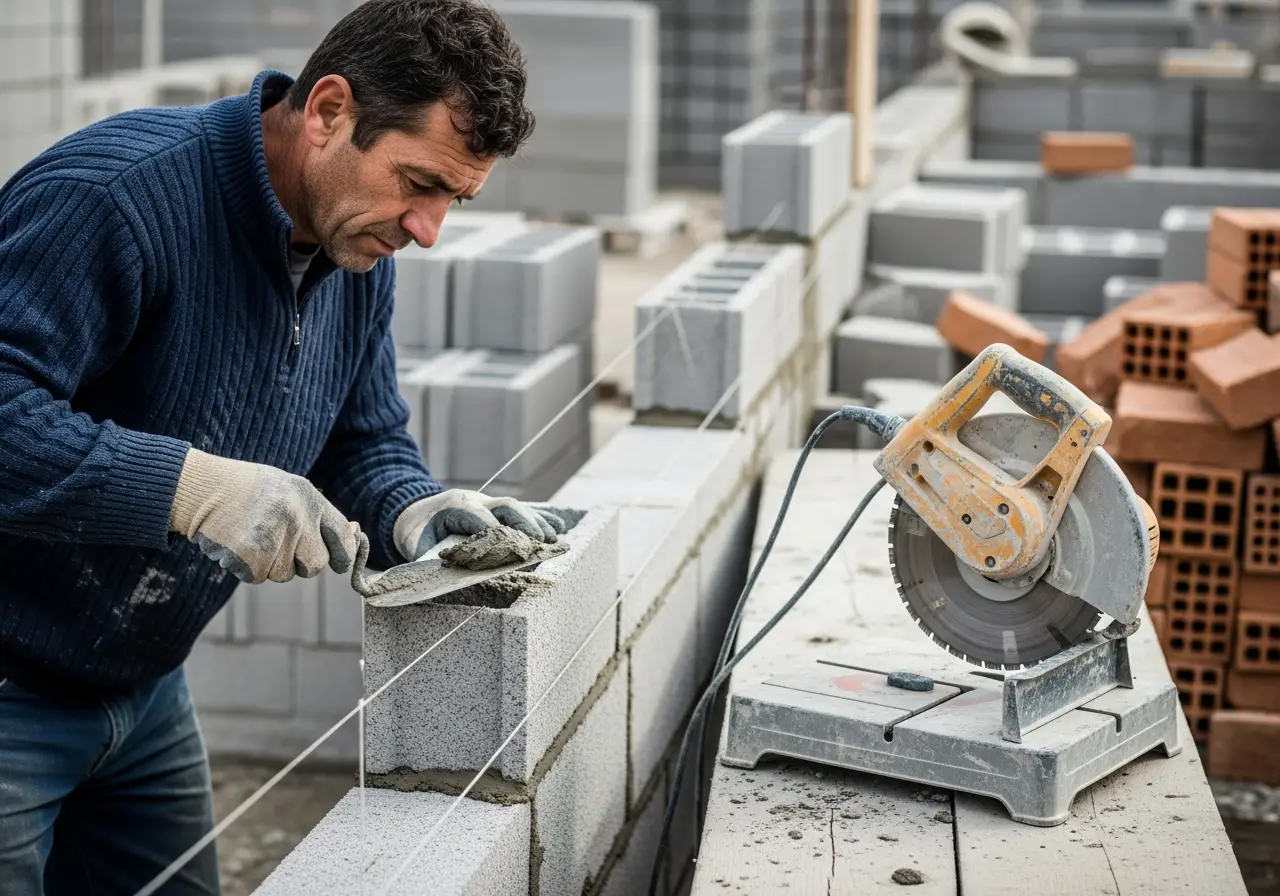
Cutting, grinding, and drilling masonry releases respirable crystalline silica that scars the lungs for life. Combined with heavy repetitive lifting and heat, masonry work takes a slow but serious toll. OSHA Scan analyzes job-site photos to catch missing dust controls and PPE before exposure adds up.
Free · No account needed to scan · Results in seconds
U.S. workers exposed to silica dust
OSHA silica permissible exposure limit
finer than sand — silica reaches deep in lungs
silica-related deaths estimated each year
Upload a real job-site photo and OSHA Scan detects visible masonry and concrete hazards in seconds — no account needed to run your first scan.
Use the real site or facility name. If you save the scan after signup, it becomes the report name.
Three angles, one deeper scan
Only the wide shot is required — every extra angle gives the AI more places to look.
Required: Set the scene — one wide shot lets the AI sweep the whole area at once
Stand at the entry point and capture corner to corner: floors, ladders, scaffolds, and everyone at work
Drop a job-site photo or walkthrough video
Click to upload, drag & drop, or snap a photo on site. Photos scan free in about 15 seconds — no signup, no card. Video walkthroughs (up to 3 min) run on a free account.
Small habits, sharper scans
Set the scene
Start with context
Fill the frame
2–3 ft for close-ups; keep ladders, cords and workers fully in view.
Capture clearly
Make the frame usable
Light it right
Keep the sun or lights behind you — glare and shadows hide hazards.
Tap to focus
Tap the hazard on screen and hold still one second — blur can't be flagged.
Choose the useful view
Give the AI room to understand
Go landscape
Turn your phone sideways — a wider frame catches more of the scene.
Only upload photos you have permission to use, and avoid images showing personal, customer, or confidential information. Demo photos and results are held privately for up to 48 hours so you can save them to a free account; unclaimed photos are deleted automatically. Results are an AI-assisted preliminary review, not an official OSHA determination.
Here is what an OSHA Scan report looks like for masonry and concrete hazards. It is an illustrative example built from this trade's hazards — clearly marked, not live scan data.
Compliance score
56
Lower means more potential hazards found
3 potential hazards found
Dry cutting without controls
CriticalPossibly related to Respirable crystalline silica (construction) (29 CFR 1926.1153)
Observed condition: A mason dry-cuts concrete block with an abrasive saw and no water or vacuum.
Corrective action: Use wet-cutting methods that apply water to the blade or bit
High confidence
Grinding in an enclosed area
HighPossibly related to Respiratory protection (29 CFR 1910.134)
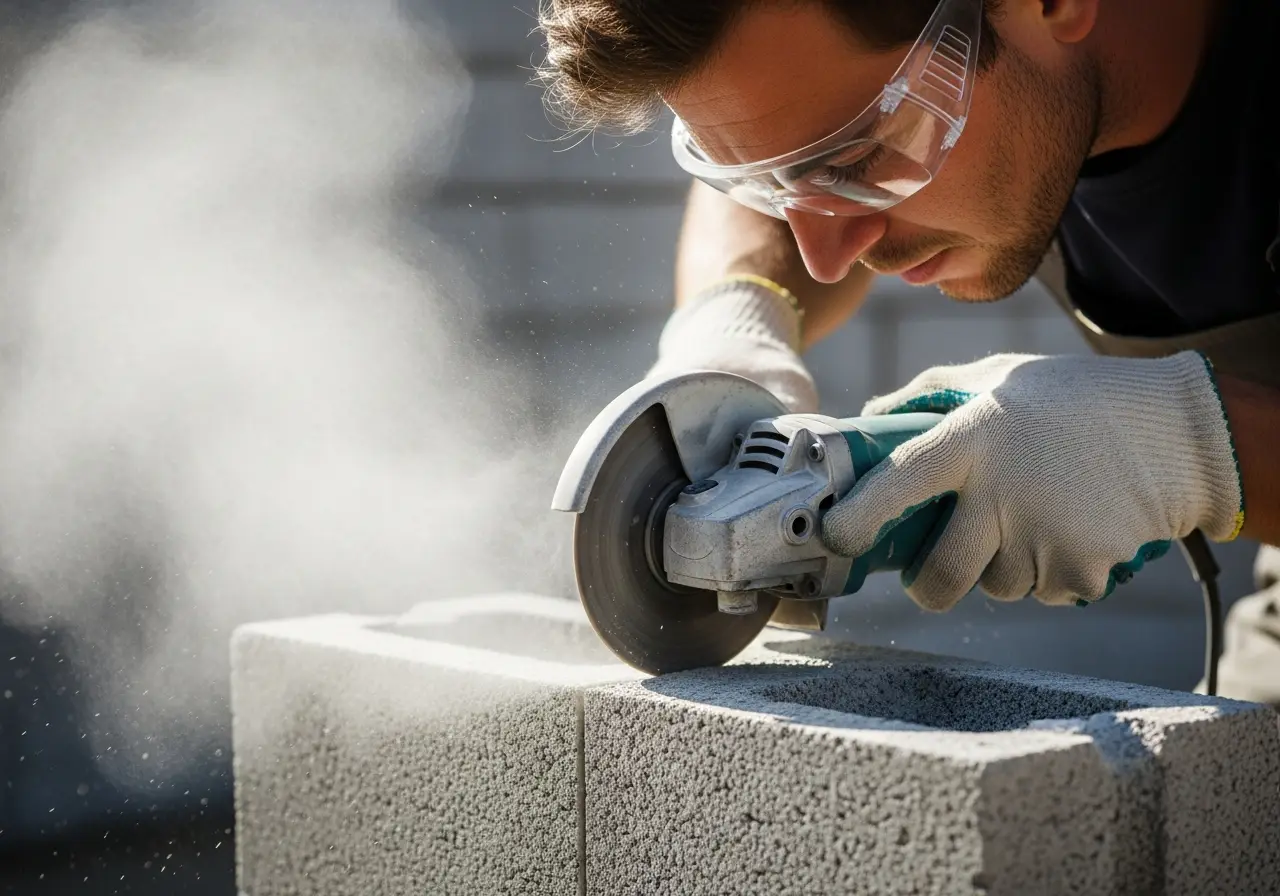
Observed condition: A worker grinds mortar joints inside a partially enclosed structure without ventilation or a respirator, concentrating silica dust in his breathing zone.
Corrective action: Use tools with integrated vacuum dust-collection systems
Medium confidenceNot fully clear from the photo — verify on site.
Repetitive lifting injury
MediumPossibly related to Scaffolds — general requirements (29 CFR 1926.451)
Observed condition: A mason lifts hundreds of blocks a day with poor technique and no mechanical aid, developing a disabling lower-back injury over the season.
Corrective action: Provide local exhaust ventilation for enclosed cutting and grinding
High confidence
The signature masonry hazard is respirable crystalline silica. Cutting, grinding, drilling, and chipping brick, block, stone, and concrete release ultrafine dust particles small enough to penetrate deep into the lungs. Over time these particles cause silicosis — an incurable, progressive scarring of the lung — and increase the risk of lung cancer, COPD, and kidney disease.
Primary OSHA standard: 29 CFR 1926.1153
The signature masonry hazard is respirable crystalline silica. Cutting, grinding, drilling, and chipping brick, block, stone, and concrete release ultrafine dust particles small enough to penetrate deep into the lungs. Over time these particles cause silicosis — an incurable, progressive scarring of the lung — and increase the risk of lung cancer, COPD, and kidney disease.
Because the dangerous particles are invisible and cause no immediate symptoms, workers routinely underestimate the exposure. A single day of dry cutting without controls can exceed the permissible limit many times over, and the damage accumulates silently for years before disease appears.
Masonry also imposes heavy physical demands. Repeatedly lifting blocks, bags of mortar, and stone causes back injuries and musculoskeletal strain, while working outdoors in summer creates heat-stress risk. Masons often work from scaffolds too, adding fall hazards to the mix. Effective masonry safety has to address dust, ergonomics, heat, and falls together.
OSHA's respirable-silica standard sets a strict exposure limit and specific engineering controls. Non-compliance is heavily cited on masonry work.
Silicosis is incurable and often fatal, and repetitive-strain injuries can end careers. Both develop quietly over years of exposure.
Silica-related illness brings long-tail liability and workers' compensation claims that can surface years after the exposure.
Contractors with documented silica-control programs win work on projects with strict health-and-safety prequalification.
A mason dry-cuts concrete block with an abrasive saw and no water or vacuum. A visible dust cloud forms and his silica exposure far exceeds the permissible limit within an hour.
A worker grinds mortar joints inside a partially enclosed structure without ventilation or a respirator, concentrating silica dust in his breathing zone.
A mason lifts hundreds of blocks a day with poor technique and no mechanical aid, developing a disabling lower-back injury over the season.
A crew lays block in direct summer sun without shade or scheduled breaks. A worker develops heat exhaustion that progresses toward heat stroke.
A mason works from a scaffold with a missing guardrail while reaching for materials and falls from the platform.
The federal regulations that govern masonry work.
Sets a permissible exposure limit and requires engineering controls such as water or vacuum dust collection, exposure control plans, and medical surveillance.
Requires a written program, fit testing, and medical clearance when respirators are needed to control silica and other dust exposure.
Governs the masons' scaffolds and platforms commonly used in masonry, including guardrails and load limits.
Requires appropriate PPE, including eye, hand, and respiratory protection, for masonry and concrete tasks.
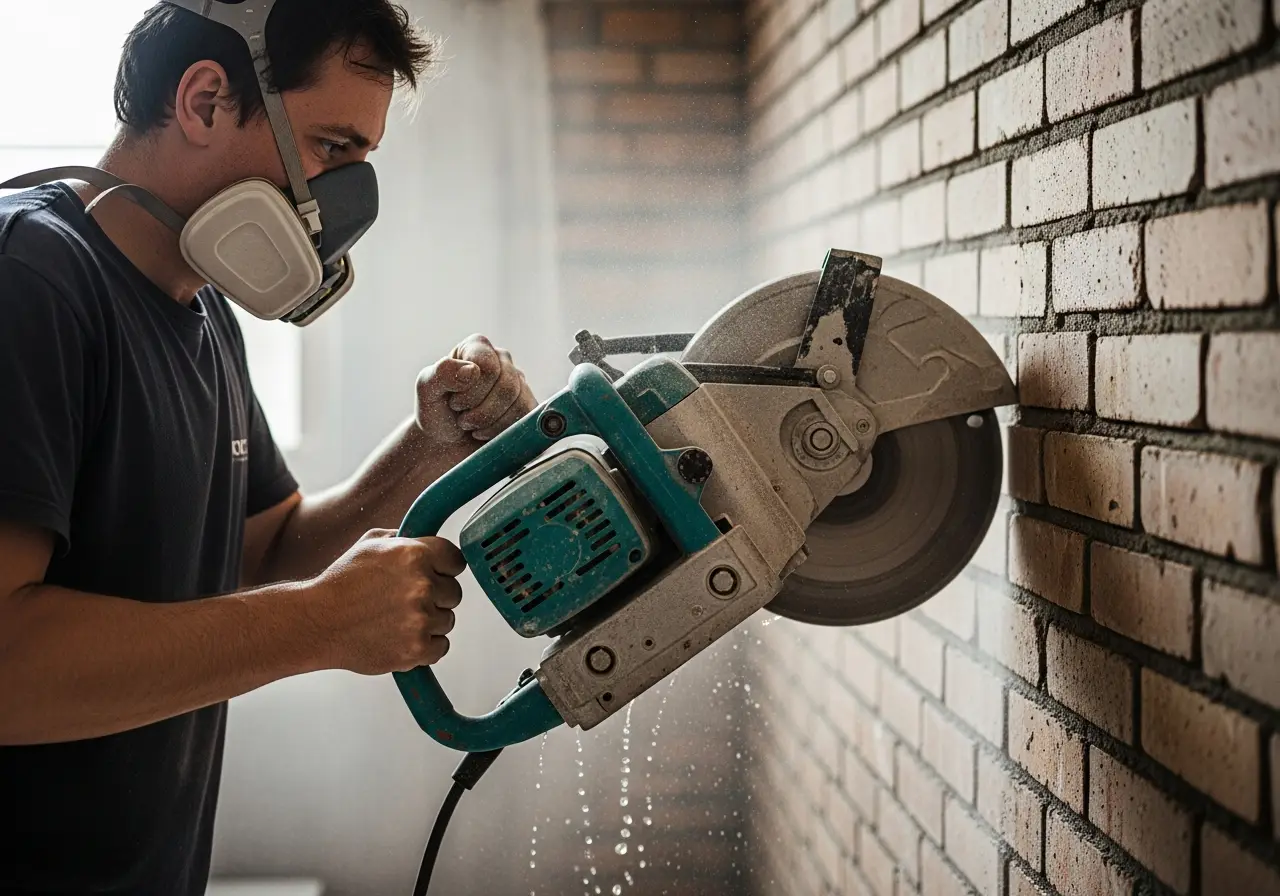
Work top-down through the hierarchy of controls — eliminate the hazard first, then fall back to procedures and PPE.
Control silica dust at the point it is created.
Plan the work to limit exposure and physical strain.
Protect against residual dust and physical hazards.
Silica disease is invisible and irreversible, so trained, competent workers who understand exposure controls and respirator use are the backbone of preventing overexposure on masonry work.
OSHA Scan analyzes masonry and concrete work photos to flag dry cutting and grinding without water or vacuum dust control, visible dust clouds in breathing zones, workers without respiratory protection during silica tasks, and scaffold platforms missing guardrails. Each finding cites the relevant OSHA standard and generates a corrective-action checklist covering dust controls and PPE — so a supervisor can catch a silica overexposure setup from a photo before the saw starts.
It is the fine dust released when cutting, grinding, or drilling silica-containing materials like concrete, brick, block, and stone. The particles are far smaller than ordinary sand and small enough to lodge deep in the lungs, where they cause permanent scarring. It is invisible in the air at hazardous concentrations, so controls are essential.
Silicosis is an incurable, progressive lung disease caused by inhaling respirable silica. Scar tissue permanently reduces lung function and raises the risk of tuberculosis and lung cancer. Because there is no cure, prevention through dust control and respiratory protection is the only effective protection.
The most effective controls are wet methods that continuously apply water to the blade or bit, and tools fitted with vacuum dust-collection shrouds. OSHA's silica standard lists specific control methods for common tasks. When these controls cannot keep exposure below the limit, respiratory protection is required in addition.
Respirators are required when engineering and work-practice controls cannot keep silica exposure below the permissible limit — for example during heavy or enclosed cutting and grinding. Respirator use requires a written program, medical clearance, and fit testing, and the correct type must be selected for the exposure level.
Reduce manual handling with carts, hoists, and mechanical lifts, keep loads close to the body, lift with the legs, and split heavy loads or use team lifting. Rotating tasks and pacing work also reduces the cumulative strain that leads to disabling back and shoulder injuries over a season.
Early signs include heavy sweating, muscle cramps, headache, dizziness, and fatigue; these can progress to heat exhaustion and life-threatening heat stroke, marked by confusion and hot, dry skin. Prevent it with shade, frequent water, scheduled rest, and acclimatization, and act immediately when symptoms appear.
OSHA's construction silica standard is heavily enforced on masonry work, and violations are among the most commonly cited in the trade. Failing to use required engineering controls, not having a written exposure control plan, skipping fit testing, or omitting medical surveillance each carries penalties that can run into the tens of thousands of dollars per item, with willful or repeat citations reaching six figures. Because silicosis is incurable, inspectors treat unchecked dry cutting seriously and may classify it as willful when an employer knowingly skips water or vacuum controls. Beyond fines, silica-related disease creates long-tail workers' compensation and liability exposure that can surface years later. Weighed against the modest cost of wet-cutting kits, vacuum shrouds, and a written plan, compliance is far cheaper than a single citation or a career-ending disease claim, which is why documented silica programs are now standard on serious masonry projects.
Under the silica standard, employers must offer medical surveillance at no cost to any worker required to wear a respirator for silica tasks for 30 or more days a year, with an initial exam and follow-up exams at least every three years, including a chest X-ray and lung-function test read by a specialist. Respirator training, medical clearance, and fit testing must be completed before first use and repeated at least annually or whenever conditions change. Hazard-communication and exposure-control training should be delivered at hire, when tasks change, and refreshed regularly so workers keep recognizing dust hazards. Keeping current records of exams, fit tests, and training both protects workers and demonstrates compliance during an inspection, and it lets a physician catch early signs of disease while a worker can still be reassigned away from exposure.
Never dry sweep or use compressed air to clean settled masonry dust — both throw respirable silica back into the air and can expose everyone nearby to concentrations far above the limit. Instead, use a HEPA-filtered vacuum designed for fine dust, or wet methods that dampen debris before it is collected. Clean up throughout the shift rather than letting dust accumulate, contain and bag waste, and keep walkways and platforms clear so cleanup does not create slip or fall hazards. Workers doing cleanup in dusty conditions may still need respiratory protection. Maintaining the vacuum's filters and emptying it carefully is part of the process, since a poorly maintained collector simply recirculates the hazard. Good housekeeping is a required element of the exposure control plan, not an afterthought, because settled dust becomes an inhalation hazard the moment it is disturbed.
Stop the task whenever the controls that keep silica in check are not working or the physical hazards outrun the plan. Concrete reasons to halt include a wet-cutting water supply that runs dry, a vacuum shroud that clogs or loses suction, a visible dust cloud forming in the breathing zone, a respirator that will not seal or is the wrong type, or ventilation that cannot clear an enclosed space. Also stop for scaffold platforms missing guardrails, for signs of heat stress in the crew, and any time a worker raises a concern. The competent person is responsible for pausing work and correcting the condition before cutting resumes, and no production schedule justifies dry cutting without controls. Resuming should follow a quick re-check that water or vacuum controls, respiratory protection, and the work platform are all sound.
Run through this before, during, and after every job.
15 more checklist points are waiting. Register with your email to reveal every item and download the complete OSHA compliance checklist as a printable PDF. Free, and it only takes a few seconds.
Already have an account? Sign in
A masonry contractor built its reputation on speed, and crews routinely dry-cut block and concrete on site because it was faster than setting up water or vacuum systems. Visible dust clouds were considered a normal part of the job.
Years of dry cutting exposed workers to silica far above the permissible limit. Several long-tenured masons were eventually diagnosed with silicosis, an incurable disease, leading to workers' compensation claims and lasting harm to workers who had trusted the job was safe.
The contractor converted to wet-cutting and vacuum-shrouded tools, wrote a silica exposure control plan, added respiratory protection and medical surveillance, and adopted OSHA Scan to photo-audit job sites for dry cutting and missing dust controls.
Measured silica exposures dropped below the permissible limit across the crews, no new silicosis cases emerged among workers hired after the change, and the documented program helped the contractor qualify for health-conscious institutional projects.
Review findings, organize chemical records, and open relevant official resources for your saved locations and work context.
You make the final call. Review, edit, or dismiss any AI-flagged hazard before finalizing your inspection report.
Scan chemical labels or upload legacy MSDS sheets to create structured drafts that support your team's search for and review of current official manufacturer Safety Data Sheets.
Open official OSHA and State Plan guidance, required posters, emergency contacts, and relevant publications for saved locations and work requirements.
OSHA Scan reads a single photo. That makes it fast and easy for anyone on site — but it also means it has real limits. Here's an honest look at both.
Reviewed by OSHA Scan Editorial
Last updated August 29, 2026
This content is produced by the OSHA Scan Editorial team and reviewed with AI assistance. It is general safety information, not legal or compliance advice. OSHA Scan is an independent tool and is not affiliated with, endorsed by, or certified by OSHA or the U.S. Department of Labor.
Upload a photo of your masonry job site and get an instant, OSHA-cited hazard report.
Start your free trial